
Romans-sur-Isère
Romans-sur-Isère is a commune in the Drôme department of Southeastern France, situated on the right bank of the Isère river. With a population of around 33,000, it is the third most populous city in its department. Historically, the town has experienced significant events such as the carnival killings in 1580 and has developed economically through industries like nuclear fuel and shoe manufacturing.
Key Facts
- ›Located on the right bank of the Isère river, 20 km northeast of Valence.
- ›Population of approximately 33,000, making it the third-largest city in the Drôme department.
- ›The urban area, including Bourg-de-Péage, exceeds 50,000 inhabitants.
- ›Notable sights include the Collegiate Church of Saint-Barnard, the International Museum of Footwear, and the Tower of Jacquemart clock.
- ›Key industries include nuclear fuel manufacture and shoe manufacture.

Collegiate Church of Saint-Barnard, International Museum of Footwear, Tower of Jacquemart Clock
Romans
Hippolyte Charles, Robert Clergerie, éRik Comas, Pierre Latour, Jules Nadi, Baptiste Reynet, Philippe Saint-André, Thomas Arthur, Comte De Lally
- About Twenty Artisans Killed At the Annual Carnival In 1580.
- HôTel De Ville Completed In 1802.
- End Point For Stage 16 of the Tour De France On 18 July 2017.
About Romans-sur-Isère
Romans-sur-Isère, often known simply as Romans until 1920, is a significant commune located in the Drôme department of Southeastern France. Nestled on the right bank of the Isère river, it lies approximately 20 kilometers northeast of Valence. The city is the third most populous in its department, with a population of around 33,000, and its urban area, which includes the neighboring town of Bourg-de-Péage, extends to over 50,000 inhabitants.
History and Development
The history of Romans-sur-Isère includes notable events such as a tragic incident where about twenty artisans were killed during the annual carnival in 1580. More recently, the Hôtel de Ville was completed in 1802, and in 2017, the city served as the endpoint for Stage 16 of the Tour de France, highlighting its role in contemporary events.
Economy and Culture
The economic landscape of Romans-sur-Isère is characterized by diverse industries. It is a center for nuclear fuel manufacture, housing a Framatome subsidiary, and is also renowned for its shoe manufacturing heritage, including the prominent brand Robert Clergerie. Among its notable sights are the Collegiate Church of Saint-Barnard, a significant religious and architectural landmark, the International Museum of Footwear, which celebrates the town's industrial past, and the distinctive Tower of Jacquemart clock.
Source: Wikipedia ↗
Frequently Asked Questions
Where is Romans-sur-Isère located?
Romans-sur-Isère is situated in the Drôme department in Southeastern France. It lies on the right bank of the Isère river, approximately 20 km northeast of Valence.
What is the population of Romans-sur-Isère?
The city itself has a population of about 33,000 inhabitants. The broader urban area, which includes the neighboring town of Bourg-de-Péage, has a population exceeding 50,000.
What are some notable landmarks in Romans-sur-Isère?
Key attractions in Romans-sur-Isère include the Collegiate Church of Saint-Barnard, which is a significant religious site. Visitors can also explore the International Museum of Footwear and the historic Tower of Jacquemart clock.
What are the main economic activities in Romans-sur-Isère?
The economy of Romans-sur-Isère is supported by several industries. These include the manufacture of nuclear fuel, with a Framatome subsidiary present, and the production of footwear, with brands like Robert Clergerie originating from the town.
Related Monasteries
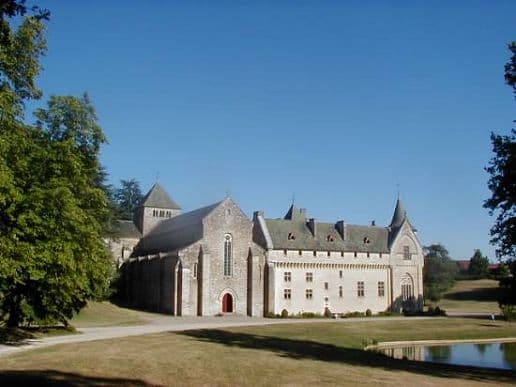
Abbey of Loc-Dieu
Abbey of Loc-Dieu is a Cistercian abbey situated in Aveyron, France, founded in 1123 on a site historically known as "devil's place" before being renamed "place of God" by its monastic inhabitants. Despite facing destruction and rebuilding, it became a significant Gothic architectural site and, during World War II, served as a safe haven for artworks from the Louvre, including the Mona Lisa. Today, the abbey and its park are open to the public.

Abbey of Saint-Germain-des-Prés
The Abbey of Saint-Germain-des-Prés, originally a Benedictine abbey founded in 558, is one of the oldest churches in Paris. It served as a significant center for scholarship, producing illuminated manuscripts, and was a royal necropolis. Despite destruction by Vikings and damage during the French Revolution, the church has undergone numerous rebuilds and restorations, incorporating Romanesque, Gothic, and later decorative styles, and remains an active Catholic parish church.

Abbey of Sénanque
Sénanque Abbey is a Cistercian monastery founded in 1148 in Provence, France, renowned for its remarkably preserved Romanesque architecture. Initially thriving, it experienced decline and was suppressed during the French Revolution, only to be re-established in 1854 and later reactivated in 1988. Today, it houses an active monastic community and is known for its lavender fields and spiritual retreats.