
Romainmôtier Abbey
Christian·Switzerland·former priory, now a historical site·5th century
Romainmôtier Abbey, originally founded around 450 AD by Romanus of Condat, evolved from an early monastery to a significant Cluniac priory in the Swiss canton of Vaud. It played a prominent role in the region, experiencing periods of growth and decline, and its Romanesque church remains a key example of Cluniac art. Following the Protestant Reformation, the priory was secularized and its monastic life ceased.
Key Facts
- ›Founded by Romanus of Condat around 450 AD.
- ›Became a Cluniac priory in the 10th century.
- ›Its church is a notable example of Cluniac Romanesque architecture.
- ›Experienced secularization during the Protestant Reformation in 1537.
- ›Restoration efforts took place in the early 20th century and again in the late 20th/early 21st century.
- ›Listed on the Swiss Inventory of Cultural Property of National and Regional Significance.
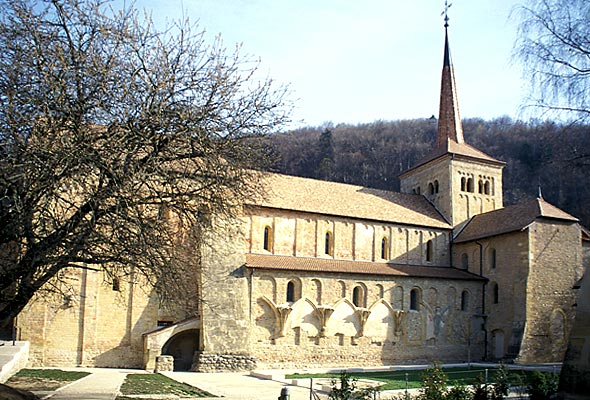
Romanesque
- Romanesque Church
- Swiss Inventory of Cultural Property of National and Regional Significance Listing
RomainmôTier Priory, Romanum Monasterium
Romanus of Condat, Lupicinus, Saint Eugendus, Gregory of Tours, Saint Hilary of Arles, Abbot Florianus, Duke Chramnelenus, Saint Columbanus, Saint Wandregisel, Pope Stephen Ii, Pepin the Short, King Rudolf I of Burgundy, Saint Adela, Richard Ii, Abbot Maiolus of Cluny, Abbot Odilo of Cluny, Beatrix of Burgundy, Frederick Barbarossa
- Founding By Romanus of Condat
- Rebuilding Under the Rule of Saint Columbanus
- Visit By Pope Stephen Ii
- Gift To Cluny Abbey
- Construction of Present Church
- Conflicts With Aristocratic Families
- Secularization During the Protestant Reformation
- Restoration of Buildings
About Romainmôtier Abbey
Romainmôtier Abbey, also known as Romainmôtier Priory, is a significant historical monastic site located in the municipality of Romainmôtier-Envy in the canton of Vaud, Switzerland. Its origins trace back to approximately 450 AD, founded by Saint Romanus of Condat, after whom the monastery was named. Initially an early Christian monastic settlement, it later became a prominent Cluniac priory under the Benedictine reform movement, experiencing periods of considerable influence and development.
History and Development
The earliest monastery at Romainmôtier was established by Romanus of Condat, a hermit who, along with his brother Lupicinus, founded several religious communities. Historical accounts, including those by Gregory of Tours, and archaeological findings corroborate the 5th-century founding. The site underwent rebuilding and reform, notably coming under the rule of Saint Columbanus by 642. A significant transformation occurred in 928 when the priory and its lands were gifted to Cluny Abbey, ushering in a "golden age" under Cluniac influence.
During the late 10th century, under Abbot Odilo of Cluny, the present church was constructed, modeled after the second church of Cluny Abbey. This Romanesque church is recognized as a vital example of Cluniac art in Switzerland. The monastery's medieval period saw it navigate complex relationships with local aristocratic families and feudal lords, while also expanding its territorial holdings through the establishment of smaller dependent priories.
Decline and Secularization
Following a financial crisis in the 14th century, the priory experienced a decline in monastic observance and respect for its rules, particularly as it entered the hands of the Savoy dynasty in the mid-15th century. By the time the Protestant Reformation reached the region in 1536, the monastic community had significantly diminished. The Bernese authorities secularized the priory on January 27, 1537, converting the church for Reformed worship and repurposing the monastic buildings. Despite these changes, Romainmôtier Abbey remains a crucial historical and architectural landmark, with its former structures undergoing restoration in the late 19th and early 20th centuries, and again in the late 20th and early 21st centuries.
Source: Wikipedia ↗
Frequently Asked Questions
When was Romainmôtier Abbey founded?
Romainmôtier Abbey was founded by Romanus of Condat around 450 AD. Archaeological excavations have uncovered traces of a church dating from the early 5th century, supporting this early founding date.
What religious order was associated with Romainmôtier Abbey?
Initially an early monastery, Romainmôtier later became a Cluniac priory. Under the Cluny Abbey administration, it experienced a significant period of development and was rebuilt in a style modeled after Cluny's second church.
What is the architectural significance of Romainmôtier Abbey?
The monastery church of Romainmôtier is considered one of the most important examples of Cluniac Romanesque art in Switzerland. The church was built at the end of the 10th century and later modified with an ornate narthex and a gatehouse.
What happened to Romainmôtier Abbey during the Reformation?
During the Protestant Reformation in 1536, the Bernese authorities secularized the priory on January 27, 1537. The priory church was then used for Reformed services, and the cloister was destroyed.
Is Romainmôtier Abbey still an active monastery?
No, Romainmôtier Abbey is no longer an active monastery. Following its secularization during the Reformation, its buildings were repurposed, and its monastic life ceased.
Related Monasteries

Abbey of St Victor
The Abbey of Saint-Victor in Marseille is a former Benedictine monastery with a history stretching back to the late Roman period. Founded by John Cassian in 415 AD, it played a significant role in early Christian theology and monasticism. Despite suffering numerous destructions and periods of decline, it was repeatedly restored and remained an important religious and economic center throughout the Middle Ages.
Condat Abbey
Condat Abbey, established in the 420s in the Jura mountains of modern-day France, became a significant monastic center during the Merovingian and Carolingian eras. Initially founded by Romanus and Lupicinus as a place for separate cells in emulation of the Desert Fathers, it later transformed into a coenobitic rule under Abbot Eugendus. The abbey developed into an ecclesiastical principality and was renowned for its library, school, and relics, attracting pilgrims and notable figures.

Moutiers-Saint-Jean Abbey
Moutiers-Saint-Jean Abbey, also known as Abbaye Saint-Jean-de-Réome, was a significant monastery in Burgundy, France, founded around 450 by John de Réôme. It underwent various reforms and faced destruction and rebuilding over centuries, notably during the French Revolution when it was sold as rubble. Today, its remains are protected, and surviving architectural elements are preserved in museums.