
Robertsbridge Abbey
Robertsbridge Abbey was a Cistercian monastery located in Robertsbridge, East Sussex, England, founded in 1176 by Alured and Alicia de St Martin. Despite its founding, the abbey was never particularly wealthy or influential due to its vulnerable location, which frequently suffered from the effects of the sea. It was ultimately dissolved in 1538 during the Dissolution of the Monasteries, with its property subsequently passing to Sir William Sydney.
Key Facts
- ›Founded in 1176 by Alured and Alicia de St Martin.
- ›Belonged to the Cistercian order.
- ›Suffered from coastal erosion due to its location.
- ›Dissolved in 1538 under Abbot Thomas Taylor.
- ›The Abbot's House, built circa 1250, is the main surviving part.
- ›The ruins of the Frater are also grade II* listed.
Medieval
Abbot's House, Crypt Beneath the Abbot's House, Ruins of the Frater, Grade I Listed Abbot's House, Grade Ii* Listed Frater Ruins
Alured De St Martin, Alicia De St Martin, Thomas Taylor
Founding In 1176, Dissolution In 1538
About Robertsbridge Abbey
Robertsbridge Abbey was a Cistercian monastery established in Robertsbridge, East Sussex, England. Its foundation in 1176 is attributed to Alured and Alicia de St Martin. The abbey's history was significantly shaped by its challenging coastal location, which rendered it vulnerable to the sea's effects. Consequently, Robertsbridge Abbey never achieved substantial wealth or prominence.
History and Dissolution
The abbey faced ongoing difficulties due to its proximity to the sea, which continually impacted its lands. This environmental factor contributed to its limited prosperity throughout its existence. The monastery met its end in 1538 when Abbot Thomas Taylor was compelled to surrender it. This dissolution was part of the broader policy of the Dissolution of the Monasteries under King Henry VIII. At the time of its closure, there were eight monks in residence. Following the dissolution, the abbey's property was transferred to Sir William Sydney.
Surviving Structures
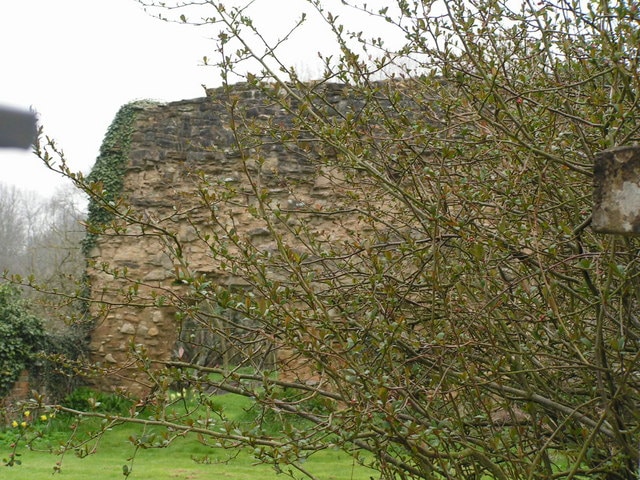
Today, the most substantial surviving element of Robertsbridge Abbey is the Abbot's house. This structure was built around 1250, predating the dissolution by several centuries. It was formerly utilized as a farmhouse and is now integrated into a private residence. The building is primarily constructed from stone rubble, with additions of red brick and brick buttresses towards the rear. It features a steeply pitched tiled roof and weather-boarding at the gable end. A notable feature beneath the Abbot's house is a crypt. The Abbot's house itself is designated as a grade I listed building.
In the grounds of the Abbot's house, the ruins of the Frater are also present. This was a rectangular building constructed of stone rubble and formed part of the monastic complex. These ruins are separately listed as grade II*.
Source: Wikipedia ↗
Frequently Asked Questions
When was Robertsbridge Abbey founded?
Robertsbridge Abbey was founded in the year 1176. The founding was carried out by Alured and Alicia de St Martin.
What religious order was Robertsbridge Abbey part of?
Robertsbridge Abbey was a Cistercian abbey. The Cistercian order is a branch of the Catholic Church known for its strict monastic rules.
Why was Robertsbridge Abbey not very wealthy?
The abbey's lands were situated in a location that was continually affected by the sea. This geographical challenge meant the abbey never accumulated significant wealth or prominence.
When and why was Robertsbridge Abbey dissolved?
Robertsbridge Abbey was forcibly surrendered and dissolved in 1538. This event was part of the wider Dissolution of the Monasteries initiated by King Henry VIII.
What remains of Robertsbridge Abbey today?
The most significant surviving part of Robertsbridge Abbey is the Abbot's House, which dates from around 1250 and is now part of a private residence. Additionally, the ruins of the Frater, a rectangular stone building, can be found in the garden.
What is the current status of the Abbot's House?
The Abbot's House, a key surviving structure from Robertsbridge Abbey, is a grade I listed building. It has been adapted and is now incorporated into a private residence.
Related Monasteries

Solières Abbey
Solières Abbey was a former Cistercian nunnery in Wallonia, Belgium, with a complex history dating back to the late 12th century. Initially founded as an Augustinian community, it later affiliated with the Cistercians. The abbey was dissolved during the French Revolution, and its former abbess's residence was converted into a mansion known as the Château de l'Abbaye de Solières. Despite its historical significance and protected monument status, the building is currently in a poor state of repair.

Aldeby Priory
Aldeby Priory was a 12th-century Benedictine monastic house located in Aldeby, Norfolk, England. Initially established as a priory cell of Norwich Cathedral, it was founded by Agnes de Beaupré and her husband Hubert de Rye. The priory was dedicated to St. Mary and received confirmation of grants from Henry I, including the church and manor of Aldeby. Despite its modest size, it played a role in local administration and faced financial and structural issues in its later years before its dissolution.
Aldgate Priory
Holy Trinity Priory, also known as Christchurch Aldgate, was an Augustinian priory founded around 1108 by Queen Matilda of Scotland near Aldgate in London. It held significant ties to English royalty, with several queens maintaining a close relationship with the priory and some royal children buried there. The priory was a center of learning in the 12th century and played a role in civic life, with its prior serving as an Alderman of London. It was dissolved in 1532 and its buildings have since been largely lost, with only remnants surviving.