
Rabban Hormizd Monastery
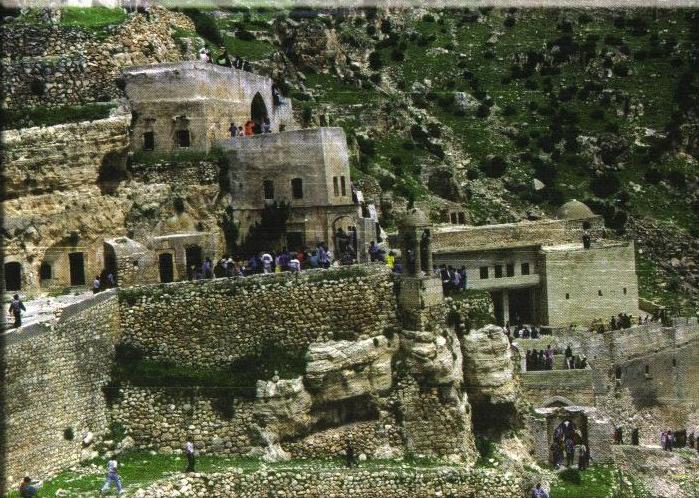
Rabban Hormizd Monastery is a historic monastery in Iraq founded around 640 AD by the Church of the East. It served as the patriarchal residence for the Eliya line of the Assyrian Church of the East from the 16th to 18th centuries and later became a significant site for the Chaldean Catholic Church after their union with Rome. Known for its ascetic lifestyle and carved rock cells, the monastery has endured periods of destruction and revival throughout its history.
Key Facts
- ›Founded around 640 AD by Rabban Hormizd.
- ›Served as the official residence for patriarchs of the Eliya line of the Assyrian Church of the East (1551-18th century).
- ›Carved into the mountains near Alqosh, Iraq.
- ›Known for its ascetic monastic cells hewn from solid rock.
- ›Experienced significant destruction and looting in the 18th and 19th centuries.
- ›A new monastery, our Lady of the Seeds, was established nearby in 1859 to replace it as the principal Chaldean Church monastery.
Rock-Hewn Architecture
Ascetic Monastic Cells Hewn From Solid Rock, Patriarchal Burial Site, Library Rich In Syriac Manuscripts
Rabban Hormizd, Yohannan Sulaqa, Gabriel Dambo, Joseph Audo, Yohannan Viii Hormizd, Augustine Hindi, E. A. Wallis Budge
Founded By Rabban Hormizd, Became Patriarchal Burial Site, Served As Patriarchal Residence, Attacked By Nader Shah's Army, Revived and Rebuilt By Gabriel Dambo, Library Manuscripts Looted, Attacked By Kurds, New Monastery of Our Lady of the Seeds Built
About Rabban Hormizd Monastery
Rabban Hormizd Monastery is a significant historical religious site in Iraq, founded around 640 AD by the monk Rabban Hormizd. Originally established for the Church of the East, the monastery gained prominence over centuries, notably serving as the official residence for the patriarchs of the Eliya line of the Assyrian Church of the East from 1551 to the 18th century. Following the union of the Church of the East with Rome in the early 19th century, the monastery transitioned to become a key institution within the Chaldean Catholic Church.
History and Significance
The monastery's remote location, carved into the mountains approximately two miles from Alqosh and twenty-eight miles north of Mosul, contributed to its unique ascetic character. It was renowned for its cells hewn directly from the rock face, where monks lived austere lives, often with minimal protection from the elements. The fame of Rabban Hormizd himself ensured the monastery's importance for the Church of the East, which flourished until the 10th century. It also served as a patriarchal burial site, with several graves dating from the late 15th century to the early 19th century.
Challenges and Revival
Rabban Hormizd Monastery has endured periods of significant hardship. In the mid-18th century, pestilence and attacks by Kurdish forces, including during the Ottoman-Persian War, led to its abandonment. The monastery was later revived in 1808 by Gabriel Dambo, who established a seminary there. However, it continued to face violence and looting in the 19th century, with its valuable library of Syriac manuscripts suffering extensive damage. Due to its exposure to attacks, Patriarch Joseph Audo initiated the construction of a new monastery, Our Lady of the Seeds, in 1859 in a safer location, which eventually superseded the ancient Rabban Hormizd site as the principal monastery of the Chaldean Church.
Source: Wikipedia ↗
Frequently Asked Questions
When was Rabban Hormizd Monastery founded?
The monastery was founded around 640 AD by Rabban Hormizd of the Church of the East. He was a monk who established the convent in the mountains.
Who resided at Rabban Hormizd Monastery?
From 1551 until the 18th century, it was the official residence of the patriarchs of the Eliya line of the Assyrian Church of the East. After the union with Rome, it became a prominent monastery of the Chaldean Catholic Church.
What were the living conditions like for the monks?
Monks lived in austere conditions in cells hewn from solid rock. These cells were often exposed to the elements and lacked amenities like doors, fire, or light, with monks subsisting on simple food and drinking rainwater.
Has the monastery faced destruction?
Yes, the monastery has faced significant challenges. It was attacked by Nader Shah's army in 1743, and later suffered from pestilence, attacks by Kurds, and looting of its library in the 18th and 19th centuries.
Is Rabban Hormizd Monastery still active?
While the ancient monastery was too exposed to remain a functioning site, a new monastery, Our Lady of the Seeds, was built nearby in 1859 and became the principal monastery for the Chaldean Church, with most monks relocating there.
Related Monasteries

Iraq
Iraq, officially the Republic of Iraq, is a country in West Asia with a history stretching back to the 6th millennium BC as Mesopotamia, the cradle of civilization. It has been home to influential empires and served as the metropole of the Abbasid Caliphate, with Baghdad as a major cultural hub. Modern Iraq gained independence in 1932 and has since experienced periods of growth and significant political instability, including wars and insurgencies, and is currently a federal parliamentary republic focused on reconstruction.

Aruchavank
Aruchavank, also known as the Cathedral of Aruch or Surb Grigor, is a significant medieval Armenian church located on a plateau near Mount Aragats. Commissioned by Prince Grigor Mamikonian and his wife Heghine between 661 and 682 AD, it stands as one of the largest and most architecturally important churches of its era in Armenia. Despite damage from earthquakes and its use as a fortress, the church has undergone restoration, though its drum and cupola are now collapsed.

Cathedral of Talin
The Cathedral of Talin is a seventh-century Armenian cathedral complex located in the Aragatsotn Province of Armenia. The complex includes the main Katoghike Church, which is largely in ruins, and the smaller S. Astvatsatsin Church, commissioned by Prince Nerseh Kamsarakan. Both structures are noted for their 7th-century architectural styles, with remnants of frescoes and inscriptions providing historical context.