
Qumran Caves
Israel·Archaeological site and heritage site
The Qumran Caves are a series of natural and artificial caves located near the archaeological site of Qumran in the Judaean Desert. These caves gained immense historical significance as the location where the Dead Sea Scrolls were discovered, beginning in late 1946 or early 1947. The artificial caves, hewn into marl bluffs, date back to the late Second Temple period and were functionally linked to the Qumran settlement.
Key Facts
- ›The caves are located in the Judaean Desert near the archaeological site of Qumran.
- ›They are famous for being the discovery site of the Dead Sea Scrolls.
- ›The artificial caves were cut into marl bluffs during the late Second Temple period.
- ›The caves were used for storage and habitation, linked to the Qumran settlement.
- ›The Israel Nature and Parks Authority manages the site as a National Heritage Site.
- ›Cave 4Q was particularly significant, containing approximately three-quarters of the scrolls found in the immediate Qumran area.
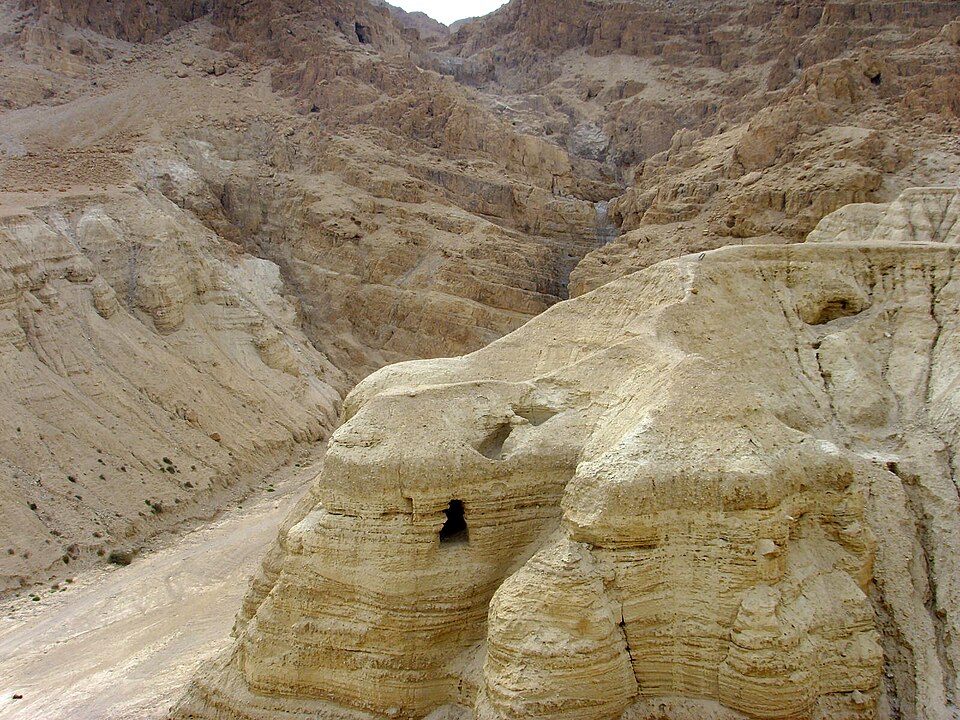
Discovery Site of the Dead Sea Scrolls, Natural and Artificial Caves, Marl-Cut Artificial Caves, Link To the Qumran Settlement
KuhūF QumrāN, Mearot Kumran
Muhammid Ahmed El-Hamed, Mar Samuel, Roland De Vaux, Gerald Lankester Harding, Joseph Patrich, Yigael Yadin, Magen Broshi, Hanan Eshel, Oren Gutfeld
Discovery of the Dead Sea Scrolls, Joint Investigation of the Cave Site, Discovery of Cave 2q, Discovery of Caves 4q, 5q, and 6q, Discovery of Cave 11q, Acquisition of the Temple Scroll By Israel, Announcement of the Discovery of Cave 12q
About Qumran Caves
The Qumran Caves are a collection of natural and artificial caverns located in the Judaean Desert, adjacent to the archaeological ruins of Qumran. These caves are of paramount historical and archaeological importance, primarily because they are the site where the vast majority of the Dead Sea Scrolls were discovered. The initial discovery, credited to a Bedouin shepherd in late 1946 or early 1947, marked the beginning of extensive exploration and excavation in the area.
The Caves and Their Function
The caves comprise both naturally formed caverns and those artificially hewn into the marl bluffs. The artificial caves were created during the latter part of the Second Temple period, from the Hasmonean era through the Herodian period. These man-made structures were directly connected and functionally related to the settlement at Qumran, situated on the terrace above. Archaeological research suggests these caves served as vital storage facilities and, in some instances, as living quarters for the inhabitants of the Qumran settlement.
Dead Sea Scrolls Discovery
The discovery of the Dead Sea Scrolls in these caves revolutionized biblical and historical scholarship. Following the initial find, systematic searches by Bedouin tribes and archaeological expeditions, notably led by Roland de Vaux and Gerald Lankester Harding, uncovered scrolls and fragments in numerous caves, with Cave 4Q proving to be the most prolific. The finds include ancient religious texts, biblical manuscripts, and sectarian documents, offering unparalleled insights into Jewish and early Christian history. The Israel Nature and Parks Authority now manages the site, which is recognized as a National Heritage Site, though its location within occupied Palestinian territories has drawn international attention and criticism.
Source: Wikipedia ↗
Frequently Asked Questions
Where are the Qumran Caves located?
The Qumran Caves are situated in the Judaean Desert, near the archaeological site of Qumran. They are found in the limestone cliffs above the ancient settlement.
What are the Qumran Caves most famous for?
The Qumran Caves are most famous as the discovery location of the Dead Sea Scrolls. The initial discovery was made in late 1946 or early 1947 by a Bedouin shepherd.
When were the artificial caves at Qumran created?
The artificial caves at Qumran were hewn into the marl bluffs during the late Second Temple occupation. This period spans from the Hasmonean phase in the late 2nd to early 1st century BCE through the Herodian period.
What was the purpose of the artificial caves?
The artificial caves are thought to have been cut for storage and habitation. They were functionally linked to the contemporaneous Qumran settlement on the terrace above.
Who manages the Qumran Caves site today?
Following the end of the 1967 war, the Israel Nature and Parks Authority took over the site. It is recognized in Israel as a National Heritage Site.
Which cave yielded the most Dead Sea Scrolls?
Cave 4Q is considered the most important of the caves in the immediate Qumran area, as it originally contained around three-quarters of all the scrolls discovered there.
Related Monasteries

Israel
Israel is a country located in the Southern Levant region of West Asia, with a rich and complex history shaped by ancient kingdoms, empires, and modern political movements. Its territory has been a crossroads for various cultures and religions, leading to significant historical events and ongoing conflicts. The modern State of Israel was established in 1948, following the Zionist movement and the end of the British Mandate, and is characterized by its technologically advanced economy, unique cultural blend, and a revived Hebrew language.

Al-Sultan Coptic Orthodox Monastery
Al-Sultan Coptic Orthodox Monastery, also known as Deir es-Sultan, is an Oriental Orthodox monastery situated on the roof of the Chapel of Saint Helena within the Church of the Holy Sepulchre complex in Jerusalem's Old City. Its ownership is a long-standing dispute between the Coptic Orthodox Church and the Ethiopian Orthodox Tewahedo Church, with historical claims dating back to the Umayyad Caliphate and subsequent confirmations by Saladin. The monastery occupies a significant area and has been the site of numerous historical events and ongoing tensions between the two denominations.

Aachen
Aachen, historically known as Aquae Granni and Aix-la-Chapelle, is a city in Germany with a rich history dating back to Roman times. It rose to prominence as the principal royal residence of Charlemagne and the political center of the Frankish Empire, earning it the moniker "cradle of Europe." For centuries, it served as the coronation site for Holy Roman Emperors. Today, Aachen is a modern technological hub, home to the RWTH Aachen University and its large university hospital, while retaining significant historical and architectural heritage.