
Pomier Charterhouse
Christian·France·event and conference venue·12th century
Pomier Charterhouse was a Carthusian monastery founded in 1170 by William I, Count of Geneva, near Annecy, France. It served as a burial site for the Counts of Geneva and Vaud and was once under Imperial protection. After being largely ruined during the French Revolution and sold into private ownership, parts of the site were restored and operated as a hotel before eventually becoming an event and conference venue.
Key Facts
- ›Founded in 1170 by William I, Count of Geneva.
- ›Served as a burial place for several Counts of Geneva and Vaud.
- ›Visited by Emperors Sigismund and Charles IV.
- ›Pillaged and ruined during the French Revolution in 1793.
- ›Restored main building operated as Hôtel Pension Abbaye de Pomier from 1894 to 1991.
- ›Currently functions as an event and conference venue.

Cellars, Chapter Rooms
Chartreuse De Pomier
William I, Count of Geneva, Sigismund, Charles Iv, JéRéMie Girod, Baron De DréE
- Founded In 1170
- Used As Burial Site For Counts of Geneva and Vaud
- Visited By Emperors Sigismund and Charles Iv
- Pillaged During the French Revolution In 1793
- Restored Main Building Operated As Hotel From 1894 To 1991
About Pomier Charterhouse
Pomier Charterhouse, also known by its French name Chartreuse de Pomier, was a significant Carthusian monastery located in Pomier, Présilly, near Annecy in the Haute-Savoie region of France. Its strategic position near the Swiss border and at the foot of the Salève mountain, also placing it on the Way of St. James, contributed to its historical importance.
History and Significance
The charterhouse was established in 1170 through the efforts of William I, Count of Geneva. For centuries, it served as a notable burial place for a number of Counts of Geneva and Vaud, underscoring its connection to the region's noble families. The monastery also received imperial recognition, being visited by Emperors Sigismund and Charles IV, who subsequently placed it under Imperial protection. Throughout its history, Pomier Charterhouse was led by 91 priors.
Decline and Modern Use
The monastery faced a period of destruction during the French Revolution in 1793, when it was pillaged and its religious structures were ruined. The site was then sold into private hands and, over time, was repurposed for various industrial and agricultural activities, including pottery production, brewing, and farming. In 1894, Jérémie Girod acquired the property and undertook the restoration of the main building, transforming it into the Hôtel Pension Abbaye de Pomier. This hotel operated until 1991. Today, the restored structures of the charterhouse, specifically its cellars and ground-floor chapter rooms, are utilized as an event and conference venue.
Source: Wikipedia ↗
Frequently Asked Questions
When was Pomier Charterhouse founded?
Pomier Charterhouse was founded in the year 1170. Its establishment was initiated by William I, the Count of Geneva.
What happened to Pomier Charterhouse during the French Revolution?
During the French Revolution in 1793, Pomier Charterhouse was pillaged, leading to the ruin of its religious structures. The site was subsequently sold into private ownership.
What is the current use of the restored buildings at Pomier Charterhouse?
The restored Chartreuse de Pomier, specifically the cellars and ground-floor chapter rooms, now serves as an event and conference venue. Previously, a restored main building operated as a hotel.
Who founded Pomier Charterhouse?
Pomier Charterhouse was founded by William I, Count of Geneva. He established the charterhouse in 1170.
Is Pomier Charterhouse still an active monastery?
No, Pomier Charterhouse is not an active monastery. Following its pillaging during the French Revolution, the religious structures were ruined and the site transitioned through private ownership and various commercial uses.
Related Monasteries
Abbey of Loc-Dieu
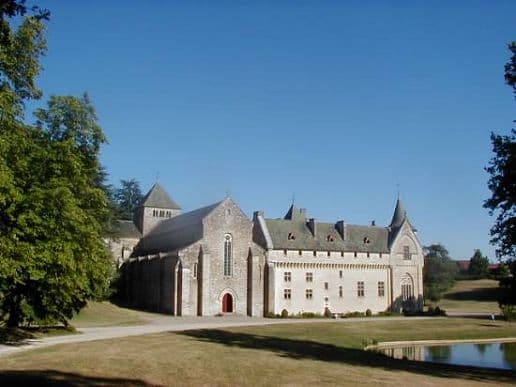
Abbey of Loc-Dieu is a Cistercian abbey situated in Aveyron, France, founded in 1123 on a site historically known as "devil's place" before being renamed "place of God" by its monastic inhabitants. Despite facing destruction and rebuilding, it became a significant Gothic architectural site and, during World War II, served as a safe haven for artworks from the Louvre, including the Mona Lisa. Today, the abbey and its park are open to the public.

Cadouin Abbey
Cadouin Abbey was a Cistercian monastery founded in 1115 as a hermitage. It rose to prominence as a major pilgrimage site due to its possession of a relic believed to be the Sudarium of Christ, attracting significant prestige and wealth. The abbey was dissolved during the French Revolution in 1791, with its assets looted and library destroyed, though its church still remains.

Flaran Abbey
Flaran Abbey, a former Cistercian monastery located near Valence-sur-Baïse in Gers, France, was founded in 1151 as a daughter house of Escaladieu Abbey. It flourished in the Middle Ages, even co-founding the town of Valence-sur-Baïse, but suffered damage during historical conflicts and was suppressed during the French Revolution. Today, after extensive restoration, it stands as one of the best-preserved abbeys in southwestern France and hosts cultural activities and an exhibition on the Way of St. James.