
Pinerolo
Pinerolo is a town and comune in the Metropolitan City of Turin, Piedmont, northwestern Italy, historically significant for its strategic location and role as a fortress. It served as a key crossroads and a principal stronghold for the dukes of Savoy, which led to the establishment of a notable military school. The town has a rich history, including periods under French control and a significant role in the economy of the surrounding Waldensian Valleys.
Key Facts
- ›Pinerolo is located 40 kilometers southwest of Turin, Italy, on the river Chisone.
- ›The town's toponym first appears in a medieval imperial diploma from 981.
- ›It was a principal fortress for the dukes of Savoy, contributing to its military importance.
- ›Pinerolo was under French control from 1536 to 1574 and again from 1631.
- ›The town is a trade center for the surrounding mountain area and the Waldensian Valleys.
- ›Pinerolo is recognized as the home city of the first society of mutual help, founded in 1848, which includes a museum.

Romanesque, Gothic
Pinerolo Cathedral, San Maurizio Church, Galup Factory, Historic Center, Train Station, Town Hall, Historic Museum of Mutual Help, Museum of Chivalry, Santuario Della Madonna Delle Grazie, Pinerolo Palaghiaccio
Pignerol, Pinareul, PineròL
Lidia PoëT, Luigi Facta, Ferruccio Parri, Fabio Miretti, Nicolas Fouquet, the "Man In the Iron Mask", Antonin Nompar De Caumont, 1st Duke of Lauzun, Anna Canalis Di Cumiana, David Llewellyn Snellgrove, Bruno Lanteri
- French Troops Invaded Piedmont and Conquered Pinerolo In 1536.
- Pinerolo Fell Again To France In 1631 With the Treaty of Cherasco.
- France Agreed To Hand Pinerolo Back To the House of Savoy Under the Treaty of Turin In 1696.
- Pinerolo Cathedral Was Restored After the 1808 Earthquake.
- the First Society of Mutual Help Was Founded In 1848.
- Pinerolo Palaghiaccio Hosted Curling Events At the 2006 Winter Olympics.
- the Tour De France Featured A Stage In the Area During the 2011 and 2024 Editions.
About Pinerolo
Pinerolo is a town and comune situated in the Metropolitan City of Turin, within the Piedmont region of northwestern Italy. Strategically positioned 40 kilometers southwest of Turin on the river Chisone, its history is deeply intertwined with its role as a vital crossroads and a principal fortress for the dukes of Savoy. This military importance led to the establishment of a renowned military school, a legacy that continues to this day.
History and Significance
Archaeological findings suggest human presence in the Pinerolo area dating back to prehistoric times, with Roman-era agricultural activities also evidenced. The town's name first appears in historical records in a 981 imperial diploma. Pinerolo's strategic location made it a coveted stronghold, and it experienced periods of French occupation, notably from 1536 to 1574 and again from 1631, before being returned to the House of Savoy under specific treaty conditions in 1696.
Economic and Cultural Hub
Pinerolo serves as a significant economic center for the surrounding Waldensian Valleys and the plain stretching towards the Po river. Its economy is supported by various industries, including mechanical, paper, chemical, and textile manufacturing. The town is also recognized as the birthplace of the first society of mutual help, founded in 1848, which now houses a museum and historical archives. Pinerolo is also a reference city for the Val Chisone, Val Pellice, and Val Lemina.
Notable Features and People
Architectural highlights include the Pinerolo Cathedral, an ancient Roman Catholic church featuring Romanesque and Gothic elements, and the San Maurizio church. The town's historic center and various landmarks, such as the Galup factory famous for local sweets, contribute to its appeal. Pinerolo has been the birthplace or place of residence for several notable figures, including Lidia Poët, Italy's first female lawyer, and Luigi Facta, a former Prime Minister. Its dungeon also famously imprisoned historical figures like Nicolas Fouquet and the "Man in the Iron Mask."
Source: Wikipedia ↗
Frequently Asked Questions
What is the historical significance of Pinerolo?
Pinerolo holds historical significance as a key crossroads and a principal fortress for the dukes of Savoy. Its strategic military importance led to the establishment of a well-known military school. The town also experienced periods of rule by the House of Savoy and French forces.
What is Pinerolo known for in terms of its economy?
Pinerolo serves as an economic hub for the Waldensian Valleys and the plain between these valleys and the Po river. It hosts various industries including mechanical, paper making, chemical, and textile sectors. It is also a trade center for its surrounding mountain region.
What are some notable historical figures associated with Pinerolo?
Notable figures associated with Pinerolo include Lidia Poët, the first Italian female lawyer, and Luigi Facta, who served as Italy's last Prime Minister before the dictatorship of Benito Mussolini. The dungeon of Pinerolo also held figures like Nicolas Fouquet and the "Man in the Iron Mask."
What are the main sights in Pinerolo?
Key sights in Pinerolo include the Pinerolo Cathedral, a 9th-century Roman Catholic church with Romanesque and Gothic elements, and the Gothic-style church of San Maurizio. The town also features a historic center, the Galup factory known for local sweets, and the Historic Museum of Mutual Help.
When was Pinerolo first mentioned in historical records?
The toponym of Pinerolo first appears in historical records in a medieval imperial diploma dating from 981. This document confirmed its possession to the bishops of Turin.
Related Monasteries
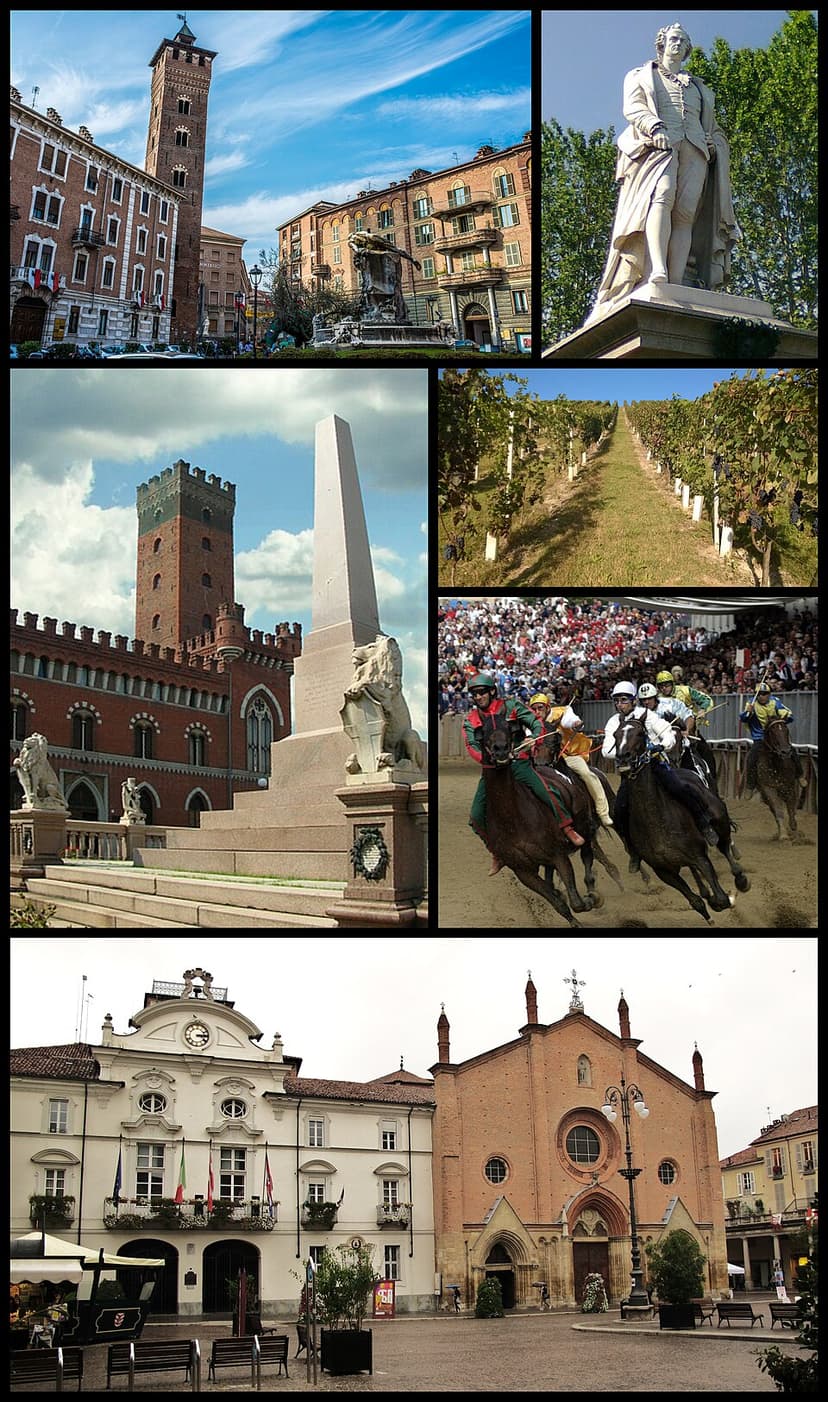
Asti
Asti is a historic comune in the Piedmont region of Italy, with a history stretching back to the Neolithic period. It rose to prominence as a Roman city named Hasta, strategically located on trade routes. Throughout the Middle Ages, Asti evolved into a powerful free commune, known for its economic and cultural splendor, and as a central hub for trade. The city has experienced periods of significant conflict and rule by various powers, including the Lombards, Franks, French, and Savoyards, before becoming part of unified Italy.

Nazarene Sisters
The Nazarene Sisters, officially known as the Daughters of the Passion of Jesus the Nazorean, were founded in 1865 by Italian Roman Catholic priest Marcantonio Durando with the assistance of Luigia Borgiotti. Durando, a member of the Congregation of the Mission, was dedicated to following the teachings of Vincent de Paul and sought to establish a new order for women. The order was established during a period of societal and ecclesiastical change in Italy, and Durando's spiritual guidance was instrumental in its formation and early development.

Venice
Venice is a historic city in northeastern Italy, renowned for its unique construction on a lagoon of 118 islands connected by canals and bridges. Established by refugees fleeing invasions, it evolved into the powerful Republic of Venice, a major maritime and financial hub from the 9th to the 18th centuries. Today, it remains a significant cultural center and a popular tourist destination, recognized as a UNESCO World Heritage Site.