
Asti
Asti is a historic comune in the Piedmont region of Italy, with a history stretching back to the Neolithic period. It rose to prominence as a Roman city named Hasta, strategically located on trade routes. Throughout the Middle Ages, Asti evolved into a powerful free commune, known for its economic and cultural splendor, and as a central hub for trade. The city has experienced periods of significant conflict and rule by various powers, including the Lombards, Franks, French, and Savoyards, before becoming part of unified Italy.
Key Facts
- ›Asti's origins trace back to the Neolithic period, with Ligurian tribes inhabiting the area before Roman conquest.
- ›It was established as a Roman castrum in 124 BC and later granted the status of colonia and municipium.
- ›Asti was a strategic refuge during the Visigoth invasion in 402 AD, successfully defended by Roman troops.
- ›It became a seat of a Lombard Duchy in the 6th century and later a powerful bishopric.
- ›Asti was one of the earliest free communes in Italy, gaining rights to mint its own coins.
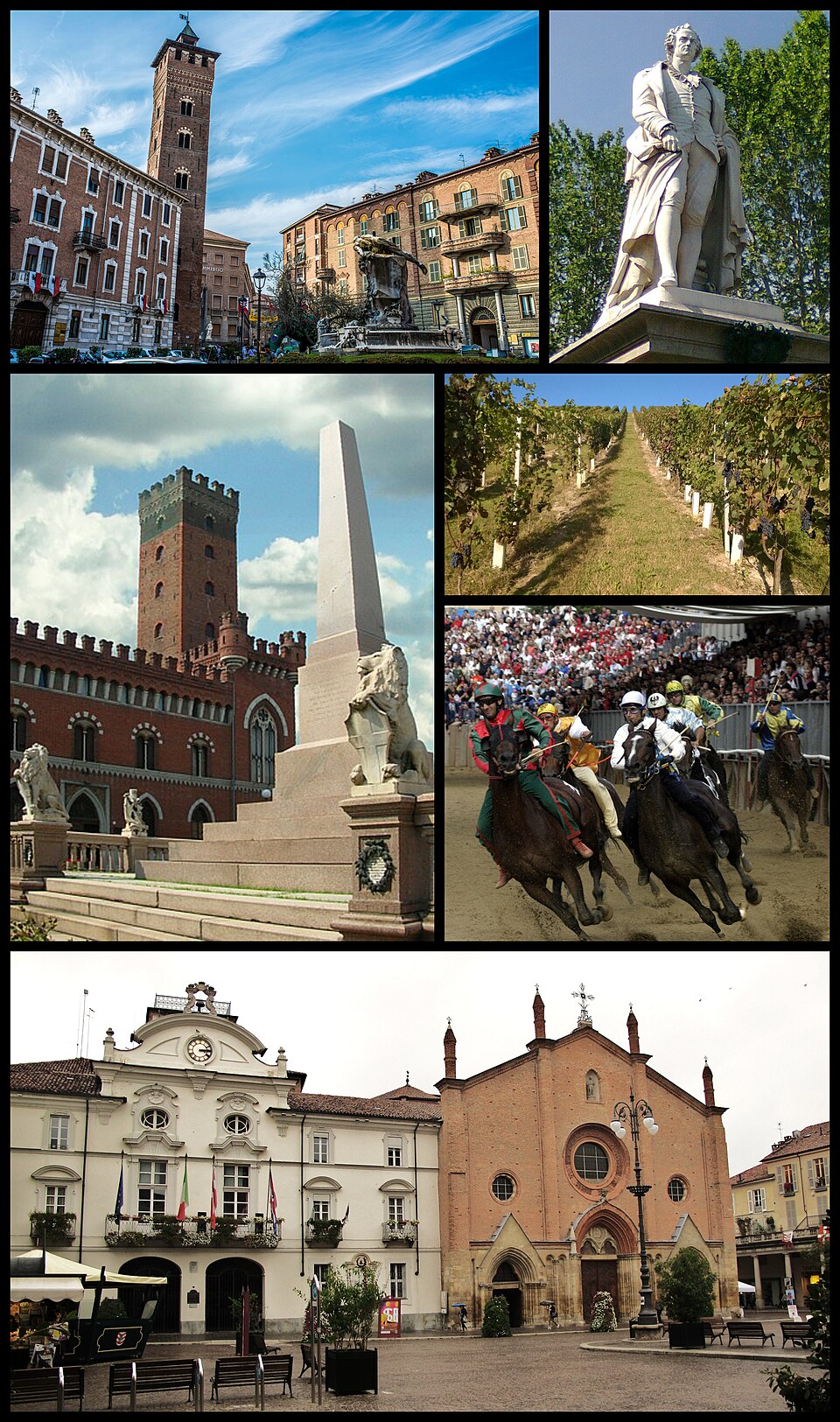
- ›The city is renowned for its medieval towers, once known as the 'city of 100 towers', some of which still stand today.
Romanesque, Gothic, Baroque
Medieval Towers, Cathedral of Santa Maria Assunta, Collegiata Di San Secondo, Baptistery of San Pietro, Palio Di Asti, Asti Spumante Production
Hasta
Secundus of Asti, Gandolfino D'Asti, Vittorio Alfieri, Charles I of Anjou, Frederick Barbarossa, Conrad Ii, Luchino Visconti, John Ii of Montferrat
Roman Conquest, Establishment As A Roman Castrum, Granting of Colonia Status, Granting of Municipium Status, Visigoth Siege and Roman Defense, Lombard Duchy Establishment, Frankish Conquest and County Title, First Mention of A Commune, Siege and Burning By Frederick Barbarossa, Adherence To the Lombard League, Battle of Montebruno, Battle of Roccavione, Visconti Control, Battle of Gamenario, French and Savoyard Domination, Repubblica Astese Declared and Suppressed, French Occupation, Napoleon's Visit, Return To Piedmont, Unification of Italy
About Asti
Asti is a historic comune in the Piedmont region of Italy, situated approximately 55 kilometers east of Turin. Its origins are ancient, with evidence of human settlement dating back to the Neolithic period. Before Roman rule, the area was inhabited by Ligurian tribes, and the city's name is thought to derive from an ancient Celtic word for 'hill.'
Roman Origins and Early Medieval Period
The Romans established a fortified camp, or castrum, at the site in 124 BC, which eventually developed into the city of Hasta. It received the status of a colonia in 89 BC and a municipium in 49 BC, becoming a significant city in the Augustan Regio IX due to its strategic location on the Tanaro River and the Via Fulvia. Asti played a crucial role during the early barbarian invasions, notably providing refuge for Emperor Honorius in 402 AD during a Visigoth siege, which was ultimately broken by Roman forces. Despite this defense, the city suffered from subsequent invasions and economic decline. In the latter half of the 6th century, Asti became a seat of one of the Lombard Duchies, and following the Frankish conquest in 774, it was known as a County.
Rise of the Commune and Local Power Struggles
In the late Carolingian age, Asti was governed by its bishops, who were major landowners. Bishop Audax and Bishop Bruningus were prominent figures who moved the episcopal seat to the Castel Vecchio. The bishopric remained a powerful entity into the 11th century. By 1095, a commune and consul magistrates were mentioned, marking the beginning of Asti's emergence as a free commune. Asti was one of the first such entities in Italy and was granted the right to mint its own coins by Conrad II in 1140. However, its expansion led to conflicts with local feudatories and Emperor Frederick Barbarossa, who besieged and burned the city in 1155. Despite these setbacks, Asti joined the Lombard League and, after the Peace of Constance in 1183, gained further privileges. The 13th century was a period of economic and cultural prosperity for Asti, though marked by wars against neighboring cities and powers. The city's growing influence led to interventions by Charles I of Anjou and ongoing internal struggles between Guelph and Ghibelline factions, often driven by powerful banking families like the Solari.
French and Savoyard Rule
Following internal divisions and external pressures, Asti came under various dominations, including the Visconti of Milan and the Marquesses of Montferrat. In 1389, it was included in the dowry of Valentina Visconti upon her marriage to Louis of Valois, Duke of Orléans, leading to periods of French control. With brief interruptions under Visconti, Montferrat, and Sforza rule, Asti eventually became a direct subject of the French Crown. The early 16th century saw further shifts in power during conflicts between Charles V and Francis I of France. The Treaty of Cambrai in 1529 ceded Asti to the Holy Roman Empire, and by 1531, Emperor Charles V granted it as a fiefdom to Beatrice of Portugal, Duchess of Savoy. Asti then became a key Savoyard stronghold, enduring sieges and changing hands between Savoy and Spain in subsequent centuries. It experienced periods of French invasion and reconquest during the War of Spanish Succession. In 1797, a brief Repubblica Astese was declared by disgruntled citizens but was quickly suppressed. Following the French revolutionary army's expulsion of the Savoyards, Asti was occupied by the French, and later visited by Napoleon Bonaparte in 1805. After the fall of the French Empire, Asti returned to Piedmont in 1814 and remained part of its history until the unification of Italy in 1861.
Modern Asti
Today, Asti is the capital of its province and is recognized as the modern capital of Montferrat. The city is renowned for its medieval architecture, particularly its surviving towers, and is a center for wine production, most famously for Asti Spumante and Moscato d'Asti. It also hosts the historic Palio di Asti, a vibrant annual horse race, and a renowned Festival of Festivals celebrating regional food and wine. The city's Jewish community has a documented presence since 812, with a dedicated synagogue and museum.
Source: Wikipedia ↗
Frequently Asked Questions
What is the historical significance of Asti?
Asti has a long and complex history, dating back to the Neolithic period. It was a significant Roman city, a Lombard duchy, and later one of Italy's first free communes. Its strategic location on the Tanaro River and trade routes made it a crucial center throughout various historical periods.
What are the notable medieval structures in Asti?
Asti is particularly known for its medieval towers, once numbering over 120, with several, like the Tower of the Comentini and Torre Troyana, still standing. The city also boasts medieval palaces and merchants' houses, reflecting its prosperous past.
What is Asti famous for in terms of events and products?
Asti hosts the famous Palio di Asti, an ancient bareback horse race held annually in September, which recalls a medieval victory. It is also a center for wine production, especially the sparkling Asti (Asti Spumante) made from Moscato Bianco grapes, and is celebrated for its food festivals and white truffle season.
What is the origin of the name Asti?
The toponym 'Asti' likely derives from the ancient Celtic word 'Ast,' meaning 'hill.' This is believed to be related to the Ligurian tribes, the Statielli, who dominated the area before Roman rule.
When did Asti become a free commune?
Asti was recognized as one of the earliest free communes of Italy. The mention of a commune and consul magistrates first appears around 1095, and by 1140, it received the right to mint its own coins.
Related Monasteries

Venice
Venice is a historic city in northeastern Italy, renowned for its unique construction on a lagoon of 118 islands connected by canals and bridges. Established by refugees fleeing invasions, it evolved into the powerful Republic of Venice, a major maritime and financial hub from the 9th to the 18th centuries. Today, it remains a significant cultural center and a popular tourist destination, recognized as a UNESCO World Heritage Site.

Pinerolo
Pinerolo is a town and comune in the Metropolitan City of Turin, Piedmont, northwestern Italy, historically significant for its strategic location and role as a fortress. It served as a key crossroads and a principal stronghold for the dukes of Savoy, which led to the establishment of a notable military school. The town has a rich history, including periods under French control and a significant role in the economy of the surrounding Waldensian Valleys.

Nazarene Sisters
The Nazarene Sisters, officially known as the Daughters of the Passion of Jesus the Nazorean, were founded in 1865 by Italian Roman Catholic priest Marcantonio Durando with the assistance of Luigia Borgiotti. Durando, a member of the Congregation of the Mission, was dedicated to following the teachings of Vincent de Paul and sought to establish a new order for women. The order was established during a period of societal and ecclesiastical change in Italy, and Durando's spiritual guidance was instrumental in its formation and early development.