
Pentney Priory
Pentney Priory was an Augustinian priory located in Pentney, Norfolk, England, founded around 1130 and dedicated to the Holy Trinity, Blessed Virgin Mary, and Mary Magdalene. It was dissolved in 1537 during the Dissolution of the Monasteries, and its ruins, primarily a flint-built gatehouse, are now a Grade I listed structure. The site has since been incorporated into Abbey Farm, with some of its stone reused in local buildings.
Key Facts
- ›Founded circa 1130 by Robert de Vaux.
- ›Dedicated to the Holy Trinity, Blessed Virgin Mary, and Mary Magdalene.
- ›United with Wormegay Priory in 1468, with Wormegay becoming a cell of Pentney.
- ›Dissolved in 1537 as part of the Dissolution of the Monasteries.
- ›The gatehouse is the main surviving ruin and is Grade I listed.
- ›Its ruins and surrounding land were incorporated into Abbey Farm.
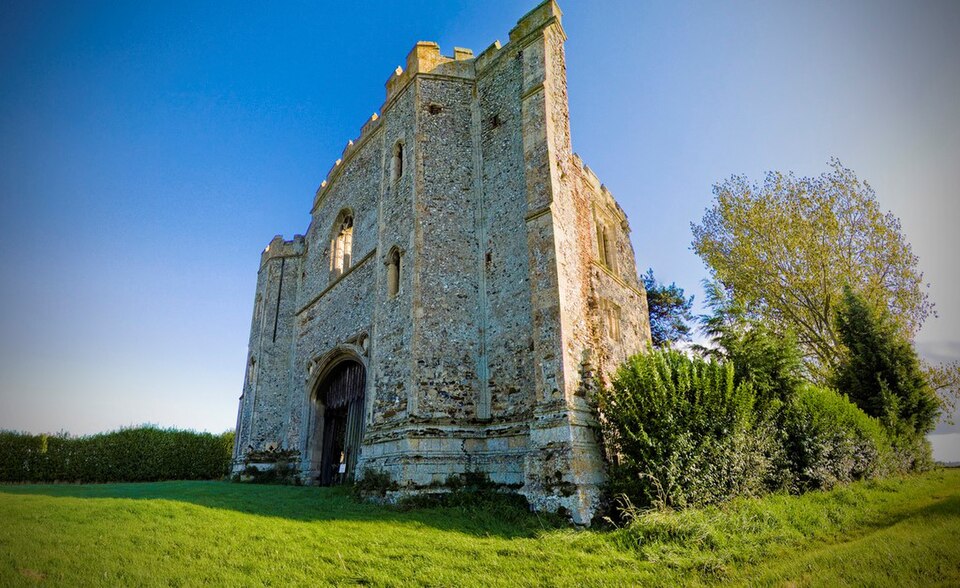
Gothic
Flint-Built Gatehouse
Robert De Vaux, Walter Hart, Prior Codde, Thomas Manners, 1st Earl of Rutland, Robert I De Vaux of Pentney, Robert Ii De Vaux of Pentney, Maud De Vaux, Petronilla De Nerford
Founding of the Priory, Union With Wormegay Priory, Dissolution of the Monasteries
About Pentney Priory
Pentney Priory was an Augustinian monastic institution situated in Pentney, within the modern district of King's Lynn and West Norfolk, Norfolk, England. Its establishment dates to approximately 1130, initiated by Robert de Vaux and consecrated to the Holy Trinity, the Blessed Virgin Mary, and Mary Magdalene. The priory played a role in monastic administration, notably in 1468 when it was united with Wormegay Priory, with Wormegay subsequently functioning as a cell of Pentney. The priory's existence concluded in 1537 with its dissolution under King Henry VIII, a significant event in English history.
History and Dissolution
The priory's dissolution saw its prior, Codde, receive a pension and appointment as warden of a Norwich hospital. The property then passed into secular hands, granted to Thomas Manners, 1st Earl of Rutland, in 1538/9. Over time, the site became integrated into Abbey Farm, with stone sourced from the priory's former structures being repurposed for the farm and other buildings in the village of Pentney. In recent times, the priory's remnants, particularly its flint-built gatehouse, have undergone renovation and emergency repairs, highlighting its enduring presence and historical significance.
Surviving Structures and Site
Today, Pentney Priory is primarily recognized for its ruins, most notably the flint-built gatehouse, which stands as a Grade I listed structure, signifying its exceptional architectural and historical importance. The site has seen efforts toward preservation and adaptation, with parts of the former monastic property, including the gatehouse, being incorporated into private residences or farm structures. The survival of these elements provides a tangible link to the priory's past and its role within the Norfolk landscape.
Source: Wikipedia ↗
Frequently Asked Questions
When was Pentney Priory founded?
Pentney Priory was founded around the year 1130. The founding was attributed to Robert de Vaux.
What religious order was Pentney Priory part of?
Pentney Priory was an Augustinian priory. This means it followed the Augustinian rule.
When was Pentney Priory dissolved?
The priory was dissolved in 1537. This occurred as part of King Henry VIII's Dissolution of the Monasteries.
What remains of Pentney Priory today?
The primary surviving ruin of Pentney Priory is its flint-built gatehouse. This structure is Grade I listed, indicating its significant architectural and historical value.
Who is buried at Pentney Priory?
Historical records indicate several burials at Pentney Priory. These include Robert I de Vaux of Pentney, Robert II de Vaux of Pentney, Maud de Vaux, and Petronilla de Nerford.
What happened to the property after the dissolution?
Following its dissolution, the property was granted to Thomas Manners, 1st Earl of Rutland. It was eventually incorporated into Abbey Farm, which now occupies the site.
Related Monasteries
Aldgate Priory
Holy Trinity Priory, also known as Christchurch Aldgate, was an Augustinian priory founded around 1108 by Queen Matilda of Scotland near Aldgate in London. It held significant ties to English royalty, with several queens maintaining a close relationship with the priory and some royal children buried there. The priory was a center of learning in the 12th century and played a role in civic life, with its prior serving as an Alderman of London. It was dissolved in 1532 and its buildings have since been largely lost, with only remnants surviving.

Ankerwycke Priory
Ankerwycke Priory was a small and relatively poor Benedictine nunnery established around 1160 in Buckinghamshire, England. Dedicated to St. Mary Magdalene, it held lands across several counties. Dissolved in 1536, its revenues were transferred to Bisham Abbey, and the priory site later saw the construction of a manor house. Today, only a small section of ruins remains, situated in Berkshire.

Arthington Priory
Arthington Priory was an English monastery for nuns of the Cluniac congregation, located in Arthington, West Yorkshire, and founded in the mid-12th century. It was one of only two Cluniac nunneries in England. The priory experienced periods of disciplinary issues among its nuns and prioresses, as documented by Archbishop William Greenfield's visits and injunctions. Following the Dissolution of the Monasteries under Henry VIII, the priory was surrendered in 1540, and its lands were eventually granted to Archbishop Thomas Cranmer. Today, little remains of the original priory structures, with a residence known as Arthington Hall built on the site around 1585, and the priory church potentially occupied by a farmhouse named The Nunnery.