
Obazine Abbey
Christian·France·Partially intact (church is parish church)·12th century
Obazine Abbey, also known as Aubazine Abbey, was a significant Cistercian monastery founded around 1134 by Saint Stephen of Obazine. It played a key role in monastic life in the Limousin and Quercy regions, establishing several affiliated farms that supported pilgrims and local communities. The abbey was suppressed and its property confiscated during the French Revolution.
Key Facts
- ›Founded around 1134 by Saint Stephen of Obazine.
- ›Affiliated with the Cistercian Order in 1147.
- ›Established farms that supplied pilgrims and monks in the Quercy region.
- ›Notable abbots included François D'Escobleau and Charles de la Roche-Aymon.
- ›Suppressed and confiscated during the French Revolution in 1791.
- ›The abbey church survived and now serves as the parish church of Aubazines.
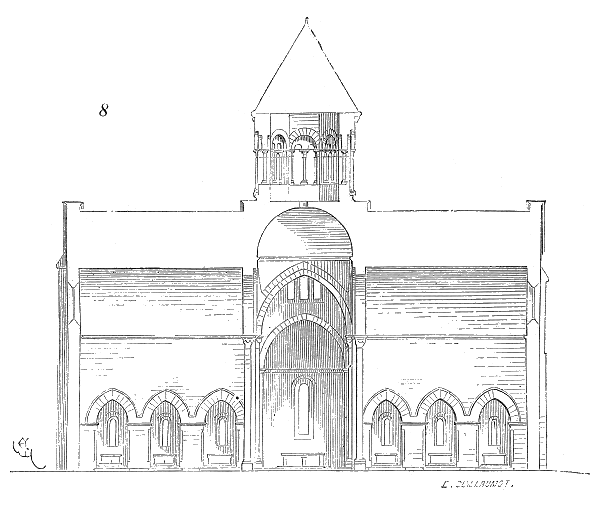
Abbey Church
Aubazine Abbey
Saint Stephen of Obazine, Pierre, Eustorge, FrançOis D'Escobleau, Charles De La Roche-Aymon
- Founded C. 1134
- Affiliated With CîTeaux In 1147
- Suppressed and Property Confiscated During the French Revolution In 1791
About Obazine Abbey
Obazine Abbey, also known by the Latinized name Aubazine Abbey, was a prominent Cistercian monastery located in the present-day town of Aubazines, within the département of Corrèze in the Limousin region of France. Its establishment marked a significant point in the monastic history of the area.
History and Foundations
The monastery's origins trace back to approximately 1134, when Saint Stephen of Obazine, alongside another priest named Pierre, embarked on an eremitical life. Their spiritual endeavors attracted a number of followers, and with the endorsement of Eustorge, the Bishop of Tulle, they were granted land by Viscount Archambault to build a monastery. Initially, before 1142, the community did not adhere to a strict rule, but in that year, Saint Stephen was formally invested with the regular habit. He sought guidance from Cistercian monks to train his followers, and by 1147, Obazine Abbey was officially affiliated with the powerful Abbey of Cîteaux.
As the community grew, Obazine Abbey became a mother house for several new foundations. Notably, before its Cistercian affiliation, it housed a feminine monastery at Coyroux, characterized by a high degree of enclosure. This arrangement, while not common within Cîteaux, contributed to Obazine's reputation. The abbey's influence extended to the Quercy region through various farm establishments, including those near the renowned pilgrimage site of Rocamadour. These Cistercian farms were vital in supplying wood and food to pilgrims and monks in the area. However, many of these establishments struggled to survive beyond the Hundred Years' War, with some transforming into small fortified structures, while others vanished entirely.
Notable Figures and Dissolution
Throughout its history, Obazine Abbey was led by several distinguished abbots. Among them were François d'Escobleau, who later became Archbishop of Bordeaux and died in 1628, and Charles de la Roche-Aymon, who served as Cardinal Archbishop of Reims and passed away in 1777. The abbey's existence as a monastic institution came to an abrupt end during the French Revolution. In 1791, the government suppressed the abbey, confiscating its properties. In a striking turn of events, the confiscated abbey buildings were subsequently repurposed as a bordello for the remainder of the decade.
Legacy
Despite the dissolution and subsequent repurposing, the abbey church itself endured the revolutionary period. Following necessary restoration efforts, it continues to serve the local community as the parish church of Aubazines, standing as a tangible remnant of the abbey's historical presence.
Source: Wikipedia ↗
Frequently Asked Questions
When was Obazine Abbey founded?
Obazine Abbey was founded around 1134 by Saint Stephen of Obazine. He began a life of prayer with another priest, Pierre, and they attracted followers to establish the monastery.
What religious order was Obazine Abbey a part of?
Obazine Abbey was a Cistercian monastery. It was formally affiliated with the Abbey of Cîteaux in 1147, adopting their mode of life.
What happened to Obazine Abbey during the French Revolution?
During the French Revolution, the abbey was suppressed and its property confiscated by the government in 1791. For the remainder of the decade, the government converted the abbey into a bordello.
Does any part of Obazine Abbey still exist today?
Yes, the structure of the abbey church survived the Revolution. After restoration, it now serves as the parish church for the town of Aubazines.
What was the significance of Obazine Abbey's farms?
Obazine Abbey established several farms in the Limousin and Quercy regions. These farms were strategically located to provide wood and food to pilgrims, particularly those visiting Rocamadour, and to the monks of Obazine itself.
Related Monasteries

Abbey of Loc-Dieu
Abbey of Loc-Dieu is a Cistercian abbey situated in Aveyron, France, founded in 1123 on a site historically known as "devil's place" before being renamed "place of God" by its monastic inhabitants. Despite facing destruction and rebuilding, it became a significant Gothic architectural site and, during World War II, served as a safe haven for artworks from the Louvre, including the Mona Lisa. Today, the abbey and its park are open to the public.

Cadouin Abbey
Cadouin Abbey was a Cistercian monastery founded in 1115 as a hermitage. It rose to prominence as a major pilgrimage site due to its possession of a relic believed to be the Sudarium of Christ, attracting significant prestige and wealth. The abbey was dissolved during the French Revolution in 1791, with its assets looted and library destroyed, though its church still remains.

Flaran Abbey
Flaran Abbey, a former Cistercian monastery located near Valence-sur-Baïse in Gers, France, was founded in 1151 as a daughter house of Escaladieu Abbey. It flourished in the Middle Ages, even co-founding the town of Valence-sur-Baïse, but suffered damage during historical conflicts and was suppressed during the French Revolution. Today, after extensive restoration, it stands as one of the best-preserved abbeys in southwestern France and hosts cultural activities and an exhibition on the Way of St. James.