
Novospassky Monastery
Novospassky Monastery is a historic fortified monastery in Moscow, originally established in the early 14th century. It served as a significant burial site for prominent Russian families, including the Romanovs, and was rebuilt by Tsar Michael of Russia in the 1640s. After periods of secular use, including as a prison, it was returned to the Russian Orthodox Church in 1991.
Key Facts
- ›Traces its origins to Moscow's first monastery in the early 14th century.
- ›Served as the burial vault for the Sheremetev and Romanov boyar families.
- ›Rebuilt in the 1640s by Tsar Michael of Russia, with most current buildings dating from that period.
- ›Withstood attacks by Crimean Tatars in 1571 and 1591.
- ›Converted into a prison and police drunk tank during the Soviet era.
- ›Returned to the Russian Orthodox Church in 1991.

Muscovite
- Cathedral of the Transfiguration With 17th-Century Frescoes
- Intercession Church With Refectory
- 18th-Century Bell-Tower
- Sheremetev Sepulcher
- House of Patriarch Filaret
- House of Loaf-Giving
New Monastery of the Savior, Novospasskiy Monastyr'
Andrei Kobyla, Xenia Shestova, Princess Tarakanova, Grand Duke Sergei Alexandrovich of Russia, Michael of Russia, Patriarch Filaret
- Relocation and Renaming In 1491
- Attacks By Crimean Tatars In 1571 and 1591
- Rebuilding By Tsar Michael of Russia In the 1640s
- Conversion Into A Prison During the Soviet Era
- Return To the Russian Orthodox Church In 1991
About Novospassky Monastery
Novospassky Monastery, meaning the "New Monastery of the Savior," is a historic and fortified monastic complex situated in Moscow, Russia. Its origins trace back to the early 14th century, making it one of the city's oldest religious sites. The monastery's significance is deeply intertwined with Russian history, serving as a prominent burial place for influential families, most notably the Sheremetev and Romanov boyars. Its current architectural form largely dates from the ambitious rebuilding undertaken in the 1640s by Tsar Michael of Russia, who sought to enhance his family's ancestral shrine.
History and Significance
The monastery's initial establishment predates its current location; its roots lie with Moscow's first monastery founded in the early 14th century. In 1491, the abbey was relocated to its present site on the left bank of the Moskva River and renamed the "New Abbey of the Savior" to distinguish it from an older church within the Kremlin. This strategic position, along with its fortified nature, allowed it to withstand significant historical challenges, including repeated attacks by Crimean Tatars in 1571 and 1591.
The monastery's role as a family necropolis for powerful aristocratic families like the Sheremetevs and the Romanovs cemented its importance. Among the notable figures interred here are Xenia Shestova, the mother of the first Romanov Tsar, and Grand Duke Sergei Alexandrovich of Russia. The ascension of the Romanov dynasty to the throne led to a comprehensive reconstruction of their family shrine by Tsar Michael of Russia in the 1640s.
Architectural Evolution and Later History
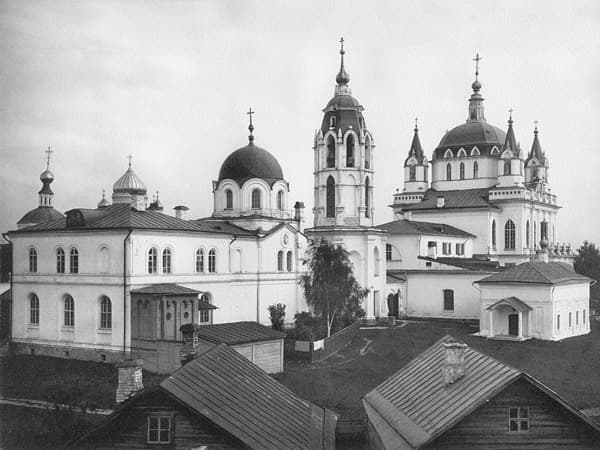
The rebuilding in the 1640s established most of the structures that define the monastery today. Key edifices from this period include the grand Cathedral of the Transfiguration, adorned with frescoes by leading Muscovite artists of the 17th century, and the Intercession Church, which incorporates a refectory. The impressive 18th-century bell-tower, one of Moscow's tallest, also dates from this era of reconstruction and expansion. Other important buildings include the Church of the Sign and the infirmary Church of St. Nicholas the Miracle Worker.
During the tumultuous Soviet period, Novospassky Monastery experienced a profound transformation. It was secularized and repurposed, serving successively as a prison and a police drunk tank. By the 1970s, it was allocated to an art restoration institute. A significant turning point occurred in 1991 when the monastery was finally returned to the Russian Orthodox Church, initiating a new chapter in its long and complex history, with ongoing restoration and spiritual life.
Source: Wikipedia ↗
Frequently Asked Questions
What is the history of Novospassky Monastery?
Novospassky Monastery's history dates back to Moscow's first monastery in the early 14th century. It was relocated and renamed in 1491, and later rebuilt by Tsar Michael of Russia in the 1640s. It served as a prominent family burial site before its secularization during the Soviet era and subsequent return to the Russian Orthodox Church in 1991.
Who is buried at Novospassky Monastery?
The monastery served as the burial vault for the Sheremetev and Romanov boyar families. Notable burials include Xenia Shestova (mother of the first Romanov Tsar), Princess Tarakanova, and Grand Duke Sergei Alexandrovich of Russia.
What happened to Novospassky Monastery during the Soviet era?
During the Soviet years, Novospassky Monastery was repurposed for secular use. It was first converted into a prison and later used as a police drunk tank. In the 1970s, it was assigned to an art restoration institute.
When was Novospassky Monastery returned to the Russian Orthodox Church?
Novospassky Monastery was returned to the Russian Orthodox Church in 1991, following its period of secular use during the Soviet era.
What are the main architectural features of Novospassky Monastery?
The monastery features the Cathedral of the Transfiguration (1645-49) with 17th-century frescoes, the Intercession Church (1673-1675) with a refectory, and the Church of the Sign (1791-1795). A large 18th-century bell-tower is also a prominent feature.
Related Monasteries

New Jerusalem Monastery
The New Jerusalem Monastery, also known as the Resurrection Monastery, is a significant Russian Orthodox monastery founded in 1656 by Patriarch Nikon. It was conceived as a representation of the Holy Land, with the Istra River symbolizing the Jordan and its buildings mirroring sacred sites in Jerusalem. Despite periods of closure and damage, the monastery has undergone extensive restoration and is now an active religious community and a popular destination for visitors.
Conception Convent
The Conception Convent, also known as the Zachatyevsky Monastery, is a Russian Orthodox convent located on the Moskva River in Moscow. Originally believed to occupy the site of the oldest nunnery in Moscow, it was reestablished in 1995 after being closed by the Bolsheviks in 1918 and undergoing significant damage and repurposing during the Soviet era. Its reconstruction has seen the rebuilding of its katholikon in a Russian Revival style.

Ipatiev Monastery
The Ipatiev Monastery, also known as the Hypatian Monastery, is a male monastery located on the bank of the Kostroma River in Russia. Founded around 1330, it is dedicated to St. Hypatios of Gangra and has played a significant role in Russian history, particularly during the Time of Troubles and the early Romanov dynasty. The monastery is a notable center of learning and has been the site of important historical discoveries and events.