
New Romney Priory
Cistercian·England·Ruins/Preserved Structures·13th century
New Romney Priory, also known as the Priory of St John the Baptist, was a 13th-century monastic grange located in New Romney, Kent, England. Initially established as a cell of Pontigny Abbey in France, its possessions were later confiscated by the Crown and subsequently granted to All Souls College, Oxford. Today, remnants of the priory, including an 18th-century house and a medieval building, are preserved as listed structures and a scheduled monument.
Key Facts
- ›Founded in the 13th century as a monastic grange.
- ›Originally a cell of Pontigny Abbey in France.
- ›Possessions were confiscated by the King during wars with France.
- ›Granted to all Souls College, Oxford in 1439.
- ›Surviving structures include an 18th-century priory house and a medieval building.
- ›Remains are recognized as Grade II* listed and a scheduled monument.
Medieval, 18th-Century
- Grade Ii* Listed Buildings
- Scheduled Monument
- Medieval Stone Rubble Building With Pointed Doorways and Windows
- 18th-Century Priory House
Priory of St John the Baptist
Boniface, Archbishop of Canterbury, Henry Vi
- Grant of Advowson of the Church of St Nicholas In New Romney To Pontigny Abbey
- Confiscation of Possessions During Wars With France
- Grant To All Souls College, Oxford
About New Romney Priory
New Romney Priory, also identified as the Priory of St John the Baptist, was a monastic establishment in the town of New Romney, Kent, England. Its origins date to the 13th century, functioning primarily as a monastic grange. The priory's history is intertwined with its parent institution, Pontigny Abbey in France, to which it was made a cell through a grant by Boniface, Archbishop of Canterbury, in 1264. This affiliation meant that Romney's ecclesiastical possessions were linked to the French abbey.
Historical Context and Changes
During the 14th and 15th centuries, periods of conflict between England and France led to significant disruption for monastic institutions with foreign ties. The possessions belonging to Pontigny Abbey, including those at New Romney, were placed under the King's custody and were ultimately confiscated around 1414. This marked a turning point in the priory's history. Subsequently, in 1439, King Henry VI granted the priory and its holdings to All Souls College, Oxford, integrating it into the English academic and ecclesiastical landscape.
Surviving Structures
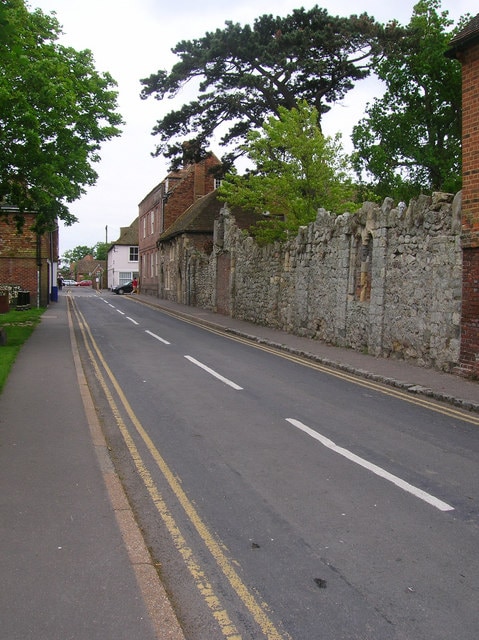
While New Romney Priory is no longer an active monastic site, remnants of its past are preserved. St John's Priory House, an 18th-century building situated at the corner of High Street and Ashford Road, along with a smaller two-storey medieval building next to it on Ashford Road, are notable surviving structures. These are recognized for their historical and architectural significance, being designated as Grade II* listed buildings. An adjoining wall along the road is also part of this listing. Further remains of the priory, including walls and archways constructed from brick and medieval stone, are located in a garden west of the wall and have been identified as a scheduled monument, indicating their importance as a site of national heritage.
Source: Wikipedia ↗
Frequently Asked Questions
When was New Romney Priory founded?
New Romney Priory was established in the 13th century. The specific year is not precisely documented, but its connection to Pontigny Abbey dates back to a grant in 1264.
What was the religious tradition of New Romney Priory?
The priory was associated with Pontigny Abbey in France, which was part of the Cistercian order. Therefore, it followed the Cistercian tradition.
What remains of New Romney Priory today?
Surviving structures include St John's Priory House, an 18th-century building, and a small two-storey medieval building adjacent to it, both of which are Grade II* listed. Further remains, including walls and archways, are preserved west of the wall and below ground.
Who currently owns or manages New Romney Priory?
In 1439, Henry VI granted the priory to All Souls College, Oxford. While the exact current management of the surviving structures is not detailed, the college's historical connection is significant.
Is New Romney Priory open to the public?
The article mentions that St John's Priory House and an adjoining medieval building are Grade II* listed structures. While visitor access details are not specified, listed buildings are often preserved and potentially accessible in some capacity.
Related Monasteries

Frankenhausen Abbey
Frankenhausen Abbey was a Cistercian nunnery that existed from the 13th to the 16th centuries. Initially established in Grünberg, it relocated to Frankenhausen in 1292. The abbey was rebuilt after a fire in 1410 and subsequently dissolved during the Protestant Reformation, with its final nuns departing in 1543. Today, remaining structures are preserved and restored as historical monuments.

Grandpré Abbey
Grandpré Abbey was a former Cistercian monastery founded in 1231 in Belgium. It was a small and relatively unsuccessful community throughout its history, never exceeding twenty monks and failing to establish any daughter houses. While most of its structures were demolished after its suppression in 1796, key elements like the gatehouse, farm buildings, and mill have been preserved and are privately maintained, with some parts accessible to the public.

Grünhain Abbey
Grünhain Abbey was a Cistercian monastery located in the Saxon Ore Mountains, founded in 1230 and dissolved in 1536. Today, only its ruins remain, serving as a historical site. The abbey played a role in the region during its operational period.