
Naupara Monastery
Naupara Monastery is a Serbian Orthodox monastery located south of Kruševac, Serbia. Originally completed in 1391, it suffered severe destruction in 1454 and was later restored in 1835 by the Simić brothers. The monastery is built in the Morava school architectural style and currently functions as an active nunnery with a small community of nuns.
Key Facts
- ›Original construction completed in 1391.
- ›Severely destroyed by Ottoman Turks in 1454.
- ›Restored in 1835 by brothers Stojan and Aleksa Simić.
- ›Built in the Serbian architectural style of the Morava school.
- ›Features 19th-century paintings and iconostasis due to original frescos being lost.
- ›Currently an active nunnery with a small community of nuns.

Morava School
19th-Century Paintings, 19th-Century Iconostasis
Stojan Simić, Aleksa Simić
Original Building Completed, Severely Destroyed By Turks, Restored By Simić Brothers
About Naupara Monastery
Naupara Monastery is a significant Serbian Orthodox Christian monastery situated approximately 12 kilometers south of the city of Kruševac, in central Serbia. Its history is marked by periods of construction, destruction, and restoration, reflecting the turbulent past of the region.
History and Architecture
The original construction of Naupara Monastery was completed in 1391. This early period saw the establishment of a significant religious center. However, its existence was dramatically interrupted when the monastery was severely destroyed by Ottoman Turks in 1454. For centuries, the site remained in ruins until a substantial restoration effort was undertaken in 1835. This undertaking was championed by brothers Stojan Simić and Aleksa Simić, who not only led the rebuilding but also contributed essential religious items such as a bell and sacred books upon its completion.
Architecturally, Naupara Monastery is a notable example of the Serbian Morava school style. This distinct style, prevalent during the late medieval period, emphasizes specific decorative and structural elements. The monastery was constructed in the same architectural tradition as the well-known Lazarica Church, highlighting its regional significance.
Present Day
Following the 19th-century restoration, the monastery's interior was redecorated. The original frescoes were lost during the period of destruction and subsequent rebuilding, meaning the paintings and iconostasis visible today date from the 19th century. Currently, Naupara Monastery is an active nunnery, housing a small community of nuns who are dedicated to tending the monastery's land and maintaining its spiritual life.
Source: Wikipedia ↗
Frequently Asked Questions
When was Naupara Monastery originally built?
The original building of Naupara Monastery was completed in 1391. This marked the initial construction phase of the religious site.
What happened to Naupara Monastery after its initial construction?
The monastery was severely destroyed by Ottoman Turks in 1454. This event caused significant damage to the original structure.
When was Naupara Monastery restored?
Naupara Monastery was not restored until 1835. The restoration project was undertaken by brothers Stojan Simić and Aleksa Simić.
What is the architectural style of Naupara Monastery?
Naupara Monastery is built in the Serbian architectural style of the Morava school. It was constructed in a similar style to the Lazarica Church.
What is the current status of Naupara Monastery?
Today, Naupara Monastery functions as an active nunnery. A small number of nuns reside there and tend to the monastery's land.
Are the original frescoes still visible at Naupara Monastery?
No, the original frescoes were ruined during the monastery's restoration. The paintings and iconostasis within the monastery now date to the 19th century.
Related Monasteries

Visoki Dečani Monastery
The Visoki Dečani Monastery is a significant medieval Serbian Orthodox Christian monastery located in Kosovo, founded in the first half of the 14th century by King Stefan Dečanski. It is renowned as the largest medieval church in the Balkans, showcasing a unique architectural blend of Orthodox traditions with Romanesque influences, and featuring the largest preserved collection of Byzantine painting. For centuries, it has been a vital center for preserving Serbian spiritual, cultural, and national identity.
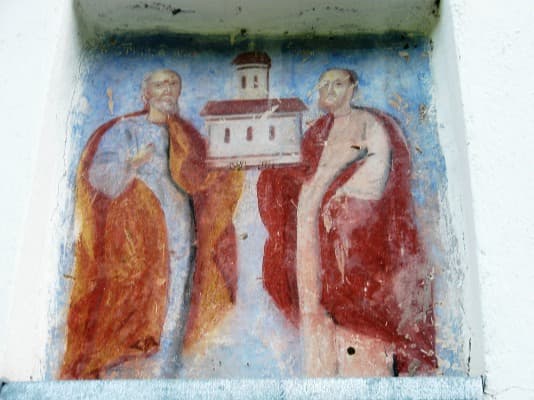
Church of Sts. Peter and Paul
The Church of Sts. Peter and Paul, also known as the Cave Church, is a Serbian Orthodox cave-church situated on Mount Kopaonik in southern Serbia. Constructed in the 14th century by King Milutin, it is dedicated to Saints Peter and Paul and forms part of the Monastery of St. Archangel Gabriel.

Ježevica Monastery
Ježevica Monastery is a Serbian Orthodox monastery situated near the village of Ježevica, south of Čačak, Serbia, dedicated to St. Nicholas. While tradition attributes its founding to King Stefan Milutin, historical records suggest a nobleman in service to King Stefan Dušan founded it in 1337. The monastery's interior was adorned with paintings in the early 17th century, and a Baroque bell tower was added in the 19th century, making it a significant cultural heritage site.