
Muresley Priory
Muresley Priory, also known as St. Margaret's Convent, was a Benedictine monastery founded in 1160 near Great Gaddesden, Hertfordshire. Despite its royal connections and land grants, it was consistently known for its poverty and was dissolved by Henry VIII in the 1530s. The priory's buildings were later converted into a manor house but were largely demolished by the mid-19th century, though some local place names still commemorate its existence.
Key Facts
- ›Founded in 1160 by Henry de Blois, Bishop of Winchester.
- ›Also known by several other names including the Priory of Ivinghoe and St. Margaret's, in the Wood.
- ›Dissolved in the 1530s during the reign of King Henry VIII.
- ›Known for its persistent poverty throughout its history.
- ›The priory buildings survived as a manor house until at least 1802.
- ›Several local place names, such as St Margaret's Lane, still exist.
Gothic
Totternhoe Stone Buildings, Mullioned Windows, Square Mouldings, Trefoil-Headed Stained Glass Windows
St. Margaret's Convent, the Priory of Ivinghoe, St. Margaret's, In the Wood, Muresley Priory
Henry De Blois, Thomas Becket, Isoda, Margaret Hardwick, Sir John Dauncey, Earls of Bridgewater, Lord Brownlow
Dissolution of the Monasteries, First Act of Suppression
About Muresley Priory
Muresley Priory, also known as St. Margaret's Convent, was a Benedictine monastery located near Great Gaddesden in Hertfordshire, England. Founded in 1160 by Henry de Blois, Bishop of Winchester, with some accounts suggesting an earlier origin by Thomas Becket, the priory was part of the Benedictine order and dedicated to Saint Margaret. Despite receiving land grants, including from King Edward I in 1280, the convent was consistently characterized by its poverty throughout its history.
The priory met its end during the tumultuous period of King Henry VIII's dissolution of the monasteries in the 1530s. By the time of its closure under the first Act of Suppression in 1535, it housed five nuns and had an annual income of just over £18. The priory was sold in 1538 to Sir John Dauncey, along with the Manor of Muresley.
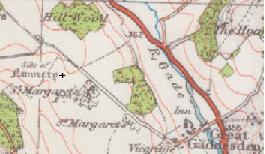
The buildings themselves, described as constructed from Totternhoe stone with distinctive mullioned and stained glass windows, survived for centuries, being converted into a manor house. However, by 1862, the structure had been almost completely demolished. Remnants of the priory's presence persist in the local landscape, with place names such as St Margaret's Lane and Farm, and the district known as St Margaret's, still in use. The site's proximity to the modern Amaravati Buddhist Monastery is also notable.
Source: Wikipedia ↗
Frequently Asked Questions
When was Muresley Priory founded?
Muresley Priory was founded in 1160. Some historical accounts suggest an even earlier foundation by Thomas Becket before 1129, indicating it predated nearby Ashridge Priory.
What religious order was Muresley Priory part of?
Muresley Priory belonged to the Benedictine order. It was known as St. Margaret's Convent.
What happened to Muresley Priory?
The priory was abolished as a consequence of King Henry VIII's dissolution of the monasteries in the 1530s. It was sold in 1538 and its buildings were later converted into a manor house, which was mostly demolished by 1862.
Is Muresley Priory still standing today?
The original monastic buildings are no longer standing in their entirety. While the structure survived as a manor house until at least 1802, it had been almost completely demolished by 1862. However, several place names in the vicinity still commemorate the priory.
Who founded Muresley Priory?
The priory was founded by Henry de Blois, the Bishop of Winchester. There are some accounts that suggest an earlier foundation by Thomas Becket before 1129.
Related Monasteries
Aldgate Priory
Holy Trinity Priory, also known as Christchurch Aldgate, was an Augustinian priory founded around 1108 by Queen Matilda of Scotland near Aldgate in London. It held significant ties to English royalty, with several queens maintaining a close relationship with the priory and some royal children buried there. The priory was a center of learning in the 12th century and played a role in civic life, with its prior serving as an Alderman of London. It was dissolved in 1532 and its buildings have since been largely lost, with only remnants surviving.

Ankerwycke Priory
Ankerwycke Priory was a small and relatively poor Benedictine nunnery established around 1160 in Buckinghamshire, England. Dedicated to St. Mary Magdalene, it held lands across several counties. Dissolved in 1536, its revenues were transferred to Bisham Abbey, and the priory site later saw the construction of a manor house. Today, only a small section of ruins remains, situated in Berkshire.

Arthington Priory
Arthington Priory was an English monastery for nuns of the Cluniac congregation, located in Arthington, West Yorkshire, and founded in the mid-12th century. It was one of only two Cluniac nunneries in England. The priory experienced periods of disciplinary issues among its nuns and prioresses, as documented by Archbishop William Greenfield's visits and injunctions. Following the Dissolution of the Monasteries under Henry VIII, the priory was surrendered in 1540, and its lands were eventually granted to Archbishop Thomas Cranmer. Today, little remains of the original priory structures, with a residence known as Arthington Hall built on the site around 1585, and the priory church potentially occupied by a farmhouse named The Nunnery.