
Morlanwelz
Morlanwelz is a municipality located in the province of Hainaut, Belgium, with a total area of 20.26 km² and a population density of 918 inhabitants per km². It is composed of the districts of Carnières, Mont-Sainte-Aldegonde, and Morlanwelz-Mariemont. The municipality is known for its association with notable figures in Belgian politics and industry, including Elio Di Rupo and the Warocqué family.
Key Facts
- ›Located in the province of Hainaut, Belgium.
- ›Total area of 20.26 km².
- ›Population density of 918 inhabitants per km² as of January 1, 2006.
- ›Comprises the districts of Carnières, Mont-Sainte-Aldegonde, and Morlanwelz-Mariemont.
- ›Home to notable figures such as Elio DI Rupo and industrialists Arthur and Raoul Warocqué.

MuséE Royal De Mariemont
Marlanwé
Elio Di Rupo, Arthur Warocqué, Raoul Warocqué, Marino Stephano
Morlanwelz Train Collision and Runaway
About Morlanwelz
Morlanwelz is a municipality situated in the province of Hainaut, within the Wallonia region of Belgium. As of January 1, 2006, it reported a total population of 18,595 inhabitants, spread across an area of 20.26 square kilometers, resulting in a population density of 918 inhabitants per square kilometer. The municipality's administrative structure includes the districts of Carnières, Mont-Sainte-Aldegonde, and Morlanwelz-Mariemont.
Notable Associations
Morlanwelz has been the birthplace or residence of several prominent individuals. Elio Di Rupo, a significant figure in Belgian politics who served as a former Minister, Walloon President, and Member of the European Parliament, was born in Morlanwelz in 1951. The municipality also has connections to the industrialist Warocqué family. Arthur Warocqué (1835–1880) was an industrialist and a key figure in promoting Belgian horticulture, after whom the arum Anthurium warocqueanum was named. His son, Raoul Warocqué (1870–1917), was also a Belgian industrialist and served as the Mayor of Morlanwelz from 1900 to 1917. The Belgian Trance music producer and DJ, Marino Stephano (1974–1999), also resided in Morlanwelz.
Geographical and Administrative Details
The postcode for Morlanwelz is 7140. The municipality is part of a network of sister cities, including Villarosa in Italy, Le Quesnoy in France, Pleszew in Poland, and Blaj in Romania. While not a monastic site itself, the municipality is geographically associated with the Musée royal de Mariemont, which is a notable cultural institution in the region. The region has also experienced significant events, such as the Morlanwelz train collision and runaway.
Source: Wikipedia ↗
Frequently Asked Questions
What is the population of Morlanwelz?
As of January 1, 2006, Morlanwelz had a total population of 18,595 inhabitants. The municipality has a population density of 918 inhabitants per km².
What is the area of Morlanwelz?
Morlanwelz covers a total area of 20.26 square kilometers. This geographical size contributes to its population density.
Which districts make up the municipality of Morlanwelz?
The municipality of Morlanwelz is comprised of three districts: Carnières, Mont-Sainte-Aldegonde, and Morlanwelz-Mariemont. These districts together form the administrative area.
Are there any notable people associated with Morlanwelz?
Yes, Morlanwelz is associated with several notable individuals. Elio Di Rupo, a former Minister and Walloon President, was born there. The industrialist family Warocqué, including Arthur and Raoul Warocqué, also resided in and had significant ties to Morlanwelz.
Related Monasteries

Amay
Amay is a municipality in the province of Liège, Belgium, situated on the Meuse River. Its origins trace back to a Gallo-Roman vicus, and it later developed around a medieval ford. The area is known for its historical sites, including the 16th-century Castle of Jehay-Bodegnée, and has been home to notable figures like mathematician François Walther de Sluze and inventor Zénobe Gramme.
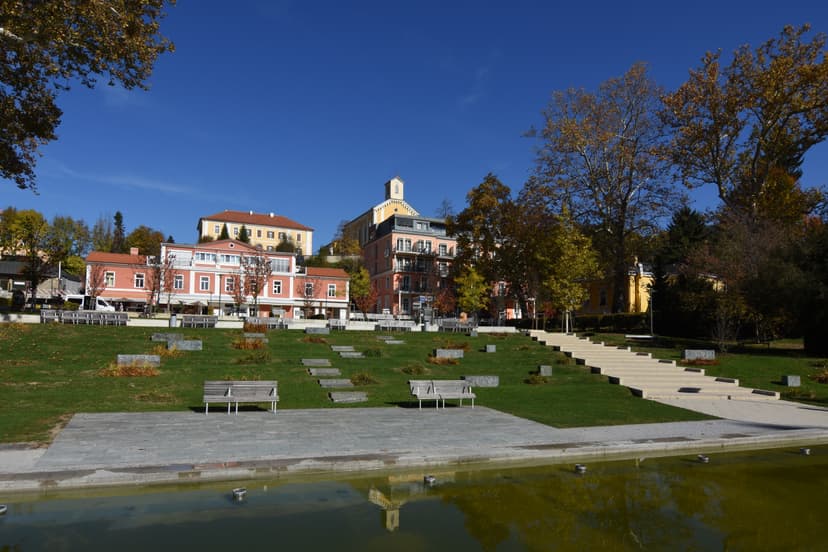
Bad Gleichenberg
Bad Gleichenberg is a municipality located in the Südoststeiermark district of the Austrian state of Styria. Its primary significance lies in its administrative and geographical context within the region. The municipality is noted for its location in the southeast of Styria.

Busca
Busca is a municipality located in the Province of Cuneo, within the Piedmont region of Italy. It is situated southwest of Turin and northwest of Cuneo. A notable historical event for Busca was a cholera outbreak in the summer of 1884, and more recently, it merged with the neighboring comune of Valmala in 2019 following a referendum. The town is also recognized as the home of Castle Roccolo.