
Monasterio de la Encarnación
The Real Monasterio de la Encarnación is a Recollet Augustinian convent in Madrid, Spain, founded by Queen Margaret of Austria in honor of her husband Philip III's expulsion of the Moriscos. Historically a place for women from noble families, it was built adjacent to the Royal Alcázar with a direct passageway for royalty. Today, it operates as a museum and is open to the public, housing a significant collection of religious art and relics.
Key Facts
- ›Founded by Queen Margaret of Austria, wife of Philip III of Spain.
- ›Established to commemorate the expulsion of the Moriscos.
- ›Designed and built by architect friar Alberto de la Madre de Dios between 1611 and 1616.
- ›The façade's style is reminiscent of Juan de Herrera.
- ›Houses notable artworks including pieces by Francisco Bayeu, Vincenzo Carducci, and Gregorio Fernández.
- ›Opened to the public in 1965.

Herreriano, Baroque
- Tubes With the Blood of St. Januarius and St. Pantaleon
- Frescoes In the Ceiling of the Main Chapel By Francisco Bayeu
- Annunciation Altarpiece By Vincenzo Carducci
- Sculptures of Augustine of Hippo and Saint Monica By Gregorio FernáNdez
- Tabernacle By Ventura RodríGuez
- Paintings and Sculptures By Luca Giordano, Juan Van Der Hamen, Pedro De Mena, José De Mora, and Gregorio FernáNdez
Royal Monastery of the Incarnation, Las Margaritas
Queen Margaret of Austria, Philip Iii of Spain, Mother Mariana De San José, Francisca De San Ambrosio, Catalina De La EncarnacióN, Isabel De La Cruz, Alberto De La Madre De Dios, Juan De Herrera, Charles Iv of Spain, Manuel Godoy, Joseph Bonaparte, Lorenzo RomáN Nielfa, Francisco Bayeu, Vincenzo Carducci, Augustine of Hippo, Saint Monica, Gregorio FernáNdez, Ventura RodríGuez, Isidro Carnicero, Luca Giordano, Juan Van Der Hamen, Pedro De Mena, José De Mora
- Founded By Queen Margaret of Austria.
- Inaugurated On July 2, 1616.
- Received Donations From the King and Queen.
- Had A Passageway For Direct Royal Access.
- Manuel Godoy Attended Daily Mass Here During the Reign of Charles Iv.
- A Cat Was Found Hanged On the Gate With A Warning During Joseph Bonaparte's Entry Into Madrid.
- Lorenzo RomáN Nielfa Was Professor of Music Here In the 19th Century.
- Opened To the Public In 1965.
About Monasterio de la Encarnación
Real Monasterio de la Encarnación
The Real Monasterio de la Encarnación, also known as the Royal Monastery of the Incarnation, is a significant convent located in Madrid, Spain. It belongs to the order of Recollet Augustines and was established to house women, predominantly from noble families. Its founding was an initiative of Queen Margaret of Austria, wife of King Philip III, intended to commemorate the expulsion of the Moriscos from Spain.
History and Construction
The impulse for the monastery's creation came from Queen Margaret, leading to the nuns sometimes being referred to as "las Margaritas." The queen enlisted Mother Mariana de San José, prioress of a discalced Augustinian convent in Valladolid, to lead the establishment, accompanied by other nuns. They were initially housed at the Convent of Santa Isabel while their new home was constructed. Generous donations from the king and queen, including precious jewels, supported the financing of the monastery. Architect and friar Alberto de la Madre de Dios designed and built the structure between 1611 and 1616. The monastery was strategically built adjacent to the Royal Alcázar, featuring a direct passageway for royal access. It was officially inaugurated on July 2, 1616, shortly after the queen's death.
Architectural and Artistic Significance
The façade of the Monasterio de la Encarnación presents a sober style that evokes the architectural principles of Juan de Herrera. The interior of the church underwent significant redecoration in the 18th century. The ceiling of the main chapel was adorned with frescoes by Francisco Bayeu, a prominent Spanish painter. The main altar features an Annunciation by Vincenzo Carducci, flanked by sculptures of Augustine of Hippo and his mother Saint Monica by the renowned sculptor Gregorio Fernández. The tabernacle was later completed by Ventura Rodríguez, and small statues of the Doctors of the Church and a bas-relief of the Savior were added by Isidro Carnicero.
The monastery's collection is further enriched by paintings and sculptures from various masters, including Luca Giordano, Juan van der Hamen, Pedro de Mena, José de Mora (represented by his Mater Dolorosa), and Gregorio Fernández again, with his striking depictions of the Dead Christ and Christ at the Column. The institution also holds relics, such as tubes containing the blood of St. Januarius and St. Pantaleon.
Later History and Public Access
During the reign of Charles IV, his prime minister, Manuel Godoy, was a regular attendee of daily mass at the monastery. The monastery also witnessed moments of political tension, as evidenced by a symbolic warning left during Joseph Bonaparte's entry into Madrid. In the 19th century, the composer Lorenzo Román Nielfa served as a professor of music at the convent. While belonging to an enclosed religious order, the Real Monasterio de la Encarnación was opened to the public in 1965 and is now administered by the Patrimonio Nacional, functioning in part as a museum.
Source: Wikipedia ↗
Frequently Asked Questions
Who founded the Monasterio de la Encarnación?
The monastery was founded by Queen Margaret of Austria, the wife of King Philip III of Spain. The founding was intended to celebrate her husband's expulsion of the Moriscos.
When was the Monasterio de la Encarnación built?
The monastery was designed and built by architect friar Alberto de la Madre de Dios between 1611 and 1616. It was inaugurated on July 2, 1616.
What is significant about the Monasterio de la Encarnación's art collection?
The monastery's church interior was redecorated in the 18th century with ceiling frescoes by Francisco Bayeu. It also contains an Annunciation altarpiece by Vincenzo Carducci and sculptures by Gregorio Fernández.
Is the Monasterio de la Encarnación open to the public?
Yes, although it belongs to an enclosed religious order, the building is open to the public under the administration of the Patrimonio Nacional. It was officially opened for public visits in 1965.
What architectural style is the Monasterio de la Encarnación?
The façade of the monastery exhibits a sobriety that recalls the style of Juan de Herrera. The interior features 18th-century redecorations, including Baroque elements.
Related Monasteries
Runcorn Priory
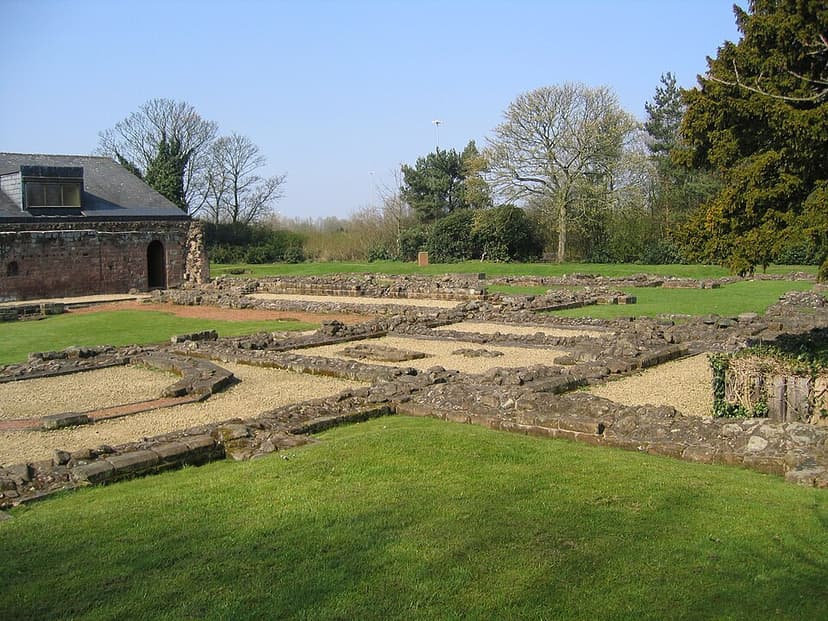
Norton Priory is a significant historical site in Norton, Runcorn, England, featuring the remains of an Augustinian priory founded in the 12th century and elevated to an abbey in 1391. Closed during the dissolution of the monasteries in 1536, its surviving structures were incorporated into later country houses. Extensive excavations have revealed important monastic artifacts, and the site now operates as a museum and visitor attraction, preserving its rich history for the public.

Santa María de las Cuevas Charterhouse
The Monastery of Santa María de las Cuevas, also known as the Cartuja, is a historic religious complex located on the Isla de La Cartuja in Seville, Spain. Originally a chapel and later a monastery founded in the 15th century, it gained prominence as a burial site for Christopher Columbus's remains and suffered during the Napoleonic invasion. Following its secularization, it was transformed into a highly successful ceramics factory and is now a national monument housing the Andalusian Contemporary Art Center (CAAC).
Pious Schools of San Jose de Calasanz
The Pious Schools, officially the Order of Poor Clerics Regular of the Mother of God of the Pious Schools, is a Catholic religious order founded in 1617 by Joseph Calasanz. It is recognized as the oldest religious order dedicated to education, with its primary mission being the free education of poor children. The Piarists' pedagogical approach served as a model for many subsequent Catholic teaching societies and influenced public school systems in Europe. The order has also achieved notable success in educating individuals with physical or mental disabilities.