
Lübbecke
Lübbecke is a town in northeastern North Rhine-Westphalia, Germany, with a history dating back to its first mention in 775 as hlidbeki. Situated on the northern slopes of the Wiehen Hills, it was granted town rights in 1279 and historically served as a county town. The region is characterized by its diverse landscape, including moors, fertile loess soils, and hills, and has a long tradition of resource extraction and industry, including textiles and tobacco.
Key Facts
- ›First mentioned in records in 775 as hlidbeki.
- ›Granted town rights in 1279 by Bishop Volquin of Schwalenberg.
- ›Located on the northern slopes of the Wiehen Hills in North Rhine-Westphalia.
- ›Has a history of textile and cigar industries, alongside modern engineering.
- ›The town is named after the creek 'Ronceva', meaning 'little beck'.

Wiehen Hills, GroßEs Torfmoor, LüBbecker LößLand, Mittelland Canal
Hlidbeki, LüBke
Widukind, Volquin of Schwalenberg, Franz Von Waldeck, August Blase
- Saxon Attack On A Frankish Camp
- Granted Town Rights
- Secularization of the Principality of Minden and Incorporation Into Brandenburg-Prussia
- Town Hall Burned Down and Rebuilt
- Razing of Medieval Fortifications
- Became Canton Capital In the Kingdom of Westphalia
- Reorganization Into the Prussian Province of Westphalia
- Merger of Districts Into Minden-LüBbecke
About Lübbecke
Lübbecke is a town situated in northeastern North Rhine-Westphalia, Germany, with a history that stretches back to its first documented mention in 775 as 'hlidbeki'. Located on the northern slopes of the Wiehen Hills, the town was granted its charter of rights in 1279 by Bishop Volquin of Schwalenberg, establishing it as a significant administrative center. Historically, Lübbecke was the county town and played a role in the early spread of Christianity under Charlemagne, potentially having a church dating back to the Saxon Angrivarii.
Geography and Landscape
The town's setting is diverse, lying on the North German Plain with its southern suburbs touching the Wiehen Hills. The landscape includes important natural areas such as the Großes Torfmoor and Oppenweher Moor, which together form the largest moorland in Westphalia. Fertile loess soils, known as the Lübbecker Lößland, are found at the foot of the hills and are conducive to agriculture, while the northern parts of the borough are more rural and flatter. The Mittelland Canal forms the northern boundary of the borough.
Historical Development and Industry
Lübbecke's history is marked by periods of change, including its integration into Brandenburg-Prussia in 1648 after the secularization of the Bishopric of Minden. The town experienced industrial development, particularly in the textile and cigar industries from the mid-19th century onwards, with notable figures like August Blase establishing large cigar factories. These industries, though now complemented by engineering and other sectors, remain part of Lübbecke's economic identity. The town's medieval fortifications were dismantled in the early 19th century, and its administrative status evolved through various regional and national reorganizations, most recently becoming part of the larger Minden-Lübbecke district in 1973.
Source: Wikipedia ↗
Frequently Asked Questions
When was Lübbecke first mentioned?
Lübbecke was first mentioned in historical records in the year 775. It was noted as 'hlidbeki' in Frankish imperial annals, marking a Saxon attack on a Frankish camp.
When did Lübbecke receive its town charter?
Lübbecke was granted its town charter in 1279. This significant event was enacted by the Bishop of Minden, Volquin of Schwalenberg.
What is the origin of the name Lübbecke?
The name Lübbecke is derived from the creek now known as 'Ronceva'. It originates from Low German and means 'little beck' or 'small stream'.
What are the main geographical features of Lübbecke?
Lübbecke is situated on the northern slopes of the Wiehen Hills. The landscape also includes the North German Plain, moors like the Großes Torfmoor, and fertile loess soils known as the Lübbecker Lößland.
What historical industries were important in Lübbecke?
Historically, Lübbecke was significant for its textile and cigar industries, flourishing from the mid-19th century. These industries, though less dominant now, are still represented alongside engineering and other modern sectors.
Related Monasteries

Meissen Cathedral
Meissen Cathedral, officially the Church of St John and St Donatus, is a prominent Gothic cathedral located on the castle hill of Meissen, overlooking the River Elbe. Established as the episcopal see of the Bishopric of Meissen in 968, the present-day hall church was constructed between 1260 and 1410. Following the Protestant Reformation, it became the cathedral church of the Evangelical-Lutheran Church of Saxony and is known for its Gothic sculptures, paintings, and the historic Prince's Chapel, serving as the dynastic burial site for the House of Wettin.
Adorf
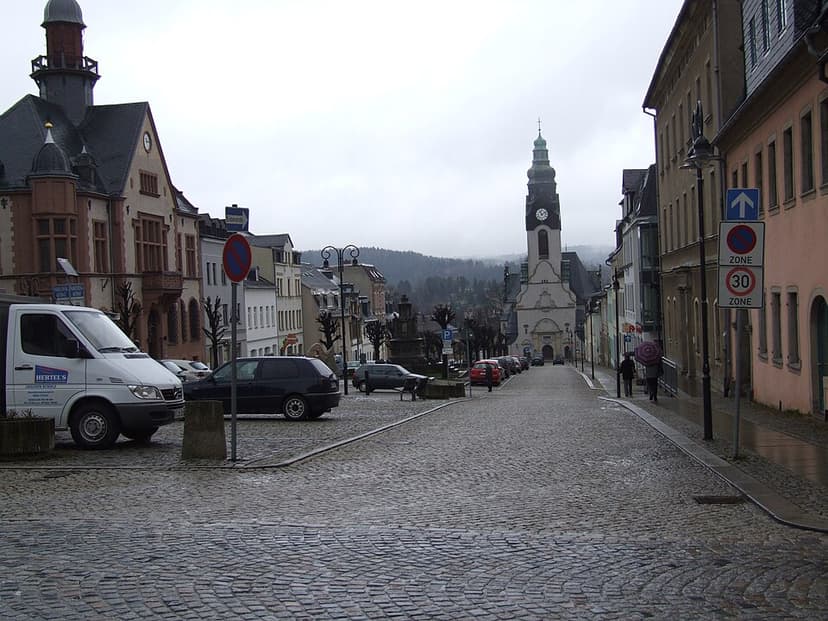
Adorf is a small town in the Vogtlandkreis region of Saxony, Germany, with a history dating back to around 1200 when it was founded. It gained town status in 1293 and developed as a center for crafts, spinning, weaving, and musical instrument making due to its strategic location and transport links. Despite being destroyed by fire in 1768, Adorf has preserved historical structures like the Freiberger Tor, the last remaining town gate in Vogtland, and boasts attractions such as Miniaturschauanlage Klein-Vogtland.

Beckum
Beckum is a town in North Rhine-Westphalia, Germany, whose name originates from "home upon the brooks" due to its location near three streams. Granted town charter in 1224, it experienced periods of growth and hardship, eventually becoming a major center for the chalk and cement industries in the late 19th century. Today, Beckum is an industrial town with a focus on machine engineering and cement production.