
Lobbes Abbey
Christian·Belgium·Ruins/Museum (partial)·7th century
Lobbes Abbey was a significant Benedictine monastery in Hainaut, Belgium, founded around 645 by Saint Landelin. It played a crucial role in the religious and political landscape of the Prince-Bishopric of Liège, particularly around the year 1000, and was renowned for its school. Despite periods of decline and destruction, notably by French revolutionary troops in 1794, remnants of its architectural heritage, such as the Church of Saint Ursmarus, still exist.
Key Facts
- ›Founded by Saint Landelin around 645 on the banks of the river Sambre.
- ›Became a prominent center of learning, with its school gaining great fame.
- ›Suffered destruction during Hungarian invasions in 954.
- ›The Church of Saint Ursmarus, a surviving structure, is one of the oldest in Belgium.
- ›Dissolved in 1794 by French revolutionary troops, with most buildings destroyed.
- ›The Lobbes Bible, completed in 1084, was a notable manuscript from its library.
Romanesque, Mosan
- Church of Saint Ursmarus
- Crypt Containing Tombs of Saint Ursmarus and Saint Erminus
- Mosan Westwork Tower
- Lobbes Bible
Abbaye De Lobbes
Saint Landelin, Saint Ursmarus, Ermin of Lobbes, Abel of Reims, Theodulph of Lobbes, Anson, Hucbert, Franco, Folcuin, Heriger of Lobbes, Hugo, Godfrey Iii, Henry Iii, Pope Urban Ii, Vulgise De Vignron
- Founded By Saint Landelin Around 645.
- Raided and Burned During Hungarian Invasions In 954.
- Participated In the Peace of God Movement.
- Dissolved In 1794 By French Revolutionary Troops.
About Lobbes Abbey
Lobbes Abbey: A Benedictine Legacy in Hainaut
Lobbes Abbey (French: Abbaye de Lobbes) was a historically significant Benedictine monastery situated in the municipality of Lobbes, Hainaut, Belgium. Its foundation dates back to approximately 645, established by Saint Landelin, who repented a life of brigandage to dedicate himself to religious devotion.
Religious and Intellectual Hub
The abbey quickly grew in prominence, particularly under its early abbots, including Saint Ursmarus and his successors. Lobbes Abbey became a vital center for religious life and intellectual pursuits within the Prince-Bishopric of Liège, especially around the turn of the first millennium. Its school achieved considerable fame, attracting scholars and contributing to the region's cultural development. The monks of Lobbes also played a role in the Peace of God movement, advocating for peace and mediating feuds.
Architectural Heritage and Decline
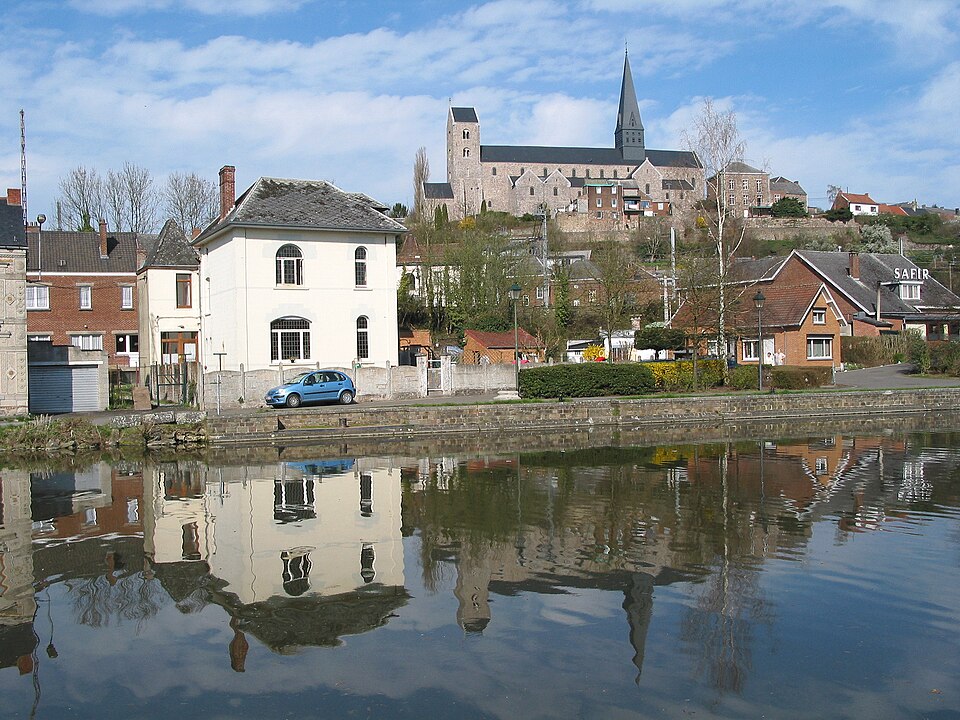
While much of the original monastic complex was destroyed during the French Revolution in 1794, the Church of Saint Ursmarus stands as a testament to its past. This church, one of the oldest in Belgium, exhibits architectural elements from the Carolingian, Ottonian, and Romanesque periods, with its Mosan-style westwork tower being a notable feature. The former library of the abbey housed important manuscripts, including the Lobbes Bible, completed in 1084.
Dissolution and Legacy
In 1794, French revolutionary troops expelled the abbot and monks, leading to the abbey's dissolution under a law passed in 1796. The abbey church of Saint Peter and most other buildings were demolished, and historical documents were destroyed. Despite its physical destruction, Lobbes Abbey remains a significant site in Belgian history, representing a major Benedictine foundation that influenced religious and intellectual life for centuries.
Source: Wikipedia ↗
Frequently Asked Questions
When was Lobbes Abbey founded?
Lobbes Abbey was founded by Saint Landelin around the year 645. The early history of the monastery is well-documented due to the survival of its annals.
What was the significance of Lobbes Abbey?
The abbey was important in the religious, political, and intellectual life of the Prince-Bishopric of Liège, especially around the year 1000. Its school achieved considerable fame, and it participated in the Peace of God movement.
What happened to Lobbes Abbey?
Lobbes Abbey was dissolved in 1794 by French revolutionary troops. The majority of its buildings, including the abbey church of Saint Peter, were demolished, and its books and documents were burned.
Are any parts of Lobbes Abbey still standing?
Yes, the Church of Saint Ursmarus, which served as the former burial church, survived the dissolution and continues to exist as a parish church. Some minor buildings were later incorporated into a railway station.
What architectural styles are associated with Lobbes Abbey?
The surviving Church of Saint Ursmarus features Romanesque elements in its choir and crypt, and its westwork tower is a notable example of Mosan architecture. The oldest parts of the church date back to Carolingian or Ottonian times.
Related Monasteries

Aulne Abbey
Aulne Abbey was a significant Cistercian monastery located in the Bishopric of Liège, modern-day Belgium. Originally founded as a Benedictine house in 656, it later adopted the Cistercian rule, flourishing for centuries until its destruction by French revolutionary troops in 1794. Today, its ruins are a Walloon Heritage Site, preserved as a historic monument.

Lier
Lier is a Belgian municipality in the province of Antwerp, known for its historical significance, including its beguinage recognized as a UNESCO World Heritage Site. The city's history is marked by pivotal European events like a royal marriage and the selection of a livestock market over a university. Lier is also recognized by its nickname, "Sheep Heads," and the popular rhyme "Lierke Plezierke."

Malmedy Abbey
The Princely Abbey of Stavelot-Malmedy was an ecclesiastical principality of the Holy Roman Empire, governed by the Benedictine abbot of the imperial double monastery of Stavelot and Malmedy. Founded in 651 by Saint Remaclus, it played a significant role in the cultural and religious life of Lotharingia. The principality was abolished in 1795 and its territory incorporated into France, later becoming part of Belgium and Prussia.