
Lindow
Christian (Cistercian, Lutheran, Protestant)·Germany·Active (as a home for the elderly) and Ruins·13th century
Lindow is a town in Brandenburg, Germany, with a history deeply intertwined with a Cistercian nunnery founded in the 13th century. This nunnery, initially a powerful landholder, evolved into a Lutheran women's convent after secularization and later a Protestant home for the elderly. The town and convent suffered significant destruction during the Thirty Years' War but were rebuilt, with parts of the conventual buildings and a cloister school surviving to the present day.
Key Facts
- ›Founded in the early to MID-13th century as a Cistercian nunnery.
- ›The nunnery was exceptionally wealthy, owning vast estates and numerous villages.
- ›Suffered severe destruction during the Thirty Years' War in 1638.
- ›The cloister school, built in the late 15th century, is a surviving structure.
- ›Transitioned from a Roman Catholic nunnery to a Lutheran women's convent (Fräuleinstift) after secularization.
- ›Currently houses the Evangelisches Stift "Kloster Lindow", a Protestant home for the elderly.

Baroque, Neoclassical, Brick Expressionism
Cloister School, Jewish Cemetery, Town Church, Evangelisches Stift "Kloster Lindow"
Kloster Lindow, FräUleinstift Lindow, Evangelisches Stift "Kloster Lindow"
Gebhard I, Count of Arnstein, Ilse Von Rochow, Theodor Fontane
- Foundation of the Cistercian Nunnery
- Secularization of the Nunnery
- Destruction During the Thirty Years' War
- Repopulation With Reformed Refugees
- City Fires
- Dissolution of the Jewish Congregation
- Establishment of the Ss Lebensborn Home Kurmark
- Incorporation Into East Germany
- Renovation of Jewish Cemetery
- Town Church As A Venue For Protests
- Reunification With Germany
About Lindow
Lindow is a town in the Ostprignitz-Ruppin district of Brandenburg, Germany, notable for its historical association with a significant monastic institution. Located on an isthmus between the Gudelacksee and Wutzsee lakes, its history is deeply marked by the presence and evolution of a Cistercian nunnery founded in the early to mid-13th century by the counts of Lindow-Ruppin.
History and Significance
The Cistercian nunnery was established with extensive landholdings, including 90,000 morgen of land and numerous villages, making its inhabitants serfs to the convent. The nunnery also played a role in educating daughters of noble families. Following the adoption of Lutheranism by the prince-elector of Brandenburg, the nunnery was secularized in 1541/1542. It transitioned into a Lutheran women's convent, known as a "Fräuleinstift," dedicated to housing unmarried noblewomen.
The town and convent endured significant hardship, particularly during the Thirty Years' War. In 1638, Imperial troops devastated the area, burning the convent and much of the town, destroying the convent's library and archives. Despite this destruction, a late 15th-century cloister school survived and remains to this day. The convent was later reestablished as a "Hochadeliges Fräuleinstift" and, after further fires and rebuilding, eventually became the Protestant home for the elderly known as Evangelisches Stift "Kloster Lindow."
Source: Wikipedia ↗
Frequently Asked Questions
When was the Lindow nunnery founded?
The Cistercian nunnery in Lindow was founded by the counts of Lindow-Ruppin between 1220 and 1240.
What happened to the Lindow nunnery during the Thirty Years' War?
During the Thirty Years' War, Imperial troops under General Matthias Gallas robbed and burnt the Lutheran convent and much of the town to the ground on October 18, 1638. The convent's library and archives were destroyed by fire.
What is the current status of the former Lindow nunnery?
The former nunnery compound now houses the Evangelisches Stift "Kloster Lindow", a Protestant home for the elderly. Some buildings from the convent have been restored or are preserved as ruins.
Are there any surviving structures from the original nunnery?
Yes, the cloister school, built in the late 15th century, survived the destruction of the Thirty Years' War and is preserved to this day. Most other buildings of the nunnery have been in ruins since the 17th century, though some have been restored.
What was the role of the Lindow nunnery after secularization?
After secularization in 1541/1542, the formerly Roman Catholic nunnery became a Lutheran women's convent, known as a Fräuleinstift. It continued to serve as a home for unmarried daughters, primarily of noble birth.
Related Monasteries

Abbey of the Holy Cross, Rostock
The Abbey of the Holy Cross in Rostock, Germany, was established in 1270 by Cistercian nuns, making it the city's sole fully preserved abbey. Originally a popular nunnery, it transitioned into a Lutheran "damsels' convent" after the Reformation. Today, the former abbey church serves as the University Church, and the convent buildings house the Museum of Cultural History.
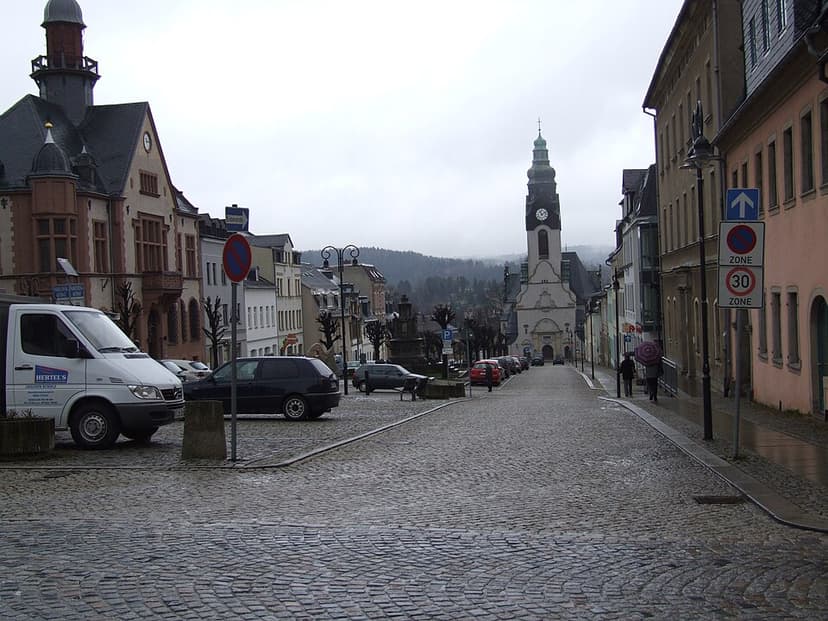
Adorf
Adorf is a small town in the Vogtlandkreis region of Saxony, Germany, with a history dating back to around 1200 when it was founded. It gained town status in 1293 and developed as a center for crafts, spinning, weaving, and musical instrument making due to its strategic location and transport links. Despite being destroyed by fire in 1768, Adorf has preserved historical structures like the Freiberger Tor, the last remaining town gate in Vogtland, and boasts attractions such as Miniaturschauanlage Klein-Vogtland.

Beckum
Beckum is a town in North Rhine-Westphalia, Germany, whose name originates from "home upon the brooks" due to its location near three streams. Granted town charter in 1224, it experienced periods of growth and hardship, eventually becoming a major center for the chalk and cement industries in the late 19th century. Today, Beckum is an industrial town with a focus on machine engineering and cement production.