
Leuven
Leuven, also known as Louvain, is the capital and largest city of the province of Flemish Brabant in Belgium, renowned as a historic university city since 1425. It has been a significant center for trade, cloth manufacture, art, and knowledge, hosting influential humanists, scholars, and artists. The city has faced considerable damage in both World Wars but has rebuilt and continues to be a hub for research, innovation, and culture, as well as the global headquarters for Anheuser-Busch Inbev.
Key Facts
- ›Founded as a settlement around 891, with the earliest mention dating to a Viking defeat by King Arnulf of Carinthia.
- ›Became a major trade center in the duchy of Brabant between the 11th and 14th centuries, known for its linen cloth.
- ›Established the University of Leuven in 1425, making it the oldest university city in the Low Countries.
- ›Suffered significant destruction during both World War I and World War II, particularly the university library.
- ›Is the global headquarters of Anheuser-Busch Inbev, the world's largest beer brewer.
- ›Home to KU Leuven, the largest Dutch-speaking university in the world and the largest in Belgium.

Brabantian Late-Gothic, Renaissance, Neo-Gothic, Baroque, Romanesque
University of Leuven, Anheuser-Busch Inbev Headquarters, Saint Peter's Church, Great Beguinage, University Library With A Large Carillon, ChâTeau of Arenberg, Park Abbey, Keizersberg Abbey, Remains of Medieval City Walls
Louvain, Loven
Arnulf of Carinthia, Dirk Bouts, Albrecht Bouts, Jan Rombouts the Elder, Quinten Metsys, Erasmus, Hieronymus Van Busleyden, Thomas More, Gemma Frisius, Gerardus Mercator, John Dee, Gaspard Van Der Heyden, Gualterus Arsenius, Andreas Vesalius, Johannes Molanus, Justus Lipsius, Sebastien Artois, Father Damien, Edmund Husserl, Sulpitius Van Vorst, Jan Ii Keldermans, Matheus De Layens, Whitney Warren, Jan Fabre, Mohamed Ridouani
- Battle of Leuven
- Founding of the University of Leuven
- Destruction of the University Library
- Occupation By German Forces In World War I and World War Ii
- Burning of the New University Library Building
- Relocation of Stalag 304 Pow Camp
About Leuven
Leuven: A Historic University City and Economic Hub
Leuven, also known by its French name Louvain, is the capital and largest city of the province of Flemish Brabant in Belgium. Situated approximately 25 kilometers east of Brussels, it is a municipality comprising several sub-municipalities. Established as a settlement around 891, with its earliest mention tied to a Viking defeat, Leuven grew into a significant center of trade and cloth manufacture by the Middle Ages. Its importance was cemented in 1425 with the founding of the University of Leuven, making it the oldest university city in the Low Countries and a renowned center for art and knowledge.
Intellectual and Artistic Flourish
During the early modern period, Leuven attracted leading humanists like Erasmus and Hieronymus van Busleyden, who established the Collegium Trilingue to teach ancient languages. The city was a hub for intellectual pursuits, with figures like Thomas More publishing his "Utopia" there, and Gemma Frisius laying foundations for modern cartography. It also became a leading center for the fabrication of precision astronomical instruments. The art scene thrived, with painters such as Dirk Bouts and Quinten Metsys contributing to its reputation.
Resilience Through Conflict and Modern Development
Leuven has faced considerable hardship, particularly during the 20th century. Both World War I and World War II inflicted extensive damage, with the university library being destroyed in both conflicts, resulting in immense losses of historical volumes. Despite these setbacks, the city has consistently rebuilt and evolved. Today, Leuven is a dynamic center for research and innovation, hosting KU Leuven, the world's largest Dutch-speaking university, and serving as the global headquarters for Anheuser-Busch InBev, the world's largest beer brewer. Its economy is heavily influenced by academic research spin-offs and advanced technology sectors.
Architectural Heritage and Cultural Life
The city's architectural landscape reflects its long history, featuring structures like the Brabantian late-Gothic Town Hall, the Renaissance and Neo-Gothic Château of Arenberg, and the Baroque Saint Michael's Church. Religious heritage is prominent, with Saint Peter's Church (a UNESCO World Heritage Site) and the Great Beguinage (also a UNESCO World Heritage Site) standing out. Leuven is a vibrant cultural center, known for its museums, music venues, and a rich beer culture, and it was recognized as the European City of Sport for 2021.
Source: Wikipedia ↗
Frequently Asked Questions
What is the historical significance of Leuven?
Leuven boasts a rich history, emerging as a key trading and cloth manufacturing center in the Middle Ages. It gained further prominence with the founding of its university in 1425, becoming a significant hub for art, knowledge, and humanism. The city has also been a site of conflict and destruction, particularly during the World Wars.
What is Leuven most famous for today?
Today, Leuven is widely recognized as a vibrant university city, home to KU Leuven, the largest Dutch-speaking university globally. It is also the international headquarters of Anheuser-Busch InBev, the world's largest beer company. The city is a growing center for research, innovation, and culture.
Has Leuven been damaged by war?
Yes, Leuven has endured significant damage during wartime. The university library was destroyed by German soldiers in World War I, leading to the loss of hundreds of thousands of volumes. In World War II, both the city and the new university library building were heavily damaged by shelling.
What architectural styles can be found in Leuven?
Leuven showcases a variety of architectural styles. Notable examples include the Brabantian late-Gothic style of the Town Hall, Renaissance and Neo-Gothic elements at the Château of Arenberg, and Baroque influences in Saint Michael's Church. The Great Beguinage is recognized as a prime example of its architectural type.
Is Leuven a religious center?
Leuven has several significant religious sites. Saint Peter's Church, a UNESCO World Heritage Site, contains a Romanesque crypt and notable artworks. Saint Anthony's Chapel holds the tomb of Father Damien. The city also features the Great Beguinage and several abbeys, including Park Abbey, Keizersberg Abbey, and Vlierbeek Abbey.
Related Monasteries
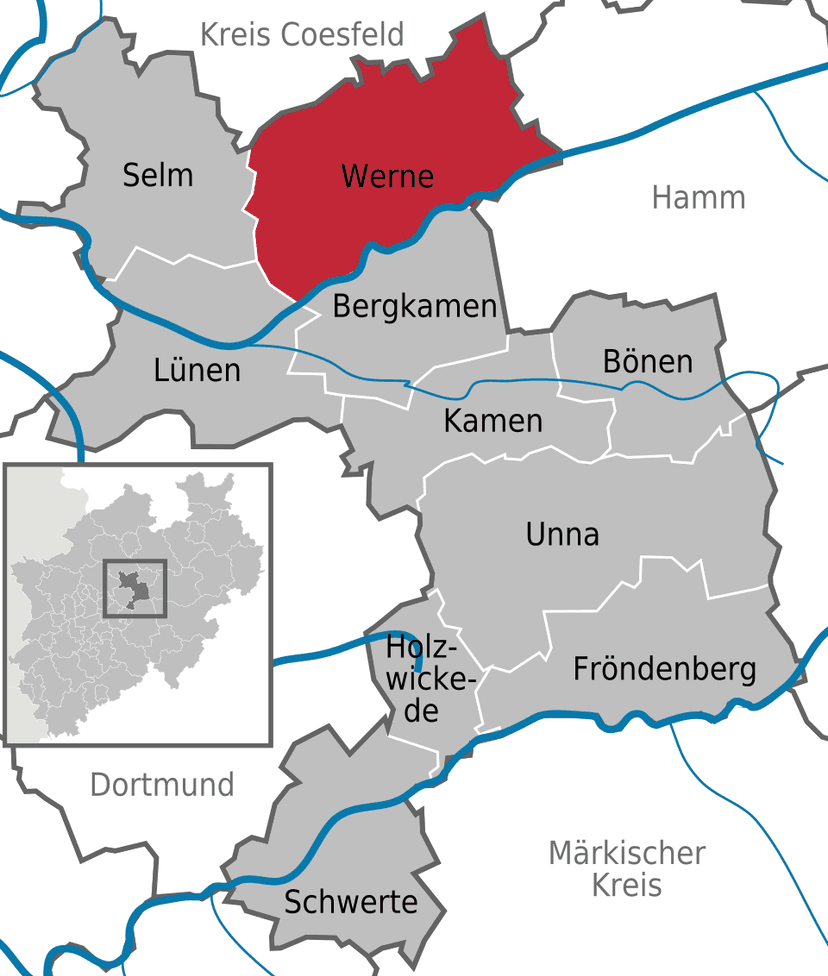
Werne
Werne an der Lippe is a town in North Rhine-Westphalia, Germany, with a history stretching back to the 9th century. Originally established as a parish by Bishop Liudger under Charlemagne, it grew into a fortified settlement and a member of the Hanseatic League. Despite periods of conflict, plague, and administrative changes, Werne has evolved into a modern town with a significant population and a diverse industrial base, while retaining elements of its historical past.

Avignon
Avignon, also known as 'La Cité des Papes' (The City of the Popes), is a historic city in southern France renowned for its papal history and well-preserved medieval architecture. Between 1309 and 1377, it served as the residence for seven successive popes, significantly shaping its urban development and cultural landscape. The city's historic center, including the Palais des Papes and its ramparts, is a UNESCO World Heritage Site, drawing millions of visitors annually for its architectural grandeur and vibrant arts scene, particularly the annual Festival d'Avignon.

Rome
Rome, often called the "Eternal City" and "Caput Mundi," is the capital of Italy and a pivotal center of Western civilization and Christian culture. Its history spans over three millennia, from its legendary founding by Romulus to its role as the capital of the Roman Kingdom, Republic, and Empire, and later as the seat of the Papacy and the modern Italian Republic. The city is renowned for its rich artistic and architectural heritage, having been a major center of the Renaissance, Baroque, and Neoclassicism.