
Lepavina Monastery
Lepavina Monastery is a Serbian Orthodox monastery located in Croatia, dedicated to the Presentation of the Theotokos. Founded around 1550, it has a complex history marked by destruction, rebuilding, and significant roles in the religious and cultural life of Serbs in the region. It is particularly renowned for its wonder-working icon of the Mother of God, making it a major pilgrimage site.
Key Facts
- ›Founded around 1550 by monks from Hilandar Monastery and Bosnia.
- ›Destroyed by Ottomans in 1557 and rebuilt in 1598.
- ›Became a major center of Eastern Orthodoxy after the Monastery of Marča was handed over to Greek Catholics.
- ›The current Baroque church was built in the MID-18th century.
- ›Suffered extensive damage during World War II but was later renovated.
- ›Features a wonder-working icon of the Mother of God, a significant pilgrimage draw.
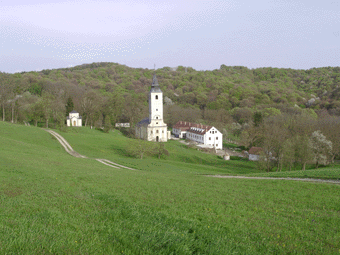
Baroque
- Wonder-Working Icon of the Mother of God
- Manuscripts and Old Printed Books
- Tetraevangelia From the 13th and 14th Centuries
Jefrem Vukodabović, Hieromonk Gregory, Archimandrite Visarion, Count Johannes Galler, Baron Sigmund Von Eibiswald, Voivode Gvozden, đOrđE Dobrojević, BlažE PejašInović, Voivode Radovan, Baron Honorius Von Trauttmansdorff, Count Georg Ludwig Von Schwarzenberg, Hegumen Kodrat, Serbian Patriarch Arsenije Iii čArnojević, Bishop Simeon Filipović, Nikola Popović, Bishop Arsenije, Hieromonk Joakim Babić, Father Simeon Sakulj, Metropolitan Jovan Pavlović, Monk Gavrilo VučKović
- Burning of the Church and Monastic Buildings In 1557 By Ottomans.
- Re-Establishment of the Monastic Community and Rebuilding In 1598.
- Receipt of Privileges By Ethnic Serb Population In 1630, Enabling Larger-Scale Building.
- Construction of A Larger Monastery Complex Under Archimandrite Visarion .
- Confirmation of Monastery Rights By Various Counts and Barons .
- Monks Sentenced To Galley Slavery In Malta In 1672.
- Visit of Serbian Patriarch Arsenije Iii čArnojević In 1692-1693.
- Lepavina Assigned As the Residence of the New Orthodox Bishopric In 1734.
- Consecration of the Completed Baroque Church In 1753.
- Arrest and Deportation of Brethren During World War Ii.
- Bombardment and Destruction of Monastic Buildings During World War Ii.
- Renovation and Regaining of Importance Under Metropolitan Jovan Pavlović From 1977.
- Revival of Connection With Hilandar Monastery In 1984.
About Lepavina Monastery
The Lepavina Monastery is a significant Serbian Orthodox religious site situated in Sokolovac, near Koprivnica, Croatia. Dedicated to the Presentation of the Theotokos, its origins trace back to approximately 1550, when monks from the renowned Hilandar Monastery, along with others from Bosnia, established a wooden church.
History and Significance
The monastery's history is marked by periods of destruction and resilience. Shortly after its founding, it was razed by Ottoman forces in 1557, resulting in the deaths of four monks and the enslavement of two others. However, the monastic community was re-established in 1598 by Hieromonk Gregory. The monastery played a crucial role in preserving Orthodox faith and culture for the Serbian population in the Varaždin Generalat, particularly after the Monastery of Marča was transferred to the Uniate (Greek Catholic) Church. Lepavina subsequently became a principal center for Eastern Orthodoxy in the region, even serving as the designated residence for the Orthodox bishopric of Lepavina and Severin in the 18th century.
Architectural and Artistic Heritage
The current monastery church, a Baroque structure, was erected in the mid-18th century. While its original iconostasis by Jovan Četirević Grabovan was destroyed during World War II, the monastery is most celebrated for its wonder-working icon of the Mother of God. This icon, believed to be from the early 16th century, is the primary draw for pilgrims. The monastery also houses valuable manuscripts and old printed books, including Tetraevangelia dating from the 13th and 14th centuries.
Modern Era and Pilgrimage
Despite suffering severe damage during World War II, the monastery underwent significant renovation and restoration in the latter half of the 20th century, notably under Metropolitan Jovan Pavlović. Under the guidance of Hegumen Gavrilo Vučković, Lepavina Monastery has experienced a spiritual revival, becoming an exceptionally popular pilgrimage destination. It attracts believers from across Europe and beyond, serving as a site for spiritual seeking and fostering dialogue between Eastern and Western Christian traditions.
Source: Wikipedia ↗
Frequently Asked Questions
When was Lepavina Monastery founded?
According to local chronicles, Lepavina Monastery was founded around 1550. This was shortly after the initial Serbian settlements began to emerge in the region. The founding involved monks from Hilandar Monastery and Bosnia constructing a wooden church.
What is the significance of the wonder-working icon at Lepavina Monastery?
The monastery is renowned for its wonder-working icon of the Mother of God, painted in the Creto-Venetian style from the early 16th century. This icon is the primary reason for the monastery's status as an important pilgrimage site, drawing believers from various backgrounds.
Has the monastery always been in its current location?
The monastery has been located near the town of Koprivnica in Croatia, specifically in the village of Sokolovac, since its founding around 1550. Its history is tied to the Serbian settlements in this particular region.
What challenges has Lepavina Monastery faced throughout its history?
Lepavina Monastery has endured significant hardships, including destruction by the Ottomans in 1557 and heavy damage during World War II. Monks were also subjected to galley slavery and conflicts with neighboring clergy. Despite these challenges, the community has persevered and rebuilt.
What kind of art and treasures are found at Lepavina Monastery?
The monastery is home to a wonder-working icon of the Mother of God. While its iconostasis from 1775 was destroyed, other valuable icons and ancient manuscripts, including Tetraevangelia from the 13th and 14th centuries, are preserved. The monastery also served as a repository for written materials and copied books.
Is Lepavina Monastery an active place of worship and pilgrimage?
Yes, Lepavina Monastery is an active religious site and a very popular destination for pilgrims. Spiritual life is reportedly on the rise, with several brethren and novices. It attracts visitors from Croatia, Europe, and beyond, fostering mutual understanding between Eastern and Western Churches.
Related Monasteries
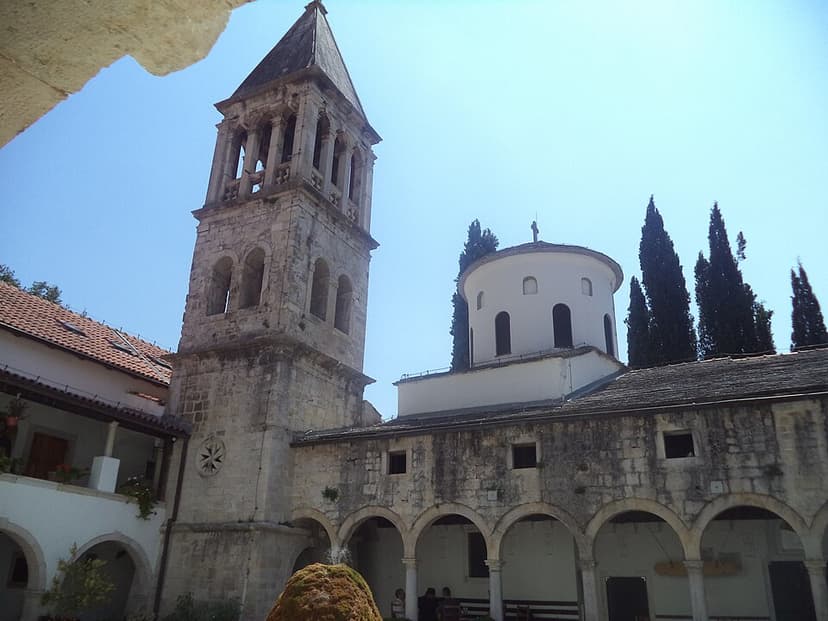
Krka Monastery
Krka Monastery is a 16th-century Serbian Orthodox monastery in Dalmatia, Croatia, dedicated to the Archangel Michael. It is notable for its complex history, built on the site of earlier Roman and medieval Catholic structures, and has undergone significant rebuilding over centuries. The monastery is an important religious and cultural center for the Serbian Orthodox Church in Croatia and is officially protected within Krka National Park.

Dalmatinska Lazarica Monastery
The Holy Lazarica Monastery, also known as Dalmatinska Lazarica, is a Serbian Orthodox monastery located near Knin, Croatia. Construction began in 1874 and was completed in 1889. The monastery is dedicated to Prince Lazar of Serbia, a significant figure in Serbian history.
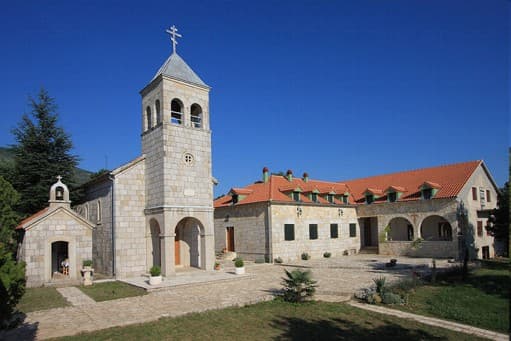
Dragović Monastery
Dragović Monastery is a Serbian Orthodox monastery located near Vrlika in Croatia. Originally founded in the late 14th century, it has been destroyed and rebuilt multiple times throughout its history, most notably after its original site was submerged by the creation of Peruća Lake. Today, it is an active spiritual center for Serbs in Dalmatia, known for its treasury of historical manuscripts and religious artifacts.