
Kraków
Kraków, officially the Royal Capital City of Kraków, is a historically significant Polish city that served as the country's official capital until 1596. Situated on the Vistula River, it has been a leading center of Polish economic, academic, cultural, and artistic life for centuries. Its Old Town, a UNESCO World Heritage Site since 1978, showcases a rich architectural legacy from Gothic, Renaissance, and Baroque periods, including Wawel Cathedral and the largest medieval market square in Europe. The city is also home to the esteemed Jagiellonian University, one of the oldest universities in the world.
Key Facts
- ›Founded as a fortified settlement on Wawel Hill around the 8th century.
- ›Became the seat of Polish monarchs in 1038, serving as the administrative center for centuries.
- ›Its Old Town was declared a UNESCO World Heritage Site in 1978.
- ›Home to Jagiellonian University, one of the oldest universities in the world.
- ›Named European Capital of Culture in 2000 and a UNESCO City of Literature in 2013.
- ›Hosted the World Youth Day in 2016 and the European Games in 2023.

Gothic, Renaissance, Baroque
Wawel Cathedral, Wawel Royal Castle, St. Mary's Basilica, Saints Peter and Paul Church, Rynek GłóWny, Jagiellonian University, Jagiellonian Library
Royal Capital City of KrakóW, StołEczne KróLewskie Miasto KrakóW, Cracow, Krakau, Krake, Krakov, Cracovia, CracóVia, Cracovie, Krakkó, Krokuva, Krakiv
Krakus, Sigismund Iii of Poland, Casimir Iii the Great, King Sigismund Ii Augustus, Tadeusz KośCiuszko, JóZef PiłSudski, Karol WojtyłA, Hans Frank, Oskar Schindler, Roman Polanski, Ivan Konev
- Mongol Invasions
- Founding of the University of KrakóW
- Transfer of the Capital To Warsaw
- Swedish Invasion and Siege
- Bubonic Plague Outbreak
- Partitions of Poland
- KrakóW Uprising
- Austrian Rule and Granting of Autonomy To Galicia
- Outbreak of World War I and Formation of the First Cadre Company
- Nazi German Occupation and Establishment of Distrikt Krakau
- Establishment of the KrakóW Ghetto
- Liquidation of the KrakóW Ghetto
- Soviet Forces Entering the City
- Construction of Lenin Steelworks
- Elevation of Karol WojtyłA To the Papacy As John Paul Ii
- Inclusion of Old Town On Unesco World Heritage List
- Named European Capital of Culture
- Approved As A Unesco City of Literature
- Hosted World Youth Day
- Hosted the European Games
About Kraków
Kraków: A Royal Capital and Cultural Nucleus
Kraków, officially the Royal Capital City of Kraków, is a city steeped in history and cultural significance, recognized as the second-largest and one of the oldest urban centers in Poland. Situated on the banks of the Vistula River in the Lesser Poland Voivodeship, Kraków served as the official capital of Poland until 1596 and has consistently been a leading hub for Polish economic, academic, cultural, and artistic endeavors. Its Old Town, designated a UNESCO World Heritage Site in 1978, is a testament to centuries of development, showcasing a remarkable confluence of Gothic, Renaissance, and Baroque architectural styles.
Historical Trajectory
The city's origins trace back to a fortified settlement on Wawel Hill around the 8th century. It rose to prominence in 1038 when it became the seat of Polish monarchs from the Piast dynasty, continuing its role as a central administrative hub under subsequent Jagiellonian kings and the Polish–Lithuanian Commonwealth. Despite periods of devastation, such as the Mongol invasions of the 13th century and pillaging during the Swedish invasion in the 1650s, Kraków was repeatedly rebuilt and evolved. The founding of the University of Kraków (now Jagiellonian University) in 1364 by Casimir III the Great further cemented its status as a vital center of learning.
Cultural and Architectural Heritage
Kraków's architectural landscape is a rich tapestry woven from various historical epochs. Key landmarks include Wawel Cathedral and the Wawel Royal Castle, both perched on the Vistula's banks. The city also boasts St. Mary's Basilica, Saints Peter and Paul Church, and Rynek Główny, Europe's largest medieval market square. The Jagiellonian University, one of the world's oldest academic institutions, remains a cornerstone of the city's intellectual life. In the 20th century, despite the devastation of World War II and its role as the seat of Nazi Germany's General Government, the city's core historical and architectural heritage was largely preserved.
Modern Significance
In the modern era, Kraków continues to thrive as a global city. It was named a European Capital of Culture in 2000 and recognized as a UNESCO City of Literature in 2013. The city has also successfully hosted major international events, including World Youth Day in 2016 and the European Games in 2023. The elevation of Karol Wojtyła, the Archbishop of Kraków, to the papacy as Pope John Paul II in 1978 further underscored the city's global spiritual and historical importance.
Source: Wikipedia ↗
Frequently Asked Questions
What is the historical significance of Kraków's Old Town?
Kraków's Old Town is historically significant as it was declared a UNESCO World Heritage Site in 1978, being among the first sites globally to receive this status. It represents a rich cultural and architectural legacy spanning Gothic, Renaissance, and Baroque eras, containing prominent landmarks like Wawel Cathedral and the largest medieval market square in Europe.
When did Kraków cease to be the capital of Poland?
Kraków was the official capital of Poland until 1596. In that year, King Sigismund III of the House of Vasa moved the administrative capital of the Polish–Lithuanian Commonwealth to Warsaw, marking a decline in Kraków's political prominence.
What major academic institution is located in Kraków?
Kraków is home to Jagiellonian University, which is one of the oldest universities in the world. It is widely considered Poland's most reputable institution of higher learning and played a significant role in the city's cultural and scientific development.
What was Kraków's role during World War II?
After the invasion of Poland in 1939, Kraków became the seat of Nazi Germany's General Government, with the city's Wawel Castle serving as the residence of Governor-General Hans Frank. The Nazis planned to Germanize the city and established the Kraków Ghetto, from which Jewish populations were sent to extermination and concentration camps. Despite Nazi occupation, the city's historical and architectural heritage was largely spared from destruction.
What international events has Kraków hosted recently?
In recent years, Kraków has hosted significant international events. It was the venue for World Youth Day in 2016 and hosted the European Games in 2023. The city was also named a European Capital of Culture in 2000 and a UNESCO City of Literature in 2013.
Related Monasteries

Przemyśl
Przemyśl is one of the oldest cities in southeastern Poland, with origins dating back to the 8th century. Its strategic location in the Przemyśl Gate, connecting mountains and lowlands, and its position on the San River have historically made it a vital trade and military center. The city has experienced periods of prosperity and decline, marked by its role within various empires and states, including Great Moravia, Poland, Kievan Rus, the Polish-Lithuanian Commonwealth, and the Austrian Empire, before becoming part of modern Poland.
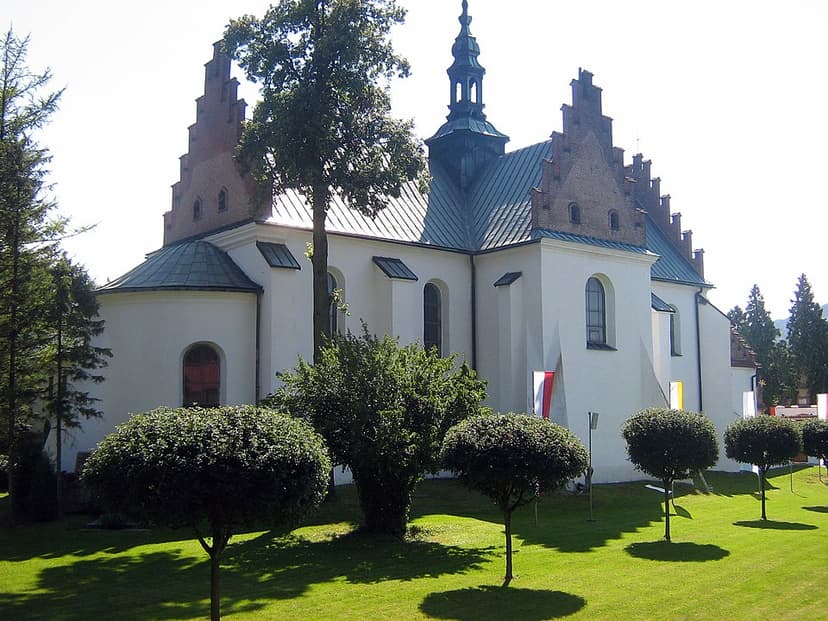
Szczyrzyc Abbey
Szczyrzyc Abbey is a functioning Cistercian monastery located in Szczyrzyc, Poland, established in 1234. It holds significance as one of the Polish Shrines to the Virgin Mary and also houses the Museum of the Cistercian Abbey, showcasing its religious and historical heritage.

Jędrzejów Abbey
Jędrzejów Abbey is a Cistercian monastery established in the 12th century in Poland, around which the town of Jędrzejów developed. It holds historical significance as the place where Blessed Wincenty Kadłubek, a bishop and historian, lived for five years and was eventually buried. The abbey also saw the work of the notable sculptor Veit Stoss in the 15th century.