
Jędrzejów Abbey
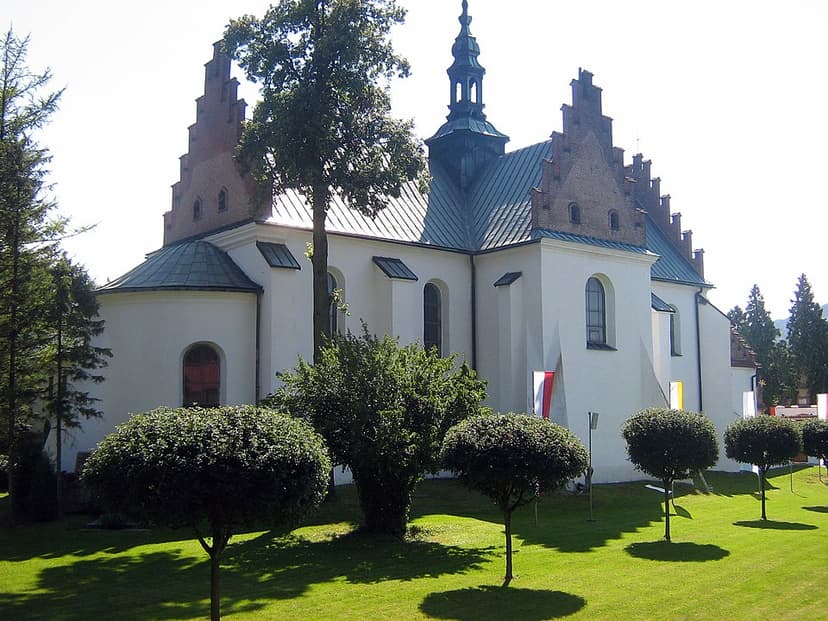
Jędrzejów Abbey is a Cistercian monastery established in the 12th century in Poland, around which the town of Jędrzejów developed. It holds historical significance as the place where Blessed Wincenty Kadłubek, a bishop and historian, lived for five years and was eventually buried. The abbey also saw the work of the notable sculptor Veit Stoss in the 15th century.
Key Facts
- ›Founded in the 12th century.
- ›Associated with the Cistercian order.
- ›Blessed Wincenty Kadłubek, Bishop of Kraków, lived and was buried here.
- ›The town of Jędrzejów grew around the abbey.
- ›Sculptor Veit Stoss worked at the abbey in the 15th century.

Burial Site of Blessed Wincenty KadłUbek, Site Where Veit Stoss Worked
Wincenty KadłUbek, Veit Stoss
About Jędrzejów Abbey
Jędrzejów Abbey is a significant Cistercian monastery located in Poland, with its origins dating back to the 12th century. The development of the town of Jędrzejów is closely tied to the abbey's presence, as the settlement grew around its monastic complex. The abbey has a rich historical and religious legacy, attracting notable figures and serving as a center of spiritual and artistic activity.
Historical Significance
A key figure associated with Jędrzejów Abbey is Blessed Wincenty Kadłubek, a distinguished Polish bishop of Kraków and historian. He resided at the monastery for a period of five years, and it is also his final resting place. This association underscores the abbey's importance in the religious and intellectual history of Poland. Further contributing to its cultural significance, the renowned sculptor Veit Stoss, also known as Wit Stwosz, worked at Jędrzejów Abbey during the 15th century, highlighting the abbey's role as a patron of the arts.
Source: Wikipedia ↗
Frequently Asked Questions
When was Jędrzejów Abbey founded?
Jędrzejów Abbey was founded in the 12th century. The exact year of its establishment is not specified, but its foundation marks the beginning of the monastery's long history.
What religious order is Jędrzejów Abbey associated with?
Jędrzejów Abbey is a Cistercian monastery. The Cistercian order is a Catholic monastic order known for its strict observance and contemplative lifestyle.
Who is a notable figure buried at Jędrzejów Abbey?
Blessed Wincenty Kadłubek, a Polish bishop of Kraków and historian, lived at Jędrzejów Abbey for five years and was buried there. He is a significant historical and religious figure associated with the monastery.
Did any famous artists work at Jędrzejów Abbey?
Yes, the renowned sculptor Veit Stoss, known in Polish as Wit Stwosz, worked at Jędrzejów Abbey during the 15th century. His presence suggests the abbey was a significant cultural center during that period.
What is the historical relationship between Jędrzejów Abbey and the town of Jędrzejów?
The town of Jędrzejów developed and grew around the Jędrzejów Abbey. This indicates the abbey played a central role in the settlement and development of the surrounding area.
Related Monasteries

Kraków
Kraków, officially the Royal Capital City of Kraków, is a historically significant Polish city that served as the country's official capital until 1596. Situated on the Vistula River, it has been a leading center of Polish economic, academic, cultural, and artistic life for centuries. Its Old Town, a UNESCO World Heritage Site since 1978, showcases a rich architectural legacy from Gothic, Renaissance, and Baroque periods, including Wawel Cathedral and the largest medieval market square in Europe. The city is also home to the esteemed Jagiellonian University, one of the oldest universities in the world.
Szczyrzyc Abbey
Szczyrzyc Abbey is a functioning Cistercian monastery located in Szczyrzyc, Poland, established in 1234. It holds significance as one of the Polish Shrines to the Virgin Mary and also houses the Museum of the Cistercian Abbey, showcasing its religious and historical heritage.

Wąchock Abbey
Wąchock Abbey is a Cistercian monastery located in Wąchock, Poland, renowned for its significant Romanesque architecture. Founded in 1179, it has a long history marked by destruction and rebuilding, notably after the Tatar invasions. Today, the abbey is an active Cistercian community, a museum, and a preserved monument of Polish Romanesque art.