
Jerichow Monastery
Premonstratensian·Germany·Museum and restored church complex·12th century
Jerichow Monastery, located in Saxony-Anhalt, Germany, was founded in 1144 as a Premonstratensian Abbey. Despite its name and appearance, it functioned as a collegiate church rather than a traditional monastery, housing secular priests. It is recognized as one of the oldest brick buildings in northern Germany and a significant example of Brandenburg brick architecture, forming a key stop on the "Romanesque Road."
Key Facts
- ›Founded in 1144 as a Premonstratensian Abbey by Hartwig von Stade.
- ›Functioned as a collegiate church, not a traditional monastery, with secular canons.
- ›Features towers built in the Late Romanesque style and is a prime example of Brandenburg brick architecture.
- ›One of the oldest brick buildings in northern Germany.
- ›A designated stop on the "Romanesque Road" tourist route.
- ›Experienced secularization in the 16th century and significant damage during the Thirty Years' War.

Late Romanesque, Brandenburg Style, Early Gothic
- One of the Oldest Brick Buildings In Northern Germany
- Prime Example of Brandenburg Brick Architecture
- Towers Built In Late Romanesque Style
- Museum In the West Wing
- Stop On the "Romanesque Road"
Kloster Jerichow
Hartwig Von Stade, Conrad Iii of Germany, Isfrid of Ratzeburg, Frederick William of Brandenburg, Frederick William Iv of Prussia, Ferdinand Von Quast
- Founded In 1144
- Moved To Present Location In 1148
- Church Construction Began In 1149
- Secularized In the 16th Century
- Devastated During the Thirty Years' War In 1631
- Restored As A Reformed Church In 1685
- Restored By Ferdinand Von Quast Between 1853 and 1856
- Used As A Brewery and Distillery Around 1870
- West Front Damaged Near the End of World War Ii
- Fire Damaged East and South Wings In 1946
- Repairs Made Between 1955 and 1960
- Museum Opened In 1977
- Jerichow Monastery Foundation Founded On December 13, 2004
About Jerichow Monastery
Jerichow Monastery: A Collegiate Church of Brick Architecture
Jerichow Monastery, located in the northern outskirts of Jerichow near the Elbe River in Saxony-Anhalt, Germany, is a historically significant ecclesiastical complex. While commonly referred to as a monastery, its canonical status was that of a collegiate church, founded in 1144 by Hartwig von Stade as a Premonstratensian Abbey. The institution was intended for secular canons, priests who perform pastoral duties rather than living in seclusion, distinguishing it from traditional monastic life. Despite this, its imposing structure and historical context lead to its frequent mention as a monastery.
Construction and Architectural Significance
The construction of the church began in 1149, culminating in a basilica with three naves by 1172, along with the east wing of the cloister. The complex later saw the addition of a crypt, a winter rectory, administrative offices, a summer rectory, and finally, the westernmost bay with its distinctive towers and facade between 1256 and 1262. Architecturally, Jerichow Monastery is renowned as one of the oldest brick buildings in northern Germany. Its towers showcase Late Romanesque elements, while later constructions exhibit characteristics of Early Gothic, particularly in the window designs. The complex is a prime example of the Brandenburg style of brick architecture and is a recognized stop on the "Romanesque Road" tourist route.
History of Secularization and Restoration
The religious life at Jerichow was disrupted by the Reformation in the 16th century, leading to its secularization and the departure of its canons. The complex endured further damage during the Thirty Years' War in 1631. In 1685, under the Electorate of Brandenburg-Prussia, the collegiate church was restored to serve as a Reformed church for Huguenot refugees. Significant restoration efforts were undertaken in the mid-19th century by Ferdinand von Quast, and again in the mid-20th century during the Communist era, which aimed to restore its interiors to a pure Romanesque style. Despite periods of use as a brewery and distillery and damage from wartime events and fire, ongoing preservation and restoration have continued, culminating in the founding of the "Stiftung Kloster Jerichow" (Jerichow Monastery Foundation) in 2004 to consolidate its heritage.
Source: Wikipedia ↗
Frequently Asked Questions
Was Jerichow Monastery a true monastery?
Although commonly referred to as a monastery due to its appearance, Jerichow was canonically a collegiate church. It was founded by Premonstratensian canons, who were secular priests performing pastoral duties, rather than monks living in seclusion.
When was construction completed on the church?
The basilica with three naves and the east wing of the cloister were finished in 1172. The crypt was added between 1180 and 1200, with further expansions including a winter rectory and administrative offices. The final phase, including the towers and western facade, was completed between 1256 and 1262.
What happened to Jerichow Monastery after the Reformation?
Following the Reformation, the monastery was secularized in the 16th century, and the canons had to leave. It suffered devastation during the Thirty Years' War in 1631. Later, it was restored in the 17th century to serve as a Reformed church for Huguenot refugees.
Has the monastery always been preserved?
No, the former Jerichow Monastery faced several periods of neglect and damage. It was used as a brewery and distillery around 1870, the west front was damaged near the end of World War II, and a fire damaged the east and south wings in 1946. Significant restoration efforts have taken place, particularly between 1955 and 1960.
What is the significance of its architecture?
Jerichow Monastery is considered one of the oldest brick buildings in northern Germany and a prime example of the Brandenburg style of brick architecture. The towers are built in the Late Romanesque style, while later additions incorporated elements of Early Gothic, such as pointed arches.
Related Monasteries
Hamborn Abbey
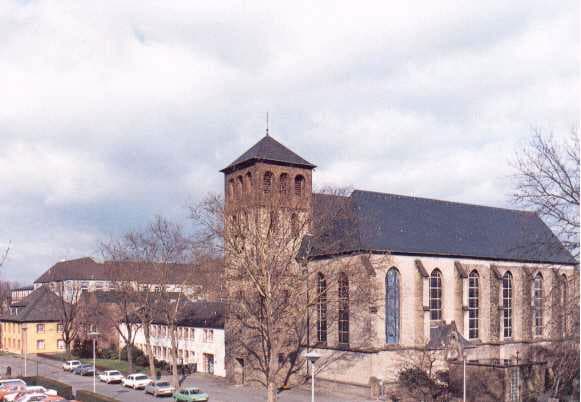
Hamborn Abbey is a Premonstratensian monastery located in Duisburg, Germany, with a history dating back to a 9th-century parish church. Founded in its current form in 1170, it was abolished during the Napoleonic era but re-established in 1959. Today, the abbey serves as a center for pastoral work, education, and social projects in the northern Duisburg area.

Averbode Abbey
Averbode Abbey is a Premonstratensian monastery in Belgium with a history dating back to its founding around 1134. Throughout its existence, it has experienced periods of growth, suppression, and reestablishment, notably serving as a leading children's publisher in Belgium during the 20th century. The abbey church is a distinct blend of Baroque and Gothic architectural styles, constructed with local sandstone.
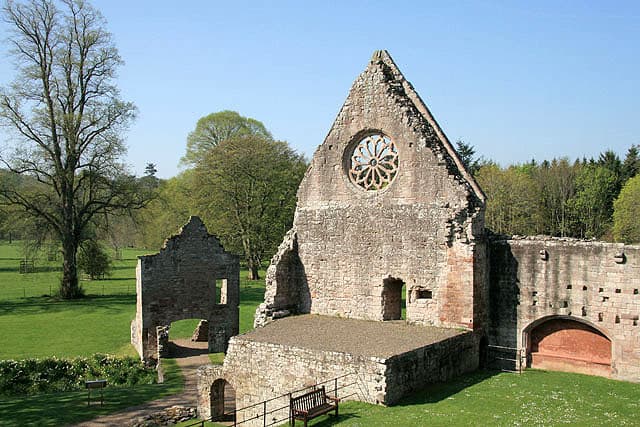
Dryburgh Abbey
Dryburgh Abbey, situated near the River Tweed in the Scottish Borders, was founded in 1150 by Premonstratensian canons. Despite significant destruction from English raids in the 14th and 16th centuries, the abbey experienced periods of restoration and flourished in the 15th century. Today, it stands as a designated scheduled monument, with its grounds serving as the final resting place for notable figures like Sir Walter Scott and Douglas Haig.