
Jasenovac Monastery
Jasenovac Monastery is a Serbian Orthodox monastery dedicated to the Nativity of St. John the Baptist, serving as the seat of the Eparchy of Slavonia. Originally built in 1775, it has a history marked by destruction and restoration, notably during World War II and the Croatian War of Independence. The monastery was re-established as an active monastic entity in 2000.
Key Facts
- ›Founded in 1775.
- ›Dedicated to the Nativity of St. John the Baptist.
- ›Served as the seat of the Eparchy of Slavonia.
- ›Destroyed during World War II.
- ›Restored and reconsecrated in 1984.
- ›Desecrated and destroyed again in 1995 during the Croatian War of Independence, then restored in 2000.

Seat of the Eparchy of Slavonia
Amfilohije žIvković
- Destroyed At the Beginning of World War Ii
- Restored and Consecrated On September 2, 1984
- Church Partially Damaged In 1991 During the Croatian War of Independence
- Desecrated and Destroyed In 1995 During the Croatian War of Independence
- Restored In 2000, Proclaimed A Monastery
About Jasenovac Monastery
Jasenovac Monastery is a significant Serbian Orthodox religious site dedicated to the Nativity of St. John the Baptist. It holds the distinction of being the seat of the Eparchy of Slavonia, underscoring its administrative and spiritual importance within the region.
History and Resilience
The monastery's construction dates back to 1775. Its history is marked by periods of profound destruction and subsequent resilience. The monastery was notably demolished during the early stages of World War II. Following this, it underwent restoration and was consecrated on September 2, 1984. However, conflict again impacted the site; during the Croatian War of Independence, the church suffered partial damage in 1991 and was subsequently desecrated and destroyed in 1995. A comprehensive restoration in 2000 led to its re-establishment as an active monastic entity, with Bishop Sava Jurić proclaiming the Church of the Nativity Theotokos and St. John the Baptist as a monastery. The abbot of this monastery was Amfilohije Živković, a notable figure in its history.
Source: Wikipedia ↗
Frequently Asked Questions
When was Jasenovac Monastery founded?
The Jasenovac Monastery was originally built in 1775. It has since undergone several periods of destruction and restoration.
What is the religious affiliation of Jasenovac Monastery?
Jasenovac Monastery is a Serbian Orthodox monastery. It is dedicated to the Nativity of St. John the Baptist.
Has the monastery always been active?
The monastery was destroyed during World War II and again during the Croatian War of Independence. It was restored and officially proclaimed a monastery in 2000, indicating a renewed period of activity.
What significant events have affected Jasenovac Monastery?
The monastery was destroyed at the beginning of World War II, and its church was partially damaged in 1991 and desecrated and destroyed in 1995 during the Croatian War of Independence. It has been restored after these events.
Related Monasteries

Dalmatinska Lazarica Monastery
The Holy Lazarica Monastery, also known as Dalmatinska Lazarica, is a Serbian Orthodox monastery located near Knin, Croatia. Construction began in 1874 and was completed in 1889. The monastery is dedicated to Prince Lazar of Serbia, a significant figure in Serbian history.
Dragović Monastery
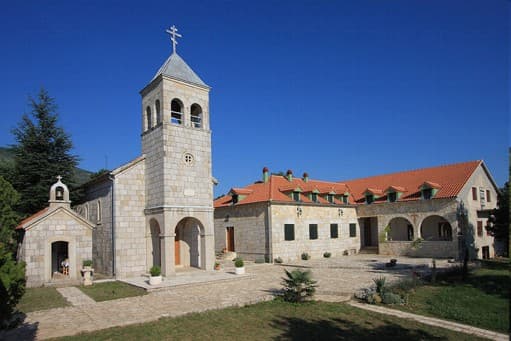
Dragović Monastery is a Serbian Orthodox monastery located near Vrlika in Croatia. Originally founded in the late 14th century, it has been destroyed and rebuilt multiple times throughout its history, most notably after its original site was submerged by the creation of Peruća Lake. Today, it is an active spiritual center for Serbs in Dalmatia, known for its treasury of historical manuscripts and religious artifacts.
Gomirje Monastery
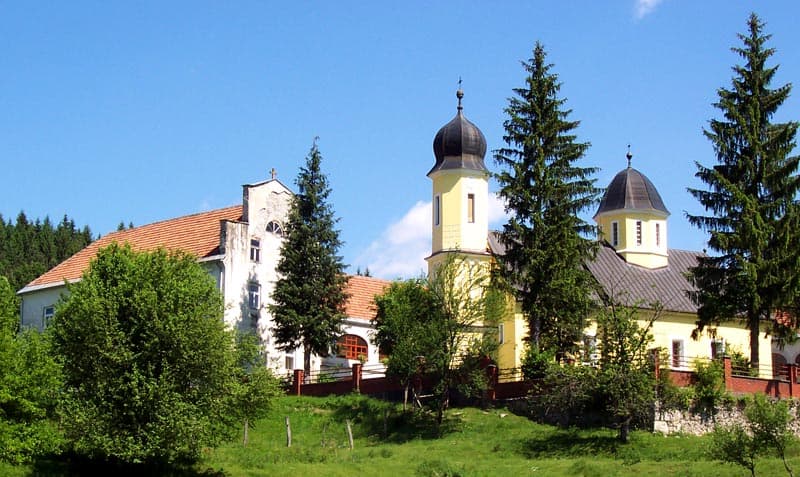
Gomirje Monastery is the westernmost Serbian Orthodox monastery, located in Croatia near the village of Gomirje. Founded around 1600, it has a history marked by struggles for land rights, resistance to Uniatism, and devastation during wartime. The monastery complex includes a stone church built in the 18th century and has undergone periods of rebuilding and reopening.