
Inchmarnock Monastery
Christian·Scotland·Ruins (monastic enclosure) / Organic Farm·7th century
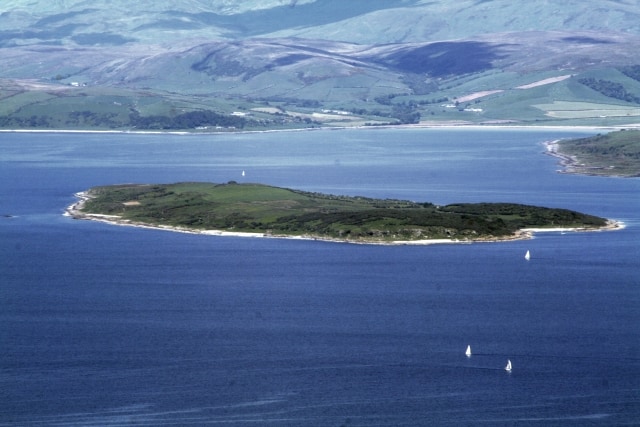
Inchmarnock Monastery was established on the island of Inchmarnock in the 7th century by a holy man named Marnock. Archaeological investigations, particularly the Inchmarnock Project, have uncovered evidence of an 8th or 9th-century monastic enclosure with workshops and a significant collection of inscribed slates, offering insights into the lives and skills of early medieval monks. The island, now privately owned and operated as an organic farm, is located in the Sound of Bute off the west coast of Scotland.
Key Facts
- ›Founded in the 7th century by Saint Marnock.
- ›Archaeological evidence suggests a monastic enclosure existed in the 8th or 9th century.
- ›Excavations revealed an exceptional number of inscribed slate pieces, serving as 'pattern books' for monastic scholars.
- ›The island is located in the Sound of Bute.
- ›Currently privately owned and operates as an organic farm.
- ›Associated with the 'Hostage Stone', depicting human figures and a boat with debated interpretations.
- Inscribed Slate Collection
- the 'Hostage Stone'
- Bronze Age Cist With 'Queen of the Inch' Remains
Innis MheàRnaig
Saint Marnock
- Establishment of A Monastery In the 7th Century.
- Excavation and Study During the Inchmarnock Project .
- Use As A Training Area For Tank Landing Craft During World War Ii.
About Inchmarnock Monastery
Inchmarnock Monastery was an early medieval religious settlement located on the island of Inchmarnock, off the west coast of Scotland. The island's name derives from the Gaelic Innis Mheàrnaig, meaning 'Island of Marnock', referring to a holy man who established a monastery there in the 7th century. While the monastery itself has largely vanished, archaeological investigations have revealed significant evidence of its past.
Archaeological Discoveries
The Inchmarnock Project, a seven-year study commencing in 1999, brought to light the remains of what is interpreted as an 8th or 9th-century monastic enclosure. This site yielded an exceptional collection of inscribed slates, provisionally dated to the 8th or 9th century AD and possibly continuing later. These slates are considered highly significant as they appear to have functioned as 'pattern books' for monastic scholars, containing practice pieces for designs, examples of writing in Gaelic, Latin, and ogham script, and depictions of contemporary dress, weaponry, buildings, and ship technology. This assemblage is the largest of its kind known from Scotland and offers a unique window into the literacy and artistic practices of the period.
Among the notable finds is the 'Hostage Stone', a conjoined piece of incised slate depicting four human figures and a boat. The interpretation of this scene is debated, with suggestions ranging from slave-raiding or hostage-taking to a religious procession, highlighting the complex narratives that can be derived from such ancient artifacts.
Historical Context and Modern Status
The island of Inchmarnock also contains a Bronze Age cist holding the remains of a female skeleton, known as the 'Queen of the Inch'. Historically, the island has seen various uses, including military training exercises during World War II. Today, Inchmarnock is privately owned and operates as an organic farm, with a herd of Highland cattle. The island is also recognized for its wildlife, including large colonies of herring gulls and a wintering ground for greylag geese. The remnants of the monastery, particularly the inscribed slates, are of considerable historical and archaeological importance, providing valuable insights into the early Christian period in Scotland.
Source: Wikipedia ↗
Frequently Asked Questions
Who founded Inchmarnock Monastery?
Inchmarnock Monastery was founded in the 7th century by a holy man named Marnock. His name, Innis Mheàrnaig, translates to 'Island of Marnock'.
What evidence exists of the monastery's past?
Archaeological work, including the Inchmarnock Project, has uncovered remains interpreted as an early monastic enclosure from the 8th or 9th century. This site yielded a large collection of inscribed slates, offering insights into monastic life and skills.
What is the 'Hostage Stone' found at Inchmarnock?
The 'Hostage Stone' is a notable inscribed slate found during excavations. It features images of human figures and a boat, with interpretations ranging from slave-raiding or hostage-taking to a religious procession.
What is the current status of Inchmarnock island?
Inchmarnock is now privately owned and operates as an organic farm, primarily raising Highland cattle. It also hosts significant wildlife, including herring gulls and greylag geese.
What is the significance of the inscribed slates found at Inchmarnock?
The inscribed slates are significant as they appear to have served as 'pattern books' for monastic scholars, containing practice pieces for designs, writing in Gaelic, Latin, and ogham script, and depictions of contemporary life. They provide valuable insights into the literacy and artistic practices of the time.
Related Monasteries

Applecross Monastery
Applecross Monastery was founded in the 7th century by Saint Máel Ruba, a significant figure in the early Celtic Church. Located on the remote Applecross peninsula in Wester Ross, Scotland, the monastery was once a center of religious life and known as 'The Sanctuary' (A' Chomraich). While only a sculptured stone and carved fragments remain as archaeological evidence of the early monastic site, the area retains its historical and spiritual significance. The lands were secularized in the late 16th century and have since been owned by various estates and trusts, with the Applecross Trust currently managing the peninsula.

Abbey of Saint-Germer-de-Fly
The Abbey of Saint-Germer-de-Fly is a former Benedictine abbey in Picardy, France, renowned for its church, which showcases early Gothic architectural elements. Originally founded in 630, it has a long history of destruction and rebuilding, notably transitioning to a Cistercian order before returning to Benedictine rule. The surviving church is considered a significant example of the transition from Romanesque to Gothic styles, featuring a 13th-century Marian chapel that echoes the Sainte-Chapelle of Paris.

Abbey of St Maur
Saint-Maur Abbey, originally known as Abbaye des Fossés, was a significant Benedictine monastery founded in 639 in what is now Saint-Maur-des-Fossés, France. Over its history, it underwent periods of reform, decadence, and reconstruction, playing a role in medieval political events and artistic development. Though the abbey buildings are largely gone, replaced by a park and a square, remnants like the Rabelais tower and old fortifications survive, with the site classified as historical monuments.