
Herford Abbey
Herford Abbey was the oldest women's religious house in the Duchy of Saxony, founded in 789 as a community of secular canonesses. It achieved significant status as an Imperial Abbey (Reichsabtei) and its abbesses held the title of Imperial Princesses, granting them a seat in the Reichstag. The abbey's importance was amplified by the relics of Saint Pusinna, and it played a role in royal marriages. Despite being destroyed by Hungarians in the 10th century, it was rebuilt and grew to possess a vast number of estates, becoming a spiritual center comparable to Cologne.
Key Facts
- ›Founded in 789 as a house of secular canonesses.
- ›Elevated to the status of an Imperial Abbey (Reichsabtei) under Emperor Louis the Pious.
- ›Became a center of religious importance with the relics of Saint Pusinna.
- ›Granted Imperial immediacy (Reichsunmittelbarkeit) in 1147, becoming an independent territory.
- ›Abbesses held the title of Imperial Princesses and sat in the Reichstag.
- ›Became Lutheran during the Reformation in 1533 and later had Calvinist abbesses.

Relics of Saint Pusinna, Former Abbey Church
Frauenstift Herford
Waltger, Saint Pusinna, Haduwy, Saint Matilda, Henry I of Germany
- Founded In 789
- Dedicated In 832
- Elevated To Imperial Abbey Status
- Relics of Saint Pusinna Brought To the Abbey
- Destroyed By Hungarians Between 919 and 924, Rebuilt By 927
- Granted Imperial Immediacy In 1147
- Became Lutheran In 1533
- Dissolved In 1802/1803
About Herford Abbey
Herford Abbey, known in German as Frauenstift Herford, stands as the oldest women's religious house in the historical Duchy of Saxony. Its establishment in 789 marked the beginning of a long and significant history as a community of secular canonesses.
Founding and Early Development
The abbey was founded by a nobleman named Waltger in 789, initially in Müdehorst. Around 800, Waltger relocated the community to his estate, Herivurth (later Oldenhervorde), a strategic location at a crossroads of vital roads and river fords. This site would eventually become the nucleus of the modern city of Herford, which grew up around the abbey.
Imperial Significance and Growth
Herford Abbey was formally dedicated in 832 and subsequently elevated to the status of an Imperial Abbey (Reichsabtei) under Emperor Louis the Pious. This prestigious position meant it answered directly to the Pope in ecclesiastical matters and received substantial endowments. The abbey's importance was further enhanced in 860 with the arrival of the relics of Saint Pusinna, who became its patron saint, leading to a change in dedication to Saints Mary and Pusinna. The abbey also played a role in dynastic history, as Saint Matilda, later Queen of Germany, was raised there and married from the abbey in 909.
Despite a destruction by Hungarians between 919 and 924, the abbey was rebuilt by 927. By 1147, Herford Abbey had achieved Imperial immediacy (Reichsunmittelbarkeit), granting it independent territorial status within the Holy Roman Empire. Its abbesses, recognized as Imperial Princesses, held a seat in the Reichstag. By the late 15th century, "Sancta Herfordia" was a considerable spiritual center, comparable to cities like Cologne, with numerous religious institutions and hospitals.
Reformation and Dissolution
The religious landscape of Herford Abbey shifted during the Reformation. In 1533, it became Lutheran under the Electors of Brandenburg. For more than a century starting in 1649, the abbesses were Calvinist, though the principality retained its Lutheran character. The abbey's independent existence concluded in 1802 with its dissolution during secularization. It was annexed to the Kingdom of Prussia in 1803, converted into a collegiate foundation for men in 1804, and finally suppressed in 1810. The former abbey church continues to serve as Herford Minster.
Source: Wikipedia ↗
Frequently Asked Questions
When was Herford Abbey founded?
Herford Abbey was founded in 789 as a house of secular canonesses. It was dedicated in 832 and later elevated to the status of an Imperial Abbey.
What was the significance of Saint Pusinna to Herford Abbey?
In 860, the bones of Saint Pusinna were brought to the abbey, significantly increasing its importance. The abbey's dedication was subsequently changed to Saints Mary and Pusinna in her honor.
What was the political status of Herford Abbey?
Herford Abbey was granted Imperial immediacy (Reichsunmittelbarkeit) in 1147, making it an independent territory within the Holy Roman Empire. Its abbesses held the title of Imperial Princesses and participated in the Reichstag.
Did Herford Abbey's religious tradition change over time?
Yes, during the Reformation in 1533, Herford Abbey became Lutheran. For over a century after 1649, the abbesses were Calvinist, though this did not alter the principality's Lutheran character.
When and why was Herford Abbey dissolved?
Herford Abbey was dissolved in 1802 during secularization under the terms of the Reichsdeputationshauptschluss. It was annexed to Prussia in 1803 and suppressed in 1810.
What remains of Herford Abbey today?
The former abbey church of Herford Abbey remains in use today as Herford Minster (Herforder Münster).
Related Monasteries
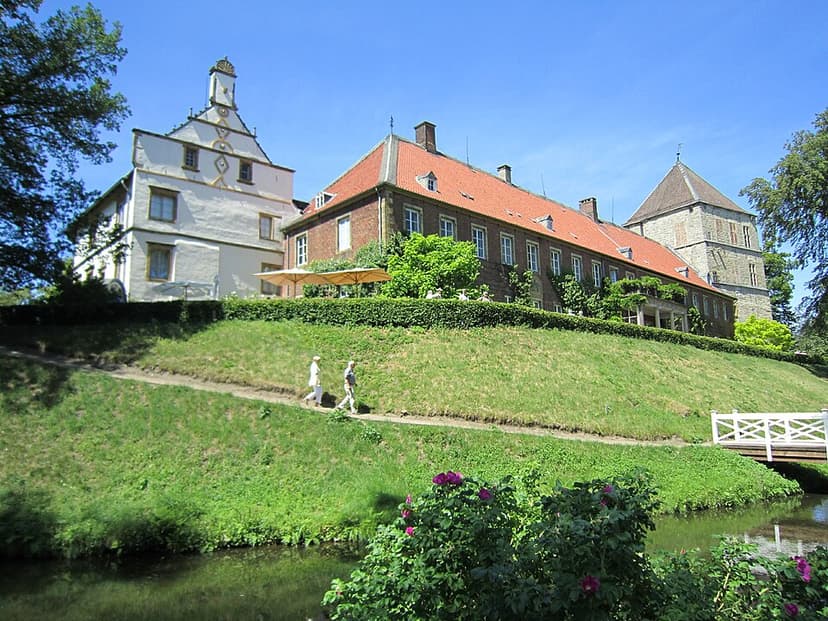
Wiedenbrück
Wiedenbrück is a historic town that merged with Rheda to form the modern city of Rheda-Wiedenbrück in North Rhine-Westphalia, Germany. It boasts a long history, with evidence suggesting a church existed as early as 785 AD and significant development as a town and administrative center from the 10th century onwards. The city was a seat of the Bishopric of Osnabrück and later became part of various German states, experiencing significant events during wartime and periods of reform.

Arnsberg
Arnsberg is a town in North Rhine-Westphalia, Germany, historically significant as the seat of the Counts of Arnsberg and later a possession of the Electorate of Cologne. Situated in the Ruhr river valley and surrounded by forests, it retains remnants of its past, including Arnsberg Castle. The town has undergone significant administrative mergers, most notably in 1975, to form its current structure, and has experienced periods of destruction, particularly during World War II.

Herford
Herford is a town in North Rhine-Westphalia, Germany, with a history dating back to its founding by Charlemagne in 789 to guard a river ford. It was once a Free Imperial City and a member of the Hanseatic League before being annexed by Brandenburg-Prussia. Today, Herford is known for its historical architecture, museums like the MARTa Herford, and as a cultural center hosting the Northwest German Philharmonic.