
Halle
Halle (Saale) is a significant city in Saxony-Anhalt, Germany, known for its historical importance in salt harvesting and as a center for education and industry. It played a key role in the Reformation and Pietism movements, and later became an industrial hub. The city boasts a rich cultural heritage, being the birthplace of composer George Frideric Handel and home to the Martin Luther University of Halle-Wittenberg.
Key Facts
- ›Founded at least as early as AD 806.
- ›Became a member of the Hanseatic League by 1281.
- ›A significant center for Pietism and the Reformation.
- ›Birthplace of Baroque composer George Frideric Handel.
- ›Home to the Martin Luther University of Halle-Wittenberg, founded in 1694.
- ›Experienced significant bombing during World War II.

Baroque, Renaissance, Gothic, Romanesque
- Martin Luther University of Halle-Wittenberg
- German National Academy of Sciences Leopoldina
- Handel House
- Marktkirche
- Roter Turm
- Francke Foundations
- State Museum of Prehistory
- Halloren Chocolate Factory
- Giebichenstein Castle
- Moritzburg Castle
- Saale-Elster Viaduct
Hall In Sachsen, Halle An Der Saale, Halle/Saale
Martin Luther, Cardinal Albert of Mainz, Frederick William I of Prussia, George Frideric Handel, Henry Muhlenberg, Frederick Muhlenberg, Johann Friedrich Reichardt, Johann Wolfgang Von Goethe, Lyonel Feininger
- Member of the Hanseatic League
- Center of Pietism and Reformation
- Battle of Halle
- Part of Prussian Province of Saxony
- Kz-AußEnlager Birkhahn Subcamp During Wwii
- Wwii Bombing Raids
- Occupation By American and Then Red Army Forces
- Capital of Saxony-Anhalt
- Capital of Bezirk Halle
- Halle Synagogue Shooting
About Halle
Halle (Saale)
Halle (Saale), often referred to simply as Halle, is a historically rich city in the German state of Saxony-Anhalt, recognized as its second-largest urban center. Its origins trace back to at least AD 806, with evidence of salt harvesting activities dating much further into the Bronze Age. This ancient resource shaped the early economy and identity of the settlement, contributing to its membership in the Hanseatic League by 1281. Halle rose to prominence as a significant locale during the Reformation and became a vital hub for the Pietism movement in the 17th and 18th centuries, influencing religious and educational developments.
Historical and Cultural Significance
The city's importance in education was solidified with the founding of the University of Halle in 1694, now integrated into the Martin Luther University of Halle-Wittenberg. Halle is also the birthplace of the renowned Baroque composer George Frideric Handel, whose life and work are celebrated through annual festivals and a dedicated museum housed in his former residence. Culturally, Halle has been a vibrant center, attracting figures of German Romanticism and later, artists like Lyonel Feininger.
Modern Development and Challenges
In the 20th century, Halle transitioned into an industrial center, particularly in the chemical sector, and was a major city in East Germany. The city experienced significant destruction during World War II due to bombing raids. Post-reunification, Halle faced economic challenges and a decline in population due to industrial restructuring. However, it remains a key economic and educational nexus in Central Germany, home to institutions like the German National Academy of Sciences Leopoldina and significant infrastructure such as the Saale-Elster Viaduct.
Source: Wikipedia ↗
Frequently Asked Questions
What is Halle (Saale) known for historically?
Halle's history is deeply connected to salt harvesting, which has taken place since at least the Bronze Age. It was also an important location for Martin Luther's Reformation and a center for the Pietism movement. The city was a member of the Hanseatic League as early as 1281.
When was Halle (Saale) founded?
The earliest documented mention of Halle dates to AD 806. Salt harvesting has been a practice in the area since at least the Bronze Age (2300–600 BC), indicating a long history of settlement and activity.
What is the significance of Halle (Saale) in education and culture?
Halle is home to the Martin Luther University of Halle-Wittenberg, one of Germany's oldest universities, and the German National Academy of Sciences Leopoldina. It is also recognized as the birthplace of composer George Frideric Handel, with his former home now serving as a museum.
What happened to Halle (Saale) during World War II?
During World War II, Halle was the site of a subcamp of Buchenwald concentration camp, where prisoners were forced to work in aircraft plants. The city also suffered two major bombing raids in March 1945, which killed over 1,000 inhabitants and destroyed thousands of buildings.
What is the current status of Halle (Saale)?
Halle is an economic and educational center in Central Germany and the second-largest city in Saxony-Anhalt. It has a population of around 226,000 inhabitants. While it experienced a population decline after German reunification due to industrial loss, its foreign population has been growing since 2015.
Related Monasteries

Hungary
Hungary is a landlocked nation in Central Europe with a rich history dating back to the late ninth century. It transformed from a principality into a Christian medieval kingdom, experienced periods of division and reunification under various empires, and played a significant role as part of the Austro-Hungarian Monarchy. The country has a strong cultural heritage, with notable contributions to arts, music, literature, and science, and is a popular tourist destination.

Aurillac Abbey
Aurillac Abbey, also known as the Abbey of Saint Gerald, was a significant Benedictine monastery founded around 895 by Count Gerald of Aurillac in Auvergne. It was a prominent intellectual and cultural center during the Middle Ages, influencing the foundation of Cluny and fostering the 10th-century French cultural renewal, notably educating Gerbert of Aurillac, who later became Pope Sylvester II. Though destroyed during the French Wars of Religion and suppressed during the Revolution, remnants of its historical importance persist.
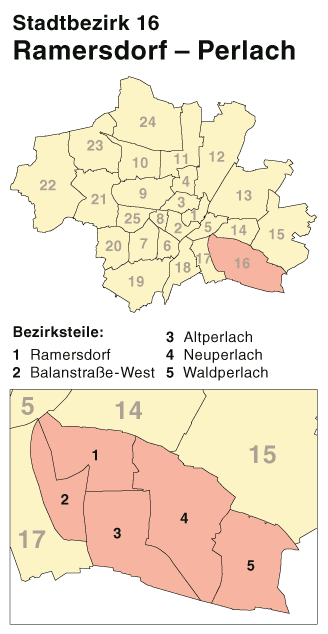
Ramersdorf
Ramersdorf-Perlach is a populous borough in Munich, Germany, formed from the former municipalities of Ramersdorf and Perlach. Its history stretches back to at least the 9th century, with Ramersdorf being first documented in the early 11th century. The borough is known for its mix of historical religious sites, modern economic centers, and extensive recreational areas.