
Goch
Goch is a town in the Kleve district of North Rhine-Westphalia, Germany, with a history dating back at least 750 years, first mentioned in 1259. It was historically part of the Duchy of Cleves and suffered complete destruction during World War II. The town is also known for its association with notable figures, including medieval theologian Johannes von Goch and the painter Vincent van Gogh, whose name suggests ancestral ties to the region.
Key Facts
- ›First mentioned in a document dated 1259, indicating it is at least 750 years old.
- ›Historically part of the Duchy of Cleves.
- ›Completely destroyed by Allied bombing during World War II.
- ›Experienced a Magnitude 4.5 earthquake on September 8th, 2011.
- ›Associated with Vincent van Gogh, whose surname suggests ancestral origins in Goch.

Proximity To the Netherlands Border
Gog
Johannes Von Goch, Vincent Van Gogh
- First Mentioned In 1259
- Completely Destroyed During World War Ii
- Magnitude 4.5 Earthquake On September 8th, 2011
About Goch
Goch is a town situated in the Kleve district of North Rhine-Westphalia, Germany, in close proximity to the border with the Netherlands. Its historical roots are significant, with the earliest documented mention of Goch appearing in a text from 1259, establishing its age as at least 750 years. The town was historically part of the Duchy of Cleves.
Historical Context and Destruction
During the tumultuous period of World War II, Goch faced immense devastation. The town was completely leveled by Allied bombers as part of Operation Veritable. In more recent times, on September 8th, 2011, Goch experienced a Magnitude 4.5 earthquake, which caused damage to both its infrastructure and residential buildings.
Notable Associations
Goch holds a place in history through its association with notable individuals. Johannes von Goch, a medieval theologian, hailed from this region. Furthermore, the name of the renowned painter Vincent van Gogh suggests a likely ancestral connection to Goch, translating as "Vincent from Goch."
Source: Wikipedia ↗
Frequently Asked Questions
When was Goch first mentioned?
Goch was first mentioned in a document dated 1259. This indicates that the town has a history spanning at least 750 years.
What historical events significantly impacted Goch?
Goch was completely destroyed by Allied bombers during Operation Veritable in World War II. More recently, on September 8th, 2011, the town was struck by a Magnitude 4.5 earthquake, causing damage to infrastructure and homes.
Is Goch known for any notable people?
Yes, Goch is associated with several notable figures. These include Johannes von Goch, a medieval theologian, and it is believed that Vincent van Gogh, the famous painter, has ancestors from this area, as indicated by his surname.
What is the geographical location of Goch?
Goch is located in the Kleve district of North Rhine-Westphalia, Germany. It is situated close to the border with the Netherlands, 12 km south of Kleve and 27 km southeast of Nijmegen.
Related Monasteries
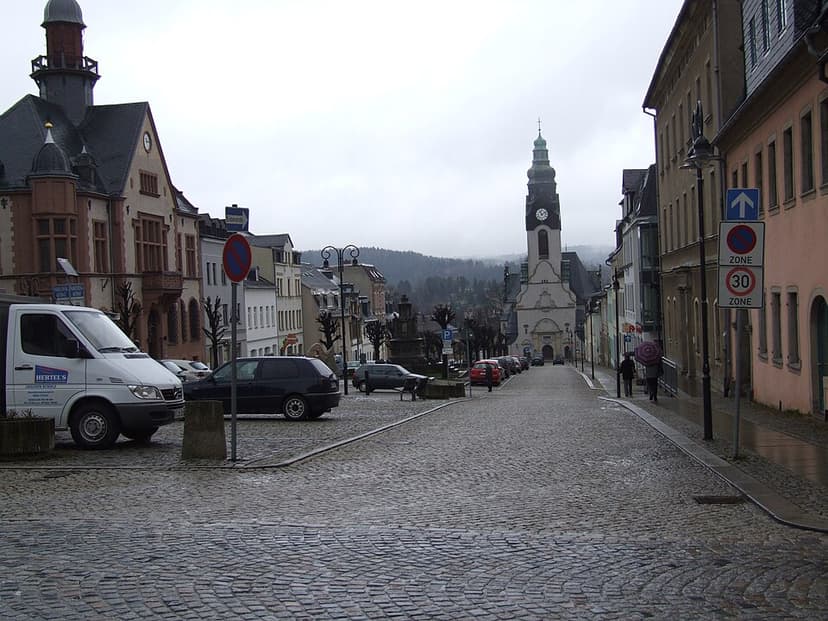
Adorf
Adorf is a small town in the Vogtlandkreis region of Saxony, Germany, with a history dating back to around 1200 when it was founded. It gained town status in 1293 and developed as a center for crafts, spinning, weaving, and musical instrument making due to its strategic location and transport links. Despite being destroyed by fire in 1768, Adorf has preserved historical structures like the Freiberger Tor, the last remaining town gate in Vogtland, and boasts attractions such as Miniaturschauanlage Klein-Vogtland.

Beckum
Beckum is a town in North Rhine-Westphalia, Germany, whose name originates from "home upon the brooks" due to its location near three streams. Granted town charter in 1224, it experienced periods of growth and hardship, eventually becoming a major center for the chalk and cement industries in the late 19th century. Today, Beckum is an industrial town with a focus on machine engineering and cement production.

Gevelsberg
Gevelsberg is a town in North Rhine-Westphalia, Germany, with a history dating back nearly 785 years. Its origins are closely tied to the establishment of a monastery of atonement following the assassination of Archbishop Engelbert II of Berg in 1225. The town experienced significant population growth in the 19th century due to the development of iron processing industries.