
Essen Abbey
Secular Canonesses·Germany·Ruins/Museum (Cathedral and Treasury)·9th century
Essen Abbey was a significant community of secular canonesses for women of high nobility, founded around 845 by Saint Altfrid. It served as the nucleus of modern-day Essen, Germany, with its abbesses exercising considerable secular and spiritual authority over extensive estates. The abbey became an Imperial abbey and was known for its wealth, art treasures, and the high social standing of its members, remaining a powerful entity until its dissolution in 1803.
Key Facts
- ›Founded around 845 by Saint Altfrid.
- ›Exclusively admitted women from the highest circles of German nobility.
- ›Became an Imperial abbey (reichsunmittelbar) between 874 and 947.
- ›Abbesses were designated 'Princesses' (Fürstin) from 1228.
- ›Dissolved in 1803.
- ›The former abbey church is now Essen Cathedral.
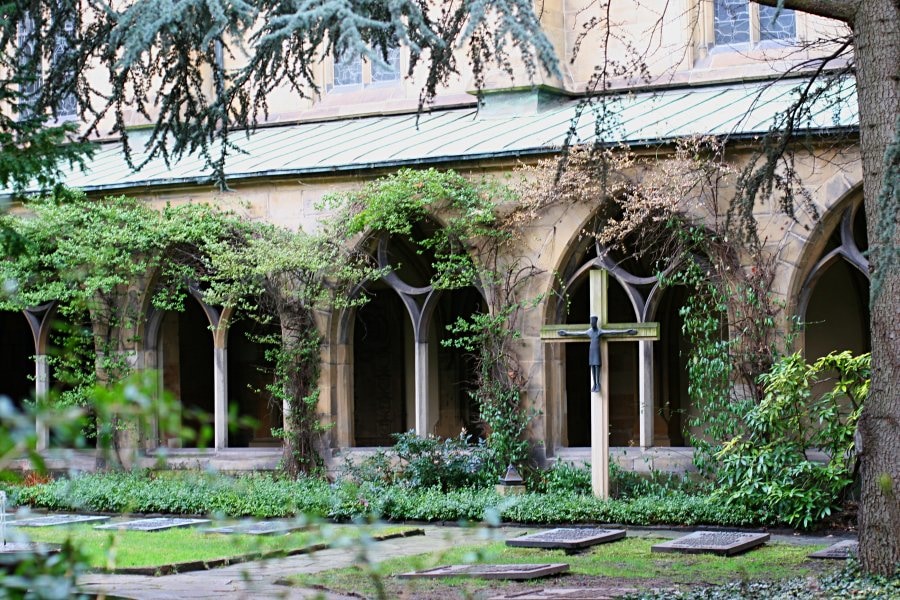
Essener MüNster, Essen Cathedral Treasury, Golden Madonna of Essen, Processional Cross of Otto and Mathilde
Stift Essen
Saint Altfrid, Gerswit, Mathilde, Maria Kunigunde Von Sachsen
- Dissolution In 1803
- Town of Essen's Efforts To Become An Independent Imperial City Were Frustrated By the Abbey In 1399 and 1670.
About Essen Abbey
Essen Abbey (Stift Essen)
Essen Abbey was a distinguished community of secular canonesses, comprised exclusively of women from the highest echelons of German nobility. Founded around 845 near a royal estate known as Astnidhi by Saint Altfrid, its existence formed the foundational nucleus of the modern city of Essen, Germany. The abbey held significant power, with its abbesses wielding authority akin to bishops (excluding sacramental duties) and acting as rulers over extensive territorial lordships.
History and Significance
The abbey's close ties to the Liudolfing dynasty, the family of the Ottonian Emperors, elevated it to the status of an Imperial abbey (reichsunmittelbar) sometime between 874 and 947. Unlike monastic orders with vows of strict celibacy, the canonesses lived in relative comfort, possessed private staff, wore secular clothing, and could leave the abbey to marry.
The abbey experienced a period of considerable prosperity and artistic acquisition under Abbess Mathilde, granddaughter of Emperor Otto I, who governed from 973 to 1011. During her tenure, many of the most important art treasures now housed in the Essen Cathedral treasury were acquired or donated, including the Processional Cross of Otto and Mathilde. Subsequent abbesses, also from the Liudolfing lineage, continued to augment the abbey's wealth and influence. By 1228, the abbesses were formally recognized as 'Princesses' (Fürstin), and from 1300, they increasingly resided at Schloss Borbeck.
The territorial lordship of the abbey, encompassing the town of Essen, expanded significantly between the Emscher and Ruhr rivers. The abbey actively prevented the town's efforts to achieve independent Imperial city status in 1399 and again in 1670. The abbey's influence also extended to the monastery of Stoppenberg, founded in 1073, and the collegiate foundation of Rellinghausen. Its possessions included approximately 3,000 farms that owed dues.
The abbey's Vögte (protectors or administrators) included prominent noble families such as the Counts of Berg, the Counts of the Mark, the Dukes of Cleves, and later the Margraves of Brandenburg. A contract in 1495 with the Dukes of Cleves and Mark diminished the abbey's autonomy by removing its ability to choose its own Vogt.
Dissolution and Legacy
Essen Abbey was dissolved in 1803. Its spiritual territory was absorbed by Prussia, then the Duchy of Berg, and finally returned to Prussia. The last abbess, Maria Kunigunde von Sachsen, passed away in Dresden in 1826. In 1958, when the Diocese of Essen was established, the former abbey church was consecrated as Essen Cathedral. The abbey's significant treasury, including the renowned Golden Madonna of Essen, was transferred to the cathedral and remains a testament to its rich history and artistic patronage.
Source: Wikipedia ↗
Frequently Asked Questions
When was Essen Abbey founded?
Essen Abbey was founded around 845 by Saint Altfrid, who was later the Bishop of Hildesheim.
Who was admitted to Essen Abbey?
Only women from the highest circles of German nobility were accepted into the community of secular canonesses at Essen Abbey.
What was the status of the abbesses of Essen Abbey?
In the medieval period, the abbess exercised functions similar to a bishop, excluding sacramental duties, and acted as a ruler over the abbey's extensive estates. From 1228, they were officially designated as 'Princesses' (Fürstin).
What happened to Essen Abbey?
Essen Abbey was dissolved in 1803. Its spiritual territory was passed to Prussia and later to the Duchy of Berg before returning to Prussian control. The former abbey church became Essen Cathedral in 1958.
What is notable about the art treasures of Essen Abbey?
Under Abbess Mathilde in the late 10th and early 11th centuries, many important art treasures were acquired for the abbey. These now form part of the treasury of Essen Cathedral, including the famous Golden Madonna of Essen.
Related Monasteries

Corvey Abbey
Corvey Abbey was a significant former Benedictine abbey and ecclesiastical principality in Germany, founded in the 9th century. It played a crucial role in the Christianization of Saxony and became a major cultural and economic center, renowned for its school and library. Though largely destroyed during the Thirty Years' War, its Carolingian Westwerk remains, and the former abbey buildings now function as Schloss Corvey, a palace open to the public.

Gerresheim
Gerresheim is a historic quarter of Düsseldorf, Germany, with a history stretching back over 1,000 years as an independent city and a significant religious foundation. It was founded in 870 by Gerricus as the women's collegiate foundation of St. Margaret's, later gaining city rights in 1368. Despite periods of hardship and conflict, Gerresheim retains important historical buildings and infrastructure, and was voluntarily incorporated into Düsseldorf in 1909.

Halle
Halle (Saale) is a significant city in Saxony-Anhalt, Germany, known for its historical importance in salt harvesting and as a center for education and industry. It played a key role in the Reformation and Pietism movements, and later became an industrial hub. The city boasts a rich cultural heritage, being the birthplace of composer George Frideric Handel and home to the Martin Luther University of Halle-Wittenberg.