
Ellerton Priory
Ellerton Priory was a Cistercian nunnery located in Swaledale, North Yorkshire, England. Its founding date is uncertain, likely in the late 12th century, and it endured significant damage from Scottish raids in 1342. The priory was formally dissolved and surrendered to the Crown in 1536 during the Dissolution of the Monasteries, with its ruins now a scheduled Ancient Monument.
Key Facts
- ›Founded in the late 12th century, though the exact founders are debated.
- ›Suffered severe damage from Scottish marauders in 1342.
- ›Dissolved in 1536 as part of the Dissolution of the Monasteries.
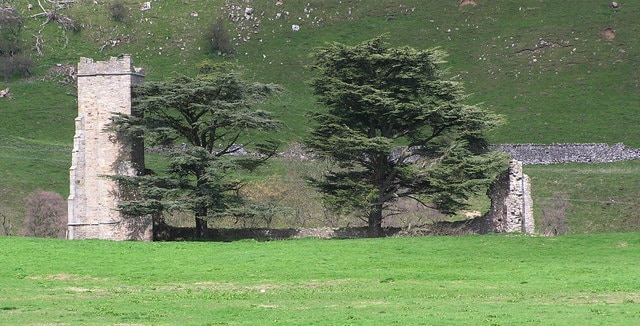
- ›The ruins include the remains of a 15th-century priory church.
- ›The church tower was reportedly rebuilt as a romantic ruin in the 19th century.
- ›There is no public access to the ruins.
Gothic
Remains of Priory Church, 19th-Century Romantic Ruin of Church Tower
Joan Harkey, Cecily Swale
Scottish Raids In 1342, Dissolution of the Monasteries In 1536
About Ellerton Priory
Ellerton Priory was a monastic establishment for Cistercian nuns situated in Swaledale, within the historic county of North Yorkshire, England. The priory's ruins are now located in the civil parish of Ellerton Abbey.
History and Significance
The precise circumstances surrounding the establishment of Ellerton Priory remain uncertain, with probable founding occurring in the late 12th century. Historical speculation points to several potential founders, including the Egglescliffe family, Warnerus, who served as chief steward to the Earl of Richmond, or Wymerus of the Aske family. The priory faced significant hardship in 1342 when it was heavily damaged by marauding Scottish forces, described as having razed and despoiled the convent.
In 1536, during the Dissolution of the Monasteries, commissioners led by Thomas Cromwell inspected the convent. The prioress at the time, Joan Harkey, reported that one of her nuns, Cecily Swale, sought release from her vows to leave the convent, having already given birth to a child. Although not all monasteries were immediately closed during this phase, Ellerton Priory was formally surrendered to the Crown in August 1536 and officially dissolved in the following year. The site is recognized as a scheduled Ancient Monument, with certain parts of the priory buildings designated as Grade II listed.
Architectural Remains and Accessibility
The remaining ruins of Ellerton Priory are situated near the road connecting Richmond and Reeth, approximately one mile downstream from the former Benedictine Priory of Marrick. Among the visible ruins are the remnants of the priory church, which dates from the 15th century. It appears that the church tower was later re-established as a romantic ruin during the 19th century. Importantly, there is no public access granted to the ruins of Ellerton Priory.
Source: Wikipedia ↗
Frequently Asked Questions
When was Ellerton Priory founded?
The exact founding date of Ellerton Priory is uncertain, but it is believed to have been established in the late 12th century. Historical accounts suggest potential founders including the Egglescliffe family, Warnerus (chief steward to the Earl of Richmond), or Wymerus of the Aske family.
What happened to Ellerton Priory?
Ellerton Priory was dissolved in 1536 during the Dissolution of the Monasteries under Thomas Cromwell. It was formally surrendered to the Crown in August of that year and dissolved in the following year.
Can I visit Ellerton Priory?
No, there is no public access to the ruins of Ellerton Priory. The site is a scheduled Ancient Monument.
What historical events impacted Ellerton Priory?
In 1342, Ellerton Priory was severely damaged by marauding Scots, who are described as having razed and despoiled the priory. Later, in 1536, it was inspected by Thomas Cromwell's commissioners as part of the Dissolution of the Monasteries, leading to its surrender and dissolution.
Related Monasteries
Aldgate Priory
Holy Trinity Priory, also known as Christchurch Aldgate, was an Augustinian priory founded around 1108 by Queen Matilda of Scotland near Aldgate in London. It held significant ties to English royalty, with several queens maintaining a close relationship with the priory and some royal children buried there. The priory was a center of learning in the 12th century and played a role in civic life, with its prior serving as an Alderman of London. It was dissolved in 1532 and its buildings have since been largely lost, with only remnants surviving.

Ankerwycke Priory
Ankerwycke Priory was a small and relatively poor Benedictine nunnery established around 1160 in Buckinghamshire, England. Dedicated to St. Mary Magdalene, it held lands across several counties. Dissolved in 1536, its revenues were transferred to Bisham Abbey, and the priory site later saw the construction of a manor house. Today, only a small section of ruins remains, situated in Berkshire.

Arthington Priory
Arthington Priory was an English monastery for nuns of the Cluniac congregation, located in Arthington, West Yorkshire, and founded in the mid-12th century. It was one of only two Cluniac nunneries in England. The priory experienced periods of disciplinary issues among its nuns and prioresses, as documented by Archbishop William Greenfield's visits and injunctions. Following the Dissolution of the Monasteries under Henry VIII, the priory was surrendered in 1540, and its lands were eventually granted to Archbishop Thomas Cranmer. Today, little remains of the original priory structures, with a residence known as Arthington Hall built on the site around 1585, and the priory church potentially occupied by a farmhouse named The Nunnery.