
Doncaster Whitefriars
Catholic·England·Active shrine within a church·14th century
Our Lady of Doncaster is a Marian shrine with a history deeply intertwined with the Carmelite friary in Doncaster, England. The original shrine, featuring a statue venerated by royalty and pilgrims, was a significant religious site in medieval Yorkshire. Although destroyed during the English Reformation, devotion was revived, leading to the establishment of a modern shrine in St Peter-in-Chains Church in 1973.
Key Facts
- ›The original shrine was part of the Carmelite friary in Doncaster.
- ›It was founded by John Nicbrother, with patronage from Richard II and John of Gaunt.
- ›The shrine was a notable stop for royal visitors, including Henry VII and Margaret Tudor.
- ›The original statue was destroyed during the English Reformation.
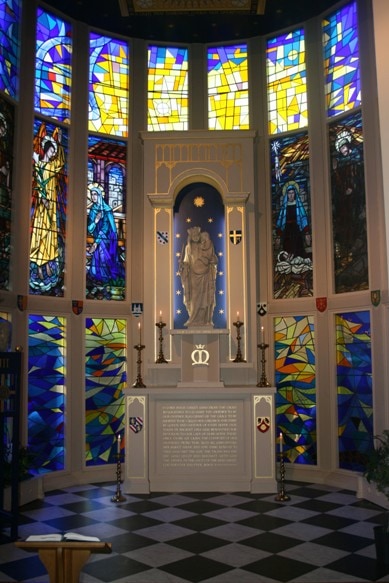
- ›A modern shrine was established in St Peter-in-Chains Church in 1973.
- ›The feast day of our Lady of Doncaster is celebrated on June 4th.
- Original Marian Shrine
- Carmelite Friary Remnants
- Modern Shrine Chapel In St Peter-In-Chains Church
- Fragments of Stone From Reformation-Destroyed Religious Establishments Incorporated Into Stations of the Cross
Shrine of Our Lady of Doncaster
John Nicbrother, Richard Le Ewere, Richard Ii, John of Gaunt, Henry Vii, Margaret Tudor, Henry Iv, Edward Iv, Anthony Woodville, 2nd Earl Rivers, Bishop Hugh Latimer, Robert Leche, William Nicholson, Cardinal John Carmel Heenan
- Founding of the Carmelite Friary and Shrine
- Royal Visits By Henry Vii, Margaret Tudor, Henry Iv, and Edward Iv
- Pilgrimage of Grace
- Surrender of the Priory To the Crown
- Destruction of the Original Statue
- Establishment of A Modern Shrine In 1868
- Transfer of the Shrine To A New Church In 1973
About Doncaster Whitefriars
Our Lady of Doncaster
Our Lady of Doncaster refers to a significant Marian shrine that was historically located within the Carmelite friary in Doncaster, South Yorkshire, England. The shrine gained prominence during the Middle Ages, attracting royal pilgrims and becoming the most important shrine dedicated to the Virgin Mary in Yorkshire. Its historical roots are tied to the Carmelite friary, which was founded in the mid-14th century with royal patronage.
History and Significance
The Carmelite friary in Doncaster was established under licence on November 30, 1350, with John Nicbrother and Richard le Ewere as key figures, and receiving patronage from King Richard II and his uncle, John of Gaunt. The friary's strategic location on the Great North Road contributed to its importance as a stopping point for travelers, including royalty. Monarchs such as Henry VII and Margaret Tudor are recorded as having visited and paid homage at the shrine. The shrine was also known for receiving notable bequests, including a hair-shirt from the Earl of Rivers and a silver gilt crown for Princess Margaret Tudor.
Destruction and Revival
The shrine's active veneration came to an end with the English Reformation. During the Pilgrimage of Grace, the Whitefriars served as a headquarters for negotiators. The priory was surrendered to the Crown in 1538, and the Carmelite Prior Laurence Cook was imprisoned. The statue of Our Lady of Doncaster was removed, likely under Archbishop Lee's orders, and is presumed to have been destroyed along with other pilgrimage images. Devotion to Our Lady of Doncaster experienced a revival in later centuries, leading to the establishment of a new shrine in St Peter-in-Chains Church in 1868. A modern shrine was dedicated and transferred to a new octagonal church in 1973, continuing the legacy of this venerated Marian image.
Source: Wikipedia ↗
Frequently Asked Questions
When was the original shrine of Our Lady of Doncaster established?
The original shrine was part of the Carmelite friary in Doncaster, which received licence for its establishment on November 30, 1350. This allowed for the construction of a church in honour of St Mary and dwellings for the friars.
What was the significance of the Doncaster Carmelite friary?
The Carmelite friary in Doncaster became an important religious center, partly due to its location on the Great North Road. It was a favored stopping point for royal progresses and housed the most important shrine to Our Lady in Yorkshire during the medieval period.
Who were some notable visitors to the shrine?
Numerous royal figures visited the shrine, including Henry VII, who heard Mass before the Lady Shrine in 1486, and Margaret Tudor, who was lodged at Whitefriars in 1503 before her marriage to James IV of Scotland. Other visitors included Henry IV and Edward IV.
What happened to the original statue of Our Lady of Doncaster?
The original statue of Our Lady of Doncaster was seized under Archbishop Lee's orders and its fate after that is not definitively known. It is believed to have been among the images destroyed during the English Reformation, potentially burned in Chelsea or Smithfield.
When was a new shrine established?
A new shrine was established in 1868 within the Roman Catholic St Peter-in-Chains Church in Doncaster, with a new statue commissioned. This devotion was further revived, and a modern shrine was transferred to a new St Peter-in-Chains church in 1973.
Is there a modern feast day for Our Lady of Doncaster?
Yes, the feast day of Our Lady of Doncaster is observed on June 4th. This date is associated with the revived devotion to the shrine.
Related Monasteries

Dartford Priory
Dartford Priory was a Dominican nunnery located in Dartford, Kent, founded by King Edward III in 1346. It played a role in the dissolution of the monasteries, after which Henry VIII converted it into a Royal Palace and manor house. The priory is notable for its royal connections and the succession of prioresses recorded over its history.

Bologna Charterhouse
The Certosa di Bologna, originally a Carthusian monastery founded in 1334, was suppressed in 1797 and transformed into Bologna's Monumental Cemetery in 1801. Praised for its transformation into an "open-air museum," it showcases a blend of religious architecture and elaborate funerary monuments, and is also notable for the discovery of an ancient Etruscan necropolis on its grounds. The site is situated on the outskirts of Bologna, near the Stadio Renato Dall'Ara and at the base of Monte della Guardia.

Lienz Friary
Lienz Friary, originally founded as a Carmelite friary in 1349 by Countess Euphemia of Görz, transitioned to Franciscan ownership in 1785. Throughout its history, it has served religious and educational purposes, surviving fires and periods of suppression. Today, it houses an active Franciscan community ministering to the local parish and providing spiritual care.