
Bursfelde Congregation
The Bursfelde Congregation was a significant reform movement within Benedictine monasticism in western and central Germany during the 15th and 16th centuries. Named after Bursfelde Abbey, it aimed to restore stricter adherence to Benedictine rule across numerous male and female monasteries. Despite facing challenges from the Reformation and eventual secularization, the congregation played a key role in revitalizing monastic life for a period.
Key Facts
- ›A union of predominantly west and central German Benedictine monasteries focused on reform.
- ›Named after Bursfelde Abbey, which was reformed by John Dederoth starting in 1433.
- ›Officially approved by Cardinal Legate Louis D'Allemand in 1446.
- ›Reached its peak with at least 136 abbeys and 64 convents before the Reformation.
- ›Faced significant disruption and dissolution due to the Reformation and subsequent secularization.
- ›Formally abolished in 1803 after centuries of operation.

- Focus On Monastic Reform and Restoration of Benedictine Discipline
- Inclusion of Both Male and Female Monasteries
Bursfelde Union
John Dederoth, Johannes De Indagine, Cardinal Nicholas of Cusa, Jan Busch, Louis D'Allemand, Pope Pius Ii, Pope Eugene Iv, Andrew LüDeritz, Bernard Bierbaum
- Reform of Bursfelde Abbey Beginning In 1433
- Approval of the Bursfelde Congregation By Cardinal Legate Louis D'Allemand In 1446
- Approval By Pope Pius Ii In 1458
- Spread of Reform To Belgium, Luxembourg, the Netherlands, and Denmark
- Dissolution of Many Abbeys During the Reformation
- Formal Abolition of the Congregation In 1803
About Bursfelde Congregation
The Bursfelde Congregation
The Bursfelde Congregation, also known as the Bursfelde Union, was a significant movement for monastic reform within the Benedictine tradition, primarily active in western and central Germany from the 15th to the early 19th century. Its impetus came from the broader European push for ecclesiastical reforms during the 15th century, with key figures like John Dederoth initiating work at Bursfelde Abbey in 1433.
Foundation and Growth
Dederoth's efforts at Bursfelde Abbey, which had fallen into neglect, were highly successful. His successor, Johannes de Indagine, continued this work, securing official approval for the Bursfelde Congregation from Cardinal Legate Louis d'Allemand in 1446. The congregation was further recognized and granted privileges by papal bulls from Nicholas of Cusa and Pope Pius II. At its zenith, prior to the Protestant Reformation, the Bursfelde Congregation encompassed at least 136 abbeys and 64 convents, making it a widespread force for Benedictine renewal across Germany and influencing monasteries in neighboring regions.
Challenges and Dissolution
The Bursfelde Congregation faced considerable challenges with the advent of the Protestant Reformation and associated social unrest. Many of its affiliated monasteries were dissolved, their assets confiscated by Protestant rulers, and their religious buildings repurposed. Despite these setbacks, the congregation persisted until the widespread secularization of monastic properties at the close of the 18th and the beginning of the 19th centuries. The Bursfelde Congregation was formally abolished in 1803, marking the end of its organized existence after centuries of promoting Benedictine reform.
Source: Wikipedia ↗
Frequently Asked Questions
What was the Bursfelde Congregation?
The Bursfelde Congregation was a union of Benedictine monasteries, primarily in west and central Germany, dedicated to reforming monastic practices. It included both men's and women's religious houses and aimed to reinstate a stricter adherence to the Benedictine rule.
When was the Bursfelde Congregation founded and approved?
While the reform efforts began with John Dederoth's work at Bursfelde Abbey in 1433, the Bursfelde Congregation was officially approved by Cardinal Legate Louis d'Allemand on March 11, 1446. Its statutes were later approved by Pope Pius II in 1458.
How many monasteries were part of the Bursfelde Congregation?
At its height, shortly before the Protestant Reformation, the Bursfelde Congregation comprised at least 136 abbeys and 64 convents. These monasteries were spread across various parts of Germany.
What led to the decline of the Bursfelde Congregation?
The Bursfelde Congregation was significantly impacted by the religious upheaval of the Reformation and subsequent peasant uprisings. Many of its monasteries were dissolved, their possessions confiscated by Protestant rulers, and their churches repurposed.
When did the Bursfelde Congregation officially cease to exist?
The Bursfelde Congregation continued to exist despite the challenges of the Reformation, though its work was greatly impeded. It was formally abolished in 1803 following the compulsory secularization of its remaining monasteries at the end of the eighteenth and beginning of the nineteenth centuries.
Related Monasteries
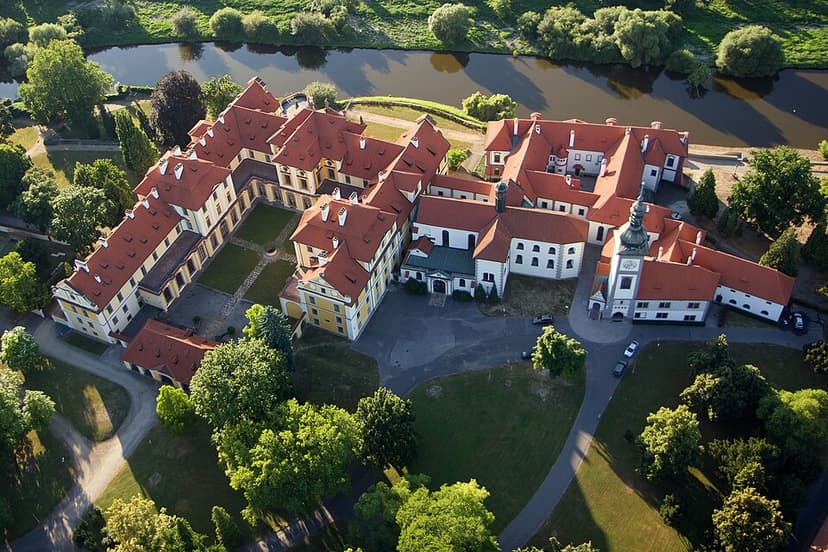
Zbraslav Monastery
The Cistercian Abbey of Zbraslav, also known as Aula Regia, was a prominent monastery in the Kingdom of Bohemia, founded by King Wenceslaus II in 1292. It served as the royal necropolis for the Přemyslid dynasty and was abolished in 1789 by Emperor Joseph II. The abbey is renowned for its abbot, Peter of Zittau, author of the Zbraslav Chronicle, and for the significant Gothic painting, the Madonna of Zbraslav.

Claro Abbey
Claro Abbey, officially Monastero di Santa Maria Assunta supra Claro, is a Benedictine community of nuns located east of Claro in the Canton of Ticino, Switzerland. Founded in 1490, it was dedicated to the Assumption of the Virgin Mary and quickly established itself, growing to 16 nuns by 1516. The abbey has historically been involved in religious education and has undergone several expansions, reflecting its enduring significance as a cultural asset of regional importance.

St. Scholastica's Monastery
The Monastery of St. Scholastica in Birgu, Malta, is home to a Benedictine order established in 1496. Originally situated in Mdina, the monastery relocated to Birgu in 1604, eventually moving to its current larger premises, the former Sacra Infermeria, in 1652. The attached church, dedicated to St. Anne, was built between 1679 and 1680, designed by Lorenzo Gafà.