
Bridgettine
The Bridgettine Order, formally known as the Order of the Most Holy Saviour, is a Catholic monastic religious order founded by Saint Birgitta of Sweden in 1344. Initially following the Rule of Saint Augustine, the order established its first monastery at Vadstena in 1369 and played a significant role in Scandinavian culture and literature. Despite the Protestant Reformation, the order persisted, with various branches and reformed congregations continuing to operate globally, dedicated to prayer, hospitality, and the devotion to the Passion of Jesus Christ.
Key Facts
- ›Founded by Saint Birgitta of Sweden in 1344 and approved by Pope Urban V in 1370.
- ›Follows the Rule of Saint Augustine.
- ›The first monastery was established at Vadstena, Sweden, in 1369.
- ›Historically spread to 80 houses, with significant presence in Scandinavia and England.
- ›Features a distinctive veil for sisters called the 'Crown of the five Holy Wounds' and a red cross with a Eucharistic host for monks.
- ›Modern branches include medieval, Spanish, Swedish, and UK branches, with a total of 800 members as of 2013.
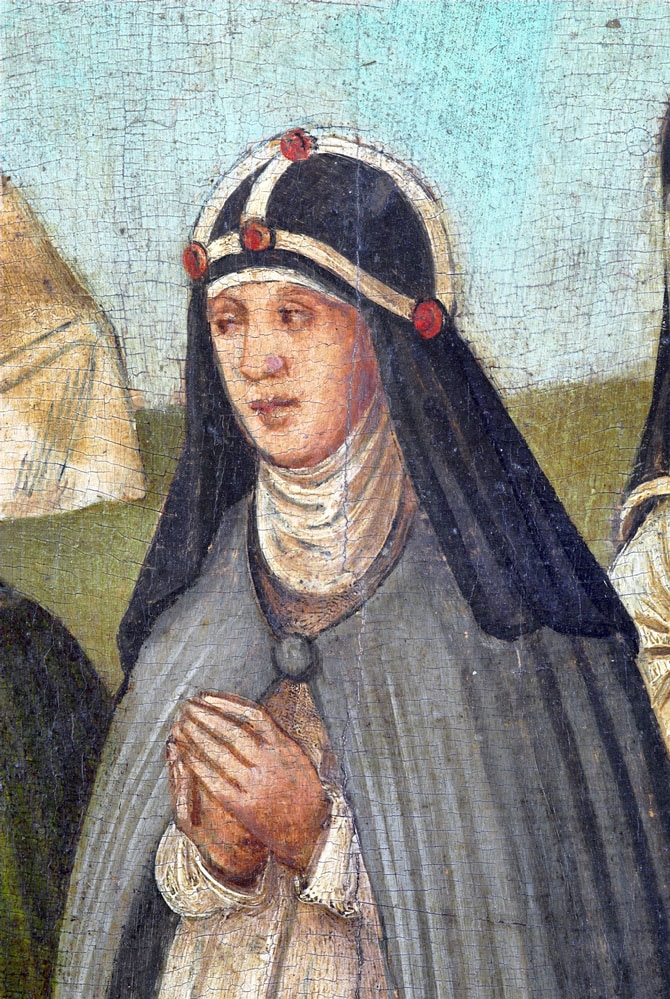
- Crown of the Five Holy Wounds Veil
- Red Cross With Eucharistic Host On Monk's Cloak
- Own Proper Rite For the Canonical Hours
- Bed and Breakfast Hospitality
Birgittines, Order of the Most Holy Saviour
Saint Birgitta, Pope Urban V, Lady Ingegerd Knutsdotter, Richard Reynolds, Elizabeth Sander, Marina De Escobar, Saint Elizabeth Hesselblad, Brother Benedict Kirby
- Founding of the Order
- Papal Approval
- Founding of Vadstena Monastery
- Dissolution of Syon Abbey Under Henry Viii
- Restoration of Syon Abbey Under Queen Mary I
- Exile of Syon Abbey Community During Queen Elizabeth I's Reign
- Return of Syon Abbey Community To England
- Controversy Over Treatment of Indian Sisters
About Bridgettine
The Bridgettine Order
The Bridgettine Order, formally known as the Order of the Most Holy Saviour (Latin: Ordo Sanctissimi Salvatoris; OSsS), is a Catholic monastic religious order established by Saint Birgitta (Bridget of Sweden) in 1344. The order received papal approval from Pope Urban V in 1370 and follows the Rule of Saint Augustine. Historically, the Bridgettines played a notable role in promoting culture and literature, particularly in Scandinavia, where their motherhouse at Vadstena remained active until 1595, even amidst the Protestant Reformation.
History and Spread
The first Bridgettine monastery was founded in 1369 at Vadstena, Sweden. The order expanded significantly, reaching a total of 80 houses at its peak, with a prominent foundation being Syon Abbey in England, established by King Henry V in 1415. Syon Abbey was a highly influential community until its Dissolution under King Henry VIII. During Queen Mary I's reign, it was briefly restored, but the Bridgettine community eventually went into exile during Queen Elizabeth I's persecution of Catholics, eventually settling in Lisbon, Portugal, before returning to England in 1861.
Modern Bridgettines
Today, the Bridgettine Order comprises several distinct branches, including a medieval branch, a Spanish branch, and the largest branch founded by Saint Elizabeth Hesselblad in 1911, which focuses on providing hospitality. As of 2013, the order had 800 members globally. The order is known for its distinctive religious attire, including the 'Crown of the Five Holy Wounds' veil for sisters and a red cross with a Eucharistic host for monks. Most houses support themselves through providing bed and breakfast hospitality.
Source: Wikipedia ↗
Frequently Asked Questions
When was the Bridgettine Order founded?
The Bridgettine Order was founded in 1344 by Saint Birgitta of Sweden. It received papal approval from Pope Urban V in 1370.
What is the main religious tradition of the Bridgettines?
The Bridgettine Order is a monastic religious order of the Catholic Church. They follow the Rule of Saint Augustine.
Where was the first Bridgettine monastery established?
The first monastery of the Bridgettine Order was founded in 1369 at the former royal castle of Vadstena in Sweden.
What are some distinctive features of the Bridgettine habit?
The professed sisters wear a veil known as the 'Crown of the Five Holy Wounds,' which has five red marks recalling the Five Wounds of Christ. Monks wear a red cross with a Eucharistic host at its center on their cloak.
Are there different branches of the Bridgettine Order today?
Yes, there are several different branches. These include the medieval branch, a Spanish branch founded by Marina de Escobar, and the largest branch founded by Saint Elizabeth Hesselblad.
What is the current size of the Bridgettine Order?
As of 2013, the Bridgettine Order had approximately 800 members.
Related Monasteries

Halmstad
Halmstad is a significant Swedish port city located at the mouth of the Nissan River in Halland province. It received its first city charter in 1307 and has a long history marked by numerous battles and occupations due to its strategic location. The city evolved from early settlements with monasteries to a modern industrial and university center.

Dalby Abbey
Dalby Church, also known as the Church of the Holy Cross in Dalby, is one of Sweden's oldest stone churches, commissioned by King Sweyn II of Denmark in the second half of the 11th century. It briefly served as a bishopric before being incorporated into the Diocese of Lund and later developing into a monastery in the 12th century. Despite significant dilapidation after the Reformation, extensive archaeological investigations and restorations have preserved much of its historical and architectural significance.

Linköping
Linköping is a historic city in southern Sweden, renowned for its prominent cathedral, which serves as the episcopal see for the Diocese of Linköping. Historically significant as an early diocese and a site for important diets, the city has evolved into a modern hub for higher education and high-technology industries. Its development accelerated significantly after the establishment of the Saab aircraft industry and Linköping University, positioning it as a vibrant center for innovation and culture.