
Baxterwood Priory
Baxterwood Priory was a Benedictine monastery with origins in Haswell, County Durham, England. Originally founded as "The Church of St Mary of Haswell" in the late 12th century, it was later relocated to Baxterwood. The monastic farm evolved into private residences, with Haswell Grange being demolished and replaced by Elemore Grange in the 18th century.
Key Facts
- ›Founded in the latter part of the 12th century as "the Church of St Mary of Haswell".
- ›Relocated to Baxterwood, possibly in 1196.
- ›Originally associated with Augustinian canons before becoming a Benedictine priory.
- ›Its lands and vills were conferred on Finchale Priory.
- ›The site was located near the Battle of Neville's Cross.
- ›The monastic farm developed into private estates, including Haswell Grange and later Elemore Grange.
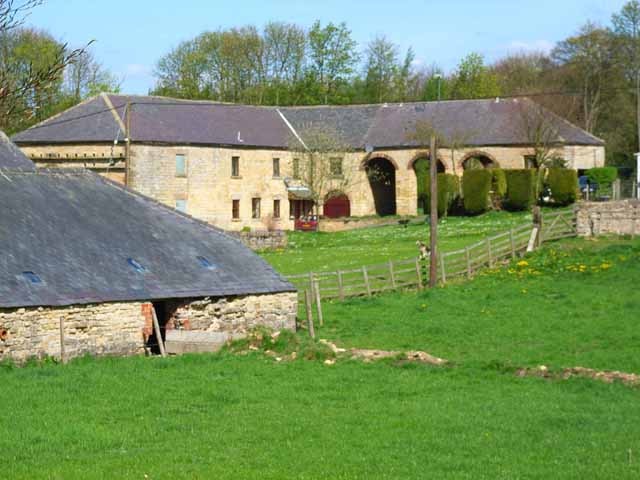
- Site of the Battle of Neville's Cross Proximity
- Evolution Into Private Estates
the Church of St Mary of Haswell, New Place Upon the Browney
Henry Pudsey
Battle of Neville's Cross
About Baxterwood Priory
Baxterwood Priory was a Benedictine monastery with its origins in Haswell, County Durham, England. The foundation began as "The Church of St Mary of Haswell" in the latter part of the 12th century, established by Henry Pudsey, son of Bishop Pudsey. The monastery found a more suitable location at Baxterwood, with a possible relocation occurring around 1196. It was also associated with an Augustinian priory known as the "New Place upon the Browney," which was later appropriated by the Benedictine monks and its lands were conferred on Finchale Priory.
Historical Context and Site Evolution
The priory's site was situated in proximity to the location of the Battle of Neville's Cross, which took place on October 17, 1346. Following the Dissolution of the Monasteries, the monastic farm at Baxterwood transitioned into private ownership. Haswell Grange, established on the site of the intended Augustinian monastery, was sold to merchant and politician Bertram Anderson. This grange was eventually demolished, and the present-day Elemore Grange is believed to have been constructed on the same site during the late 18th century, marking the end of the priory's monastic function and its transformation into secular estates.
Source: Wikipedia ↗
Frequently Asked Questions
When was Baxterwood Priory founded?
Baxterwood Priory was founded in the latter part of the 12th century. A relocation to Baxterwood occurred possibly in 1196.
What religious order was Baxterwood Priory associated with?
While initially founded as "The Church of St Mary of Haswell," it later became a Benedictine priory. There was also a "New Place upon the Browney" which was an Augustinian priory that was appropriated by the Benedictine monks.
Where was Baxterwood Priory located?
The monastery was originally founded at Haswell, County Durham, England, and later moved to Baxterwood. It was situated close to the site of the Battle of Neville's Cross.
What happened to the site of Baxterwood Priory?
The monastic farm associated with Baxterwood Priory became the site of Haswell Grange. Haswell Grange was later demolished and replaced by Elemore Grange in the late 18th century.
Related Monasteries

Blackmore Priory
Blackmore Priory was an Augustinian priory in Essex, England, established in the second half of the 12th century. It housed a Prior and twelve Canons who served the local parish while leading a monastic life. The priory experienced its peak in the late 14th century but was largely demolished in the 1520s due to the actions of Henry VIII and Cardinal Wolsey, eventually passing into secular hands.

Origny Abbey
Origny Abbey was a Benedictine nunnery situated in Origny-Sainte-Benoite, Aisne, France. Founded around 854 on the site of Saint Benoite's tomb, it was an influential institution that exclusively admitted noblewomen. The abbey faced numerous fires throughout its history before its suppression and demolition during the French Revolution.

Appuldurcombe House
Appuldurcombe House is the shell of a substantial 18th-century English Baroque country house on the Isle of Wight, England. Originally a priory, it evolved into a convent before becoming a Leigh family home. Sir Robert Worsley began constructing the current mansion in 1702, with significant extensions and landscaping undertaken by his great-nephew, Sir Richard Worsley, in the 1770s. Despite periods as a hotel and a school, the house was damaged during World War II and is now managed by English Heritage.