
Arkazhsky Monastery
Orthodox Christianity·Russia·Ruins (primarily)·12th century
The Arkazhsky Monastery was a significant monastic complex in medieval Novgorod the Great, located south of the city. Founded in 1153 by Arkadii, who later became bishop of Novgorod, the monastery's legacy endures through its Church of the Assumption of the Mother of God, the sole remaining structure from the original complex. The monastery was supported by various boyars and posadniks throughout its history, with some even becoming monks there.
Key Facts
- ›Founded in 1153 by Arkadii, who later served as Bishop of Novgorod.
- ›The monastery's name is derived from its founder, Arkadii.
- ›The Church of the Assumption of the Mother of God is the only surviving structure.
- ›Foundations of the medieval monastery were excavated in 1961.
- ›Several Novgorod posadniks (chief magistrates) contributed to the monastery and some became monks.
- ›Included a gate church dedicated to Simeon Stylites.

Church of the Assumption of the Mother of God, Church of Simeon Stylites
Monastery of Arcadius
Arkadii, Simeon Dibakevits, Archbishop Gavriil, Posadnik Tverdislav Mikhailovich, Posadnik Mikhailko, Posadnik Tverdislav
Wooden Church Built By Arkadii, Church of the Assumption Rebuilt In Stone, Church of Simeon Stylites Built Over Gates, Church of St. Michael the Archangel Rebuilt, Posadnik Mikhailko Became Monk Mitrofan, Posadnik Tverdislav Became Monk
About Arkazhsky Monastery
The Arkazhsky Monastery, meaning 'Monastery of Arcadius,' was a prominent monastic institution in the medieval period of Novgorod the Great. Founded in 1153 by Arkadii, who later ascended to the episcopacy as Bishop of Novgorod, the monastery was initially established with a wooden church dedicated to the Assumption of the Mother of God. This church was subsequently rebuilt in stone in 1188 and consecrated the following year.
Beyond its initial construction, the Arkazhsky Monastery benefited from the patronage of numerous boyars and prominent citizens, including several posadniks (chief magistrates). These benefactors contributed to the expansion and upkeep of the monastic complex over centuries. Notably, some of these influential figures chose to embrace monastic life themselves; for instance, Posadnik Mikhailko was tonsured into the schema, the highest monastic rank, within the Arkazhsky Monastery in 1206, taking the name Mitrofan. His son, Tverdislav, also became a monk there in 1222.
Today, only the Church of the Assumption of the Mother of God remains as tangible evidence of the once significant Arkazhsky Monastery. Its foundations were excavated by Soviet archaeologists in 1961, providing further insight into the layout of the medieval monastic settlement. The monastery's historical importance is underscored by its role in the religious and civic life of Novgorod the Great, as well as the personal devotion of its patrons who sought spiritual life within its walls.
Source: Wikipedia ↗
Frequently Asked Questions
Where was the Arkazhsky Monastery located?
The Arkazhsky Monastery was situated approximately two miles south of Novgorod the Great, and just west of the Yuriev Monastery. Today, its remaining church can be seen on the road leading towards Yuriev Monastery.
When was the Arkazhsky Monastery founded?
The monastery was founded in 1153 by Arkadii, prior to his election as bishop of Novgorod. He initially constructed a wooden church dedicated to the Assumption of the Mother of God.
What remains of the Arkazhsky Monastery today?
The only surviving structure from the Arkazhsky Monastery is the Church of the Assumption of the Mother of God. The foundations of the medieval monastery were uncovered by archaeologists in 1961.
Who supported the Arkazhsky Monastery?
Various boyars, including several posadniks (chief magistrates) of Novgorod, provided patronage to the monastery over the centuries. Some prominent figures even became monks within its walls.
Related Monasteries
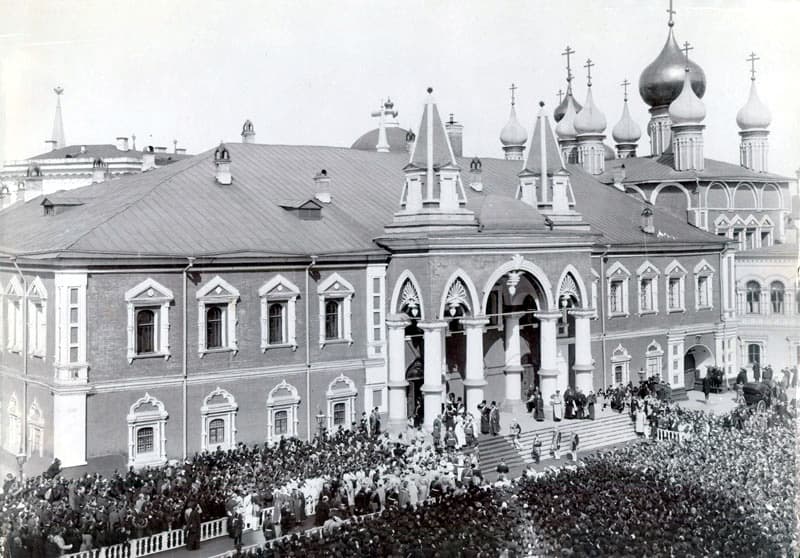
Chudov Monastery
The Chudov Monastery, formally known as Alexius’ Archangel Michael Monastery, was a significant monastic complex within the Moscow Kremlin, founded in 1358 by Metropolitan Alexius. It served as a major center for Muscovite book culture and learning, traditionally used for baptizing royal children. The monastery was eventually closed in 1918 and completely dismantled by the Soviet government in 1929.

Divnogorye
Divnogorye is a nature reserve museum located in the Voronezh Oblast of Russia, known for its distinctive limestone plateau and chalk pillars. Established in 1988 and gaining official status in 1991, it has become a popular tourist destination, attracting over 60,000 visitors annually. The site also holds significant historical and religious importance, featuring ancient cave churches, a 17th-century cathedral, and remains of the 9th-10th century Mayatsk fortress.

Donskoy Monastery
The Donskoy Monastery in Moscow was founded in 1591 to commemorate the city's defense against an invasion by the Crimean Khan Kazy-Girey. It served as a strategic defense point for the Moscow Kremlin along a key highway. Over centuries, it evolved from a humble cloister to a significant religious and architectural complex, becoming a burial site for nobility and a repository for relics and artifacts from destroyed churches during the Soviet era.