
Abbey of Saint-Antoine-des-Champs
France·Former monastery, site now occupied by a hospital
The Abbey of Saint-Antoine-des-Champs was a significant monastery located in what is now the 12th arrondissement of Paris. It played a key role in the development of the Faubourg Saint-Antoine district, which grew around its grounds. The abbey eventually transitioned into the Hôpital Saint-Antoine, reflecting its evolving role in the community.
Key Facts
- ›Located in the 12th arrondissement of Paris.
- ›The Faubourg Saint-Antoine district developed around the abbey.
- ›Later became known as the Hôpital Saint-Antoine.
- ›Historical significance in the development of its surrounding area.
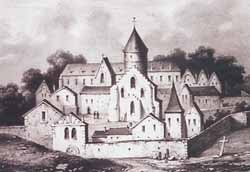
HôPital Saint-Antoine
About Abbey of Saint-Antoine-des-Champs
The Abbey of Saint-Antoine-des-Champs was a historical monastery located in the area now known as the 12th arrondissement of Paris. Its presence was instrumental in the development of the adjacent Faubourg Saint-Antoine, a district that grew and flourished around the abbey's grounds.
Over time, the abbey underwent a significant transformation. It ceased to function as a monastic institution and was eventually re-established as the Hôpital Saint-Antoine. This transition marks a notable shift in the site's historical and functional importance within the city of Paris.
Source: Wikipedia ↗
Frequently Asked Questions
Where was the Abbey of Saint-Antoine-des-Champs located?
The Abbey of Saint-Antoine-des-Champs was situated in what is now the 12th arrondissement of Paris, France. The area surrounding it grew to become known as the Faubourg Saint-Antoine.
What is the Abbey of Saint-Antoine-des-Champs known for today?
Today, the site of the former abbey is occupied by the Hôpital Saint-Antoine. The abbey itself is remembered for its historical role in the development of the Faubourg Saint-Antoine district.
Did the abbey remain a monastery throughout its history?
No, the Abbey of Saint-Antoine-des-Champs eventually transitioned from its monastic function. It later became known as the Hôpital Saint-Antoine, indicating a change in its purpose and use.
Related Monasteries

Abbaye aux Dames
The Abbaye aux Dames, officially the Abbey of Sainte-Trinité, is a former Benedictine nunnery in Caen, Normandy. Founded in the late 11th century by William the Conqueror and Matilda of Flanders, it served as a significant religious institution and burial site for Matilda and her daughter Cecilia. Despite damage during the Hundred Years' War and suppression during the French Revolution, parts of the complex have been repurposed and restored, with the church retaining notable Romanesque and Gothic architectural features.

Abbaye aux Dames, Saintes
The Abbaye aux Dames, located in Saintes, France, was the first Benedictine nunnery in the region. Founded in 1047 by Geoffrey II, Count of Anjou, and his wife Agnes, it later became a place of retirement for Agnes. The abbey has historical connections to notable figures like Eleanor of Aquitaine and Madame de Montespan, and it was classified as a monument historique in 1948.

Abbaye aux Hommes
The Abbey of Saint-Étienne, commonly known as Abbaye aux Hommes, is a significant former Benedictine monastery located in Caen, Normandy, France. Founded in 1063 by William the Conqueror, it stands as a crucial example of Norman Romanesque architecture and was a key institution during a period of monastic reform. The abbey is historically notable as the intended burial site for William the Conqueror himself.