
Vinayaki
Vinayaki is an elephant-headed Hindu goddess whose mythology and iconography are not clearly defined, with few scriptures and images depicting her. She is generally associated with Ganesha due to her similar features and is known by various names that are feminine forms of Ganesha's epithets, leading to her identification as Ganesha's feminine energy or shakti. Vinayaki is also sometimes considered part of the sixty-four yoginis or the matrika goddesses, though scholarly interpretations vary on her distinct identity.
Key Facts
- ›Vinayaki is an elephant-headed Hindu goddess.
- ›Her mythology and iconography are not clearly defined, with limited scriptural mentions and few existing images.
- ›She is often associated with Ganesha and identified as his feminine form (shakti).
- ›Alternative names include Stri Ganesha, Vainayaki, Gajananā, Vighneshvari, and Ganeshani.
- ›Vinayaki is sometimes considered among the sixty-four yoginis or the matrika goddesses.
- ›In Jain and Buddhist traditions, she is recognized as an independent goddess.

Stri Ganesha, Vainayaki, Gajananā, Vighneshvari, Ganeshani, Sri-Aingini, Ganapatihridaya, Gananayika
- Elephant-Faced
- Trunk Turning Right Or Left
- Two Or Four Arms
- Wears Yajnopavita
- Wears Neck Ornaments
- Carries Sword, Noose, Gada , Ghata , Parashu , Radish, Ankusha , Plate of Modak Sweets
- Sometimes Pot-Bellied, Sometimes Slender
- Full-Breasted
- Single Tusk
Matsya Purana, Linga Purana, Agni Purana, Devi Purana, Gorakshasamhita, Shilparatna, Aryamanjusrimulakalpa
Shakti of Ganesha, Daughter of Ishana, Potentially Sibling Or Child of Vrishabha, Associated With Matrikas
- Rairh, Rajasthan
- Chausath Yogini Temple, Bhedaghat, Madhya Pradesh
- Chitrapur Math, Shirali
- Giryek, Bihar
- Ranipur Jharial, Orissa
- Bhuleshwar Temple, Near Pune, Maharashtra
- Cheriyanad Sreebalasubramaniya Swamy Temple
Sword, Noose, Gada, Parashu, Ankusha
Elephant
Goddess, Yogini, Matrika
Minor Deity, Independent Goddess
About Vinayaki
Vinayaki (also known as Vainayaki or Vināyakī) is an elephant-headed Hindu goddess whose presence is not as clearly defined in mythology and iconography as many other deities. Despite her distinctive appearance, little is explicitly told about her in major Hindu scriptures, and very few images of this deity exist.
Association with Ganesha
Due to her elephantine features, Vinayaki is generally associated with the popular elephant-headed god of wisdom, Ganesha. She is often identified as his shakti, or feminine form, and shares epithets with him, such as Gajananā (elephant-faced) and Vighneshvari (Mistress of the remover of obstacles). Her various names, including Stri Ganesha ('female Ganesha') and Ganeshani, are feminine versions of Ganesha's own titles.
Role in the Pantheon
Vinayaki is sometimes considered to be part of the sixty-four yoginis or the matrika goddesses, who are divine mothers. However, some scholars propose that Vinayaki, the early elephant-headed matrika, and the Tantric yogini are distinct goddesses. In Jain and Buddhist traditions, Vinayaki is recognized as an independent deity. In Buddhist literature, she is known as Ganapatihridaya, meaning 'heart of Ganesha'.
Iconography and Early Depictions
The earliest known elephant-headed goddess figure, possibly Vinayaki, is a mutilated terracotta plaque dated from the first century BCE to the first century CE, found in Rairh, Rajasthan. Later elephant-headed sculptures of the goddess have been found from the tenth century onwards. Famous sculptures include one in the Chausath Yogini Temple in Bhedaghat, Madhya Pradesh, where she is called Sri-Aingini. Other depictions show her with varying attributes, such as a sword and noose, or a mace and pot, and sometimes she is pot-bellied, while in other representations she is slender. A rare metal sculpture depicts her wearing a sacred thread and holding a sword and noose, with her trunk turned to the left.
Source: Wikipedia ↗
Frequently Asked Questions
Who is Vinayaki?
Vinayaki is an elephant-headed Hindu goddess. Her mythology and iconography are not well-established, and she is often associated with the god Ganesha due to their similar features.
What are some of Vinayaki's alternative names?
Vinayaki is known by various names such as Stri Ganesha (female Ganesha), Vainayaki, Gajananā (elephant-faced), Vighneshvari (Mistress of the remover of obstacles), and Ganeshani. These names are feminine forms of Ganesha's epithets.
Is Vinayaki considered a form of Ganesha?
Yes, due to her elephantine features and epithets, Vinayaki is often assumed to be the shakti, or feminine form, of Ganesha. She shares Ganesha's ability to remove obstacles.
Where are images of Vinayaki found?
The earliest known elephant-headed goddess figure, possibly Vinayaki, is a terracotta plaque from the first century BCE to the first century CE in Rajasthan. Later sculptures of Vinayaki are found from the tenth century onwards in various locations like Madhya Pradesh, Maharashtra, Bihar, and Odisha.
Does Vinayaki appear in major Hindu scriptures?
While elephant-headed females appear in Puranas, they are often demonesses or cursed goddesses. Vinayaki, or Vainayaki, appears in texts like the Matsya Purana as one of the Matrikas created by Shiva, and in the Devi Purana where she is explicitly identified as the shakti of Ganesha.
Is Vinayaki an independent goddess in other traditions?
In Jain and Buddhist traditions, Vinayaki is recognized as an independent goddess. In Buddhist works, she is referred to as Ganapatihridaya, meaning 'heart of Ganesha'.
Related Hindu deities
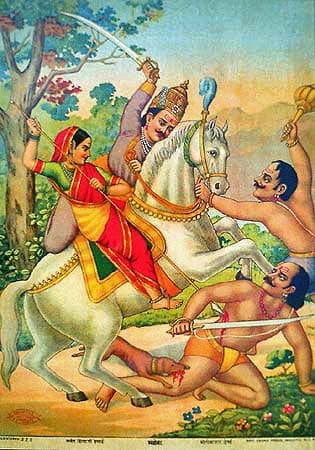
Mhalsa
Mhalsa is a Hindu goddess worshipped as an independent deity and as the consort of Khandoba. As Mohini, Vishnu's avatar, she is revered as Mahalasa Narayani, particularly in Goa. In Maharashtra, she is primarily known as the consort of Khandoba, a form of Shiva, and is associated with Parvati.

Ganesha
Ganesha, also known as Ganapati and Vinayaka, is one of the most widely revered deities in the Hindu pantheon, particularly recognized as the remover of obstacles and the bringer of good luck. He is honored at the start of rituals and ceremonies, and is considered the patron of arts, sciences, logic, intellect, and wisdom. Ganesha is prominently featured in Hindu texts from the early centuries CE and has a significant presence across various Hindu denominations, as well as in Jain and Buddhist traditions.

Ardhanarishvara
Ardhanarishvara is a composite deity formed by the union of the Hindu god Shiva and his consort Parvati. Depicted as half-male and half-female, this form symbolizes the synthesis of masculine (Purusha) and feminine (Prakriti) energies essential for creation. Ardhanarishvara represents the inseparable nature of Shiva and Shakti and is a significant iconographic representation found in many Shiva temples.