
Wangliang
Wangliang are malevolent spirits in Chinese folklore, with interpretations ranging from wilderness and water spirits to fever demons and man-eating specters. They are notable for their varied descriptions and associations across ancient Chinese texts, often linked to natural phenomena and the dangers of the wilderness or graveyards.
Key Facts
- ›Wangliang are malevolent spirits found in Chinese folklore.
- ›Their interpretations vary widely, including wilderness spirits, water spirits, fever demons, and graveyard ghosts.
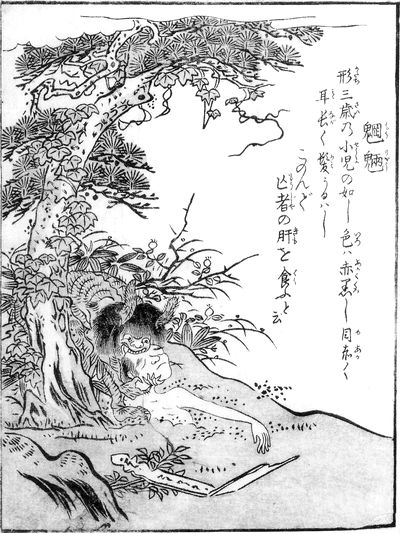
- ›Descriptions of the wangliang include a child-like appearance with specific physical features like red eyes and long ears.
- ›The name 'wangliang' has evolved over time, with early written forms differing and carrying various phonetic and semantic nuances.
- ›Synonyms and related beings like wangxiang and fangliang are often identified with wangliang, suggesting shared origins or dialectical variations.
- ›The spirits are associated with eating the brains of the dead and are sometimes depicted as fearing pine trees and tigers.
魍魎, 罔兩, 蝄蜽, 罔閬, Wangxiang, Fangliang, Chimeiwangliang, Penumbra
Wilderness, Water, Fever, Graveyards, Death
Eating Brains of the Dead, Causing Fevers, Haunting
Guoyu, Zuozhuan, Ciuci, Zhuangzi, Zhouli, Huainanzi, Lunheng, Shuowen Jiezi, Baopuzi, Shuyiji, Bencao Gangmu
Kui, Yu the Great, Yellow Emperor, Zhuanxu's Sons, Confucius
Malevolence, Danger, Death, the Unknown, Natural Dangers
- Exorcised By Fangxiangshi During Royal Funerals According To the Zhouli.
- Pine Trees Are Planted At Graves and Stone Tigers Are Placed In Graveyards Because Wangliang Fear Them.
Tigers, Arborvitae Trees
- Identified With Wangxiang and Fangliang .
- Possible Connection To Japanese MōRyō and ChimimōRyō.
Pine Trees, Tigers
About Wangliang
In Chinese folklore, the wangliang (魍魎) is a type of malevolent spirit whose nature and appearance have been interpreted in various ways across ancient texts. The term itself has seen shifts in written form and phonetic transcription, appearing in significant classical works dating from the Warring States period (475–221 BC) through the Han Dynasty.
Interpretations and Descriptions
Early texts like the Guoyu and Zuozhuan associate wangliang with natural dangers, distinguishing them as spirits of rivers and marshes, separate from mountain spirits. The Shuowen Jiezi provides a more specific physical description, depicting the wangliang as a man-eating demon resembling a three-year-old child with brown skin, red eyes, long ears, and beautiful hair. Other traditions link them to fevers, graveyard hauntings, and even the consumption of the brains of the dead.
Etymology and Related Beings
Scholars have explored the etymology of the name "wangliang," suggesting it may derive from proto-forms related to "seeing" or a root meaning "spirit; god." The name is often discussed alongside similar beings like wangxiang (罔象), frequently identified as a water demon, and fangliang (方良), a graveyard demon. These variations may represent dialectical differences or corrupted forms of a common designation. The Zhuangzi uses "wangliang" allegorically to represent "penumbra" or "shadow," linking it to concepts of perception and the non-dualistic philosophy of Daoism.
Cultural Significance
The wangliang appears in a variety of contexts, from being depicted as creatures to be known and avoided by the populace as described in the Zuozhuan, to being figures that need to be driven away by exorcists, as noted in the Zhouli. The belief that wangliang fear pine trees and tigers led to the practice of planting arborvitae trees and placing stone tigers in graveyards. These varied attributions highlight the wangliang's role in embodying the fears associated with the wilderness, death, and the supernatural in ancient Chinese culture.
Source: Wikipedia ↗
Frequently Asked Questions
What is a wangliang?
A wangliang is a type of malevolent spirit in Chinese folklore. Interpretations of what a wangliang is vary significantly, encompassing roles like wilderness spirits, water spirits, fever demons, and graveyard ghosts.
What does a wangliang look like?
One description of a wangliang portrays it as a man-eating demon resembling a three-year-old child. This depiction includes brown skin, red eyes, long ears, and beautiful hair. Other interpretations are less specific about physical appearance.
Where do wangliang appear in ancient texts?
Wangliang appear in various ancient Chinese classics, including the Guoyu (Discourses of the States), Zuozhuan, Chuci (Songs of Chu), Zhuangzi, Zhouli (Rites of the Zhou Dynasty), Huainanzi, Lunheng, and Shuowen Jiezi. These texts date from around the 4th century BCE to the 2nd century CE.
Are there different names or spellings for wangliang?
Yes, the name 'wangliang' has had several written forms across different periods and texts, including 魍魎, 罔兩, 蝄蜽, and 罔閬. Related beings like wangxiang and fangliang are also considered possible synonyms or variations.
What are some of the roles or associations of wangliang?
Wangliang are associated with various negative influences. They are sometimes depicted as demons that eat the brains of the dead, or as spirits that inhabit specific natural environments like rivers, marshes, trees, and rocks. They are also linked to fevers and graveyard hauntings.
Related Demons

Al Ana
Al Ana is a female fatal spirit or demon originating from Turkic folklore, often depicted as an ugly old woman who inhabits thickets near bodies of water. She is notably known for kidnapping newborn human babies and replacing them with her own monstrous offspring, known as changelings.

Gadulta
In folklore, a ghost is the spirit or soul of a deceased person or animal believed to manifest to the living. Descriptions vary from invisible presences to lifelike forms, and beliefs in ghosts date back to animism and ancestor worship. While science finds no proof of their existence, ghost sightings are sometimes attributed to neurological conditions or medications, and the concept remains prominent in horror fiction.
Jikininki
Jikininki, meaning "human-eating ghosts," are entities from Japanese folklore and Buddhism. They are the spirits of individuals who were greedy and selfish in life, cursed after death to consume human flesh and corpses. Their existence blurs the line between the living and the dead, and they are often depicted as shapeless beings that prey on the vulnerable.