
Rangda
Rangda is the demon queen of the Leyaks in Balinese mythology, depicted as a terrifying old woman who leads an army of witches. She is notable for her eternal battle with the benevolent Barong, symbolizing the conflict between good and evil, and is often linked to the legendary witch Calon Arang or the historical Javanese queen Mahendradatta.
Key Facts
- ›Rangda is the demon queen of the Leyaks in Bali, according to traditional Balinese mythology.
- ›She is depicted as a mostly nude old woman with long, unkempt hair, pendulous breasts, claws, and a horrifying fanged, goggle-eyed mask with a long tongue.
- ›Rangda is associated with the legend of Calon Arang, a witch who caused disease and damaged crops, and is also linked to the historical Javanese Queen Mahendradatta.
- ›The name 'Rangda' means 'widow' in old Javanese and Balinese.
- ›Her eternal battle against Barong is a central theme in Balinese dance and represents the conflict between good and evil.
- ›Rangda is considered by many to be a personification of evil, unlike Durga, with whom she is sometimes associated.

Leyak Queen, Calon Arang
Evil Witches, Plague, Death, Disease, Chaos
Leads An Army of Evil Witches, Causes Disease, Mastery of Black Magic, Summons Evil Spirits
Calon Arang Legend, Mahendradatta Legend, Barong Dance Tradition
Barong, Calon Arang, Mahendradatta, Airlangga, Empu Bharada, Empu Bahula, Ratna Manggali, Durga, Kali
Personification of Evil, Widowhood, Revenge, Black Magic
- Featured In the Barong Dance, Representing the Eternal Battle Between Good and Evil.
Barong, Empu Bharada, Empu Bahula
- Associated With Durga and Kali In Hindu Traditions.
- May Have Derived From the Historical Queen Mahendradatta.
Fanged Mask, Goggle Eyes, Long Tongue
About Rangda
Rangda is a central figure in traditional Balinese mythology, recognized as the terrifying demon queen of the Leyaks. She is predominantly known for leading an army of evil witches against Barong, the benevolent spirit embodying the forces of good. This cosmic struggle between Rangda and Barong forms the basis of the popular Barong dance, a significant cultural performance that symbolizes the eternal conflict between good and evil.
Description and Lore
Visually, Rangda is depicted as a mostly nude old woman characterized by long, unkempt hair, pendulous breasts, and sharp claws. Her face is traditionally rendered as a horrifying mask featuring fangs, goggle-like eyes, and a long, protruding tongue, emphasizing her fearsome nature. The name 'Rangda' itself translates to 'widow' in old Javanese and Balinese languages, hinting at her solitary and vengeful aspect.
Historical and Legendary Connections
Rangda's lore is deeply intertwined with the legend of Calon Arang, an ancient witch renowned for her mastery of black magic, who is said to have caused widespread damage to crops and inflicted disease upon villages. Rangda is often considered an incarnation of Calon Arang. Further interpretations suggest a connection to the historical 11th-century Javanese queen Mahendradatta, mother of King Airlangga. Mahendradatta, condemned and exiled for alleged witchcraft, is believed by some to have summoned evil spirits to exact revenge, thus becoming a historical antecedent for Rangda.
Cultural Significance
Rangda holds significant importance in Balinese culture. Performances depicting her conflicts, particularly with Barong, are not only popular tourist attractions but also vital traditions that preserve and transmit cultural narratives. While she is sometimes compared to Hindu deities like Durga and Kali in her destructive aspects, Rangda is largely viewed as a personification of pure evil in her Balinese context, distinct from the more complex divine roles of Durga in other Hindu traditions.
Source: Wikipedia ↗
Frequently Asked Questions
Who is Rangda in Balinese mythology?
Rangda is the demon queen of the Leyaks in Bali. She is a terrifying figure who leads an army of evil witches.
What does Rangda look like?
Rangda is typically depicted as a mostly nude old woman with long, unkempt hair, pendulous breasts, and claws. Her face is often a horrifying mask with fangs, goggle eyes, and a long, protruding tongue.
What is the significance of the battle between Rangda and Barong?
The battle between Rangda and Barong is a central theme in Balinese dance and represents the eternal struggle between good and evil. It is a popular performance for tourists and a cultural tradition.
What are the historical or legendary origins of Rangda?
Rangda is linked to the legend of Calon Arang, a witch who caused havoc, and also to the historical 11th-century Javanese queen Mahendradatta, who was exiled for practicing black magic.
What does the name 'Rangda' mean?
In old Javanese and Balinese languages, the name 'Rangda' means 'widow'.
Related Demons

Barong
Barong is a panther-like creature and the king of the spirits in Balinese mythology, representing the forces of good. He is the eternal enemy of Rangda, the demon queen, and their conflict is central to the Barong dance, which symbolizes the ongoing battle between good and evil in Balinese culture. Barong is believed to be animated by Banas Pati Raja, a protective spirit often depicted as a lion.
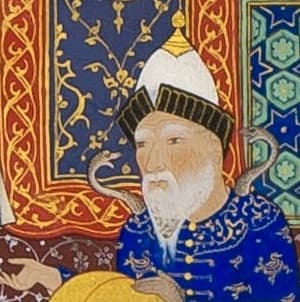
Azi Dahaka/Dahak
Aži Dahāka, also known as Zahhāk, is a prominent figure of evil in Iranian mythology and Zoroastrian tradition, often depicted as a monstrous serpent or dragon. He is notable for his role as a tyrannical king who ruled for a thousand years, feeding human brains to two snakes that grew from his shoulders, and for his eventual defeat and imprisonment by the hero Fereydun.
Bali Raj
Mahabali, also known as Bali, is a prominent daitya king in Hinduism, recognized as one of the Chiranjivi, or immortals. He is celebrated for his benevolent rule and generosity, famously tricked by Vishnu's Vamana avatar, which led to his banishment to Sutala Loka. His legend forms a central part of the annual Onam festival in Kerala, marking his symbolic return to his kingdom.