
Guayota
Guayota is the principal malignant deity and adversary of Achamán in Guanche mythology from Tenerife, Canary Islands. He is notable for being imprisoned within the Teide volcano, representing a key figure in the indigenous beliefs of the region.
Key Facts
- ›Guayota was the principal malignant deity in Guanche mythology.
- ›He was considered the adversary of Achamán, the supreme deity.
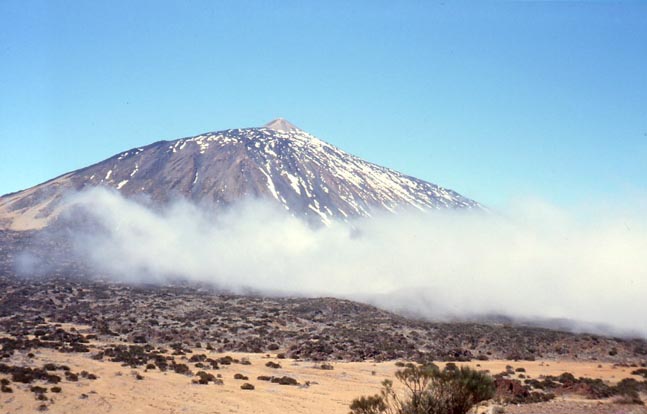
- ›Guayota was believed to reside inside the Teide volcano, a gateway to the underworld.
- ›He was depicted as a black dog and was accompanied by demons called tibicenas, also in the form of black dogs.
- ›Guayota famously kidnapped Magec (the sun) and imprisoned it in Teide, causing darkness.
- ›Achamán rescued Magec and imprisoned Guayota within Teide.
Evil, Darkness, Underworld
Kidnapping Deities, Imprisoning Celestial Bodies, Commanding Demons
AchamáN, Magec, Tibicenas
Malignancy, Evil, Adversary
AchamáN
- Shares Features With Other Malignant Volcano Deities, Such As Pele In Hawaiian Mythology.
Black Dog
About Guayota
Guayota is a significant figure in Guanche mythology, the indigenous belief system of Tenerife in the Canary Islands. He is recognized as the principal malignant deity and the primary adversary of Achamán, the supreme god in this pantheon. Guayota embodies forces of evil and darkness within the Guanche cosmology, playing a crucial role in ancient narratives.
Mythology and Legends
According to Guanche legend, Guayota's dwelling was within the Teide volcano, a natural landmark on Tenerife that was perceived as one of the gateways to the underworld. His presence in this volcanic setting linked him to the earth's destructive power and subterranean realms. Guayota was often depicted in the form of a black dog, a symbol that carried connotations of ill omen and malevolence. He was not alone in his domain, as he was said to be accompanied by other demons, also appearing as black dogs, known as tibicenas.
A central myth involving Guayota tells of his attempt to plunge the world into eternal darkness. He is said to have captured Magec, the deity representing the sun, and confined it within the Teide volcano. This act of malevolence plunged the land into a period of darkness, causing distress among the people.
In response to this crisis, the humans prayed to Achamán, the benevolent supreme deity. Achamán intervened to rescue Magec from Guayota's grasp. As a consequence of his actions and to prevent further harm, Achamán vanquished Guayota and imprisoned him within the Teide volcano, effectively containing his malevolent influence.
Cultural Significance and Modern Presence
Guayota's mythological role as the king of evil genies and Achamán's adversary places him as a key figure in understanding Guanche demonology and cosmology. His story highlights the dualistic nature of their belief system, with opposing forces of good and evil. Guayota shares thematic similarities with other malignant deities associated with volcanoes in different cultures, such as the Hawaiian goddess Pele, who was also believed to inhabit and influence volcanic activity.
In contemporary times, Guayota remains a recognizable figure in Canary Islands folklore and popular culture. His name and image are evoked in various ways, including a pub in Puerto de la Cruz, a firefighters' association in Granadilla de Abona, a folk music group, and a heavy metal band. He has also appeared as a central antagonist in literature, such as Patricia Briggs' novel Night Broken, and in video games, notably as the final boss in Gaurodan. This continued presence demonstrates the enduring legacy of Guanche mythology in the cultural landscape of the Canary Islands.
Source: Wikipedia ↗
Frequently Asked Questions
Who is Guayota in Guanche mythology?
Guayota is the primary malevolent deity in Guanche mythology, originating from Tenerife in the Canary Islands. He is portrayed as the adversary of Achamán, the supreme god.
Where did Guayota live?
According to Guanche legend, Guayota inhabited the Teide volcano, which was considered one of the entrances to the underworld. He was imprisoned there by Achamán.
What was Guayota's role in creating darkness?
Guayota is credited in legend with kidnapping Magec, the sun deity, and locking it inside the Teide volcano. This act plunged the world into darkness until Achamán intervened.
What are Guayota's companions?
Guayota was accompanied by his own demons, known as tibicenas. These companions were also described as being in the form of black dogs.
How is Guayota represented?
Guayota was typically represented as a black dog. This imagery connected him with notions of evil and the underworld within Guanche folklore.
Related Demons
Lechies
The Leshy is a tutelary spirit of the forest in pagan Slavic mythology, embodying the wilderness and its resources. While often depicted as a masculine humanoid, the Leshy can change its appearance and size, and its attitude towards humans varies greatly depending on their behavior towards the forest. It is notable for its role as both a protector and a trickster, capable of misguiding wanderers or abducting children.
Berith/Beherit
Baʿal Berith, also known as El Berith, is a deity or deities worshiped in the ancient Canaanite city of Shechem, primarily referenced in the Hebrew Bible. The name translates to 'Lord of the Covenant' or 'God of the Covenant,' with scholars debating the exact nature of the covenant and the entity's relationship to other Canaanite gods like Baʿal and El. In later Rabbinic tradition, Baʿal Berith became associated with Beelzebub and an object of idolatrous worship.
Anammelech
Anammelech was a Syrian and Mesopotamian deity worshipped alongside Adrammelech, primarily recognized as a lunar deity. According to the Hebrew Bible, he was venerated in the Assyrian town of Sepharvaim. While some scholars have linked his name to the Mesopotamian god Anu, recent scholarship suggests the "Anam" element refers to the masculine counterpart of the goddess Anat.