
Belphegor
Belphegor is a demon in Christian demonology associated with the deadly sin of sloth, though some traditions link him to gluttony. He is known for tempting people with promises of wealth through incredible inventions, thereby sowing dispute and leading them to evil. Historically, Belphegor is derived from Baal-Peor, an ancient deity worshipped in Moab.
Key Facts
- ›Belphegor is identified as the main demon of sloth in Peter Binsfeld's classification.
- ›He tempts individuals by proposing inventions that promise riches, aiming to sow dispute and lead people to evil.
- ›The demon's name originates from Baal-Peor, a deity worshipped in Moab, associated with intemperance and orgies.
- ›In Kabbalistic writings, Belphegor is described as "the one who quarrels" and an adversary to Tiferet.
- ›Belphegor's prime, a palindromic prime number containing the sequence 666, is named after him due to superstitious significance.
- ›In some traditions, he served as Hell's ambassador to France, with Mary Magdalene as his adversary.
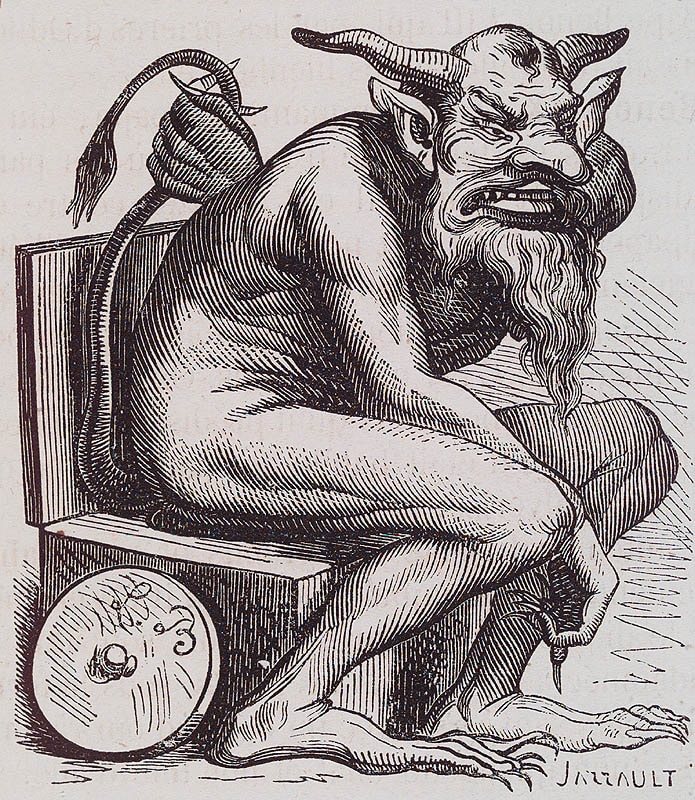
Baal Peor, Baal-Peor, Belfagor
Discoveries, Wealth, Inventions, Dispute, Evil, Sloth, Gluttony
Bestows Wealth, Grants Power To Make Discoveries, Enables Creation of Fantastic Inventions, Sows Dispute Between People
Numbers 25:3, the Lanterne of Light, Dictionnaire Infernal, Belfagor Arcidiavolo, Paradise Lost, Contes Et Nouvelles En Vers, Key of Solomon
Baal, Mary Magdalene, Tiferet
Sloth, Gluttony, Greed, Idleness, Intemperance, Orgies
- Described As A Syrian Idol That Is Now Destroyed In the Key of Solomon.
Mary Magdalene
Phallus, Belphegor's Prime Number
About Belphegor
Belphegor is a demon prominent in Christian demonology, primarily associated with the deadly sin of sloth. He is depicted as a being who tempts humans by proposing incredible inventions that promise wealth, thereby sowing dispute and leading them towards evil. Historically, Belphegor's origins are traced back to Baal-Peor, an ancient deity worshipped in Moab, who was linked to intemperance and orgies.
Religious and Historical Context
In Christian tradition, particularly as outlined by 17th-century demonologists like Peter Binsfeld, Belphegor is identified as the principal demon of sloth. However, some traditions, such as the Lollard work "The Lanterne of Light," have attributed gluttony to him instead. The demon's powers are sometimes said to be strongest in April, and he is believed to assist people in making discoveries.
Kabbalistic and Mythological Associations
Within Kabbalistic writings, Belphegor is described as "the one who quarrels" and serves as an adversary to the sefira Tiferet, representing "Beauty." His ancient precursor, Baal-Peor, was worshipped in the form of a phallus, underscoring a connection to fertility and potentially licentious rites.
Literary and Cultural Appearances
Belphegor has been featured in various literary works. Niccolò Machiavelli's novella "Belfagor arcidiavolo" (1549) recounts the demon's journey to Earth to find a mate, a narrative that later inspired opera and poetry. He also appears in John Milton's epic poem "Paradise Lost" and in the narrative poems of Jean de la Fontaine. Collin de Plancy's "Dictionnaire Infernal" lists Belphegor as Hell's ambassador to France, making him an adversary to Mary Magdalene.
Modern Notoriety
The demon's name has also found its way into modern culture. "Belphegor's prime," a specific palindromic prime number containing the sequence 666, is named due to superstitious associations. The demon has also appeared in popular media, including the TV show "Supernatural," the "Megami Tensei" and "Persona" video game series, and the German dime novel series "John Sinclair." An aircraft, the PZL M-15 Belphegor, was also named after the demon, reportedly due to its unusual appearance and performance.
Source: Wikipedia ↗
Frequently Asked Questions
What is Belphegor known for in Christian demonology?
In Christian demonology, Belphegor is primarily associated with the deadly sin of sloth. He is said to tempt people by offering them incredible inventions that promise great wealth, ultimately leading them to dispute and evil.
What is the origin of the name Belphegor?
The name Belphegor originates from Baal-Peor, a deity worshipped in ancient Moab. This deity was associated with the Israelites' transgressions at Peor, often linked to intemperance and orgiastic worship.
How does Belphegor tempt humans?
Belphegor tempts humans by proposing ingenious inventions that he claims will bring them riches and prosperity. His ultimate goal is to sow discord among people and lead them astray through the allure of wealth.
What is Belphegor's prime number?
Belphegor's prime is a specific palindromic prime number, 1000000000000066600000000000001. It is named after the demon due to the superstitious significance of its digits, including the number 666.
Is Belphegor associated with any specific literary works?
Yes, Belphegor features in Niccolò Machiavelli's novella "Belfagor arcidiavolo," which inspired later works. He also appears in poems by Jean de la Fontaine and John Milton's "Paradise Lost."
Related Demons

Buer
Buer is a Great President of Hell, commanding fifty legions of demons, as described in the 16th-century grimoire Pseudomonarchia Daemonum. He is notable for his teachings on philosophy, logic, and herbalism, as well as his ability to heal and bestow familiars. Buer's appearance is often depicted as a wheel with multiple legs or a lion's head with goat legs.
Crocell/Procell
Crocell, also known as Procell, is a Duke of Hell and the 49th spirit listed in the Ars Goetia. Previously a member of the Powers, he now commands 48 legions of demons. Crocell is notable for his enigmatic speech and his ability to teach geometry and other liberal sciences.
Decarabia
Decarabia is a Marquis of Hell, commanding 30 legions of demons. He is known for teaching the virtues of herbs and precious stones, and for his ability to cause love between individuals. He is associated with the Ars Goetia, a grimoire detailing demonology.