
Baphomet
Occultism, Western Esotericism·Demonology, Occultism, Mythology·Western Europe·Idol, Symbol, Demonic Figure (in historical accusations)
Baphomet is a symbolic figure associated with Western esoteric and occult traditions, most famously depicted as a winged, androgynous human-goat hybrid. Its name first appeared in the 14th century during the trials of the Knights Templar, who were accused of worshipping it. The modern imagery of Baphomet was established by Éliphas Lévi in the 19th century, who presented it as a symbol of equilibrium and esoteric knowledge.
Key Facts
- ›The name Baphomet first appeared in the 14th century during the trials of the Knights Templar, who were accused of heresy and worshipping it.
- ›Modern scholars generally agree that the name 'Baphomet' is an Old French corruption of 'Muhammad'.
- ›Éliphas LéVI's 1856 illustration established the iconic image of Baphomet as a winged, androgynous human-goat hybrid.
- ›LéVI's Baphomet symbolizes the perfect equilibrium of opposites, esoteric knowledge, and the summation of the universe.
- ›The figure has been linked to various historical and mythological concepts, including Gnosticism and ancient pagan rites.
- ›Baphomet is a recurring symbol in occultism and has been adapted in various modern cultural contexts.

Bafomet, Bafum, Bafumetz, Baffomet, Mahomet, Mohammed, Sabbatic Goat, Goat of Mendes
Equilibrium of Opposites, Esoteric Knowledge, Summation of the Universe, Heretical Worship
Trials of the Knights Templar Transcripts, Dogme Et Rituel De La Haute Magie, Mysterium Baphometis Revelatum
Knights Templar, Muhammad, éLiphas LéVi, Joseph Freiherr Von Hammer-Purgstall, Christoph Friedrich Nicolai
Heresy, Idolatry, Reconciliation of Opposites, Balance, Wisdom
- Accusations of Worship By the Knights Templar, Involving Kissing Feet and Exclaiming 'Yalla'.
- Alleged Presence of Idols In Templar Assemblies, Described As Heads That Could Save Them, Make Trees Flower, and Plants Sprout.
- LéVi's Descriptions of Assemblies Presided Over By the Figure, With A Flaming Torch Between Its Horns.
- the Name 'Baphomet' Is Theorized By Modern Scholars To Be A Corruption of 'Muhammad', Suggesting A Possible Misunderstanding Or Adaptation of Islamic Beliefs By Some Medieval Figures.
- Alternative Etymologies Connect Baphomet To Gnostic Concepts Like 'Baptism of Wisdom' Or the Pythagorean Pentagram.
- Joseph Freiherr Von Hammer-Purgstall Linked Baphomet To Gnostic Ophites and the Concept of Sophia .
Pentagram, Torch, Serpent, Sun, Moon, Caduceus, Hermaphroditism
About Baphomet
Baphomet is a symbolic figure deeply embedded within Western esoteric and occult traditions, most famously depicted as a winged, androgynous human-goat hybrid. Its name first surfaced in the 14th century during the infamous trials of the Knights Templar, who were accused of heresy and of worshipping Baphomet as a demonic idol. While these accusations were largely based on confessions extracted under torture, the name and the idea of Baphomet persisted.
History and Evolution
The name "Baphomet" first appeared in historical records around 1098 and later in troubadour poetry, often linked to the name Muhammad. During the 14th-century inquisitions, Templars were charged with worshipping an idol called Baphomet, described in various ways, including as a head with multiple faces or a cat. Modern scholars widely agree that the name is likely an Old French corruption of "Mahomet," suggesting that the accusations may have stemmed from a misunderstanding of Islamic practices or an attempt to demonize the Templars by associating them with perceived idolatry.
The Modern Image
The iconic image of Baphomet known today was established by the 19th-century French occultist Éliphas Lévi in his 1856 work, Dogme et Rituel de la Haute Magie. Lévi's "Sabbatic Goat" depicts a winged, hermaphroditic goat-like figure with a torch between its horns and a pentagram on its forehead. He intended this image to symbolize the absolute in symbolic form, representing the perfect equilibrium of binary opposites—such as male and female, mercy and justice, light and darkness—and serving as a representation of universal balance and esoteric knowledge.
Symbolism and Associations
Lévi's Baphomet has become a significant symbol in occultism, often adapted to represent esoteric wisdom, the reconciliation of dualities, and the summation of the universe. It has also been linked to concepts of ancient pagan deities like Pan, the Goat of Mendes, and to various Gnostic traditions. The figure's association with the Knights Templar and its subsequent reinterpretation by occultists have cemented its place in modern popular culture as a potent and often misunderstood emblem of the esoteric and the arcane.
Source: Wikipedia ↗
Frequently Asked Questions
What is Baphomet?
Baphomet is a symbolic figure primarily associated with Western esoteric and occult traditions. It is most famously depicted as a winged, androgynous human-goat hybrid, representing the reconciliation of opposites and esoteric knowledge.
Where does the name Baphomet come from?
The name Baphomet first emerged in the 14th century during the trials of the Knights Templar. Modern scholarly consensus suggests it is an Old French corruption of the name Muhammad, implying a possible influence of Islamic ideas on some Templars.
What does the modern image of Baphomet look like?
The most recognized image of Baphomet was created by Éliphas Lévi in 1856. It portrays a winged, androgynous figure with a goat's head, breasts, and a torch between its horns, symbolizing the balance of opposing forces.
What is the historical significance of Baphomet?
Baphomet gained notoriety through the accusations against the Knights Templar, who were accused of worshipping it as an idol. The figure was later reinterpreted and popularized by 19th-century occultists, becoming a prominent symbol in esoteric traditions.
What does Baphomet symbolize?
In Éliphas Lévi's interpretation, Baphomet symbolizes the absolute in symbolic form, representing the perfect equilibrium of binary opposites such as male and female, mercy and justice, and the spiritual and material worlds.
Related Demons
Choronzon
Choronzon is a demon originating in 16th-century occult writings by Edward Kelley and John Dee, central to their Enochian magic system. He later became a significant figure in Aleister Crowley's 20th-century mystical system of Thelema, where he is known as the "dweller in the abyss" and represents the final obstacle to enlightenment for an adept.
Orias/Oriax
Orias, also known as Oriax, is a Great Marquis of Hell commanding thirty legions of demons. He is notable for his knowledge of astrology, teaching the virtues of stars and planetary mansions, and his ability to grant dignities, prelacies, and influence over others. Orias can also transform individuals into various shapes.
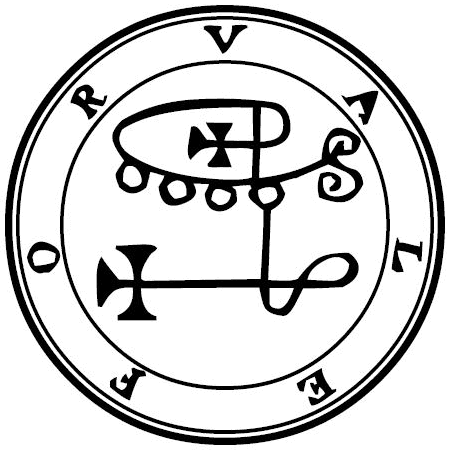
Valefar/Malaphar/Malephar
Valefar, also known as Malaphar or Malephar, is a Duke of Hell in demonology. He is notable for tempting individuals to commit theft and fostering camaraderie among thieves, acting as a beneficial familiar until they are apprehended. He commands ten legions of demons and is depicted with a lion's body and either a man's or a donkey's head.