
St Padarn's Church, Llanbadarn Fawr
St Davids·Church in Wales·Wales
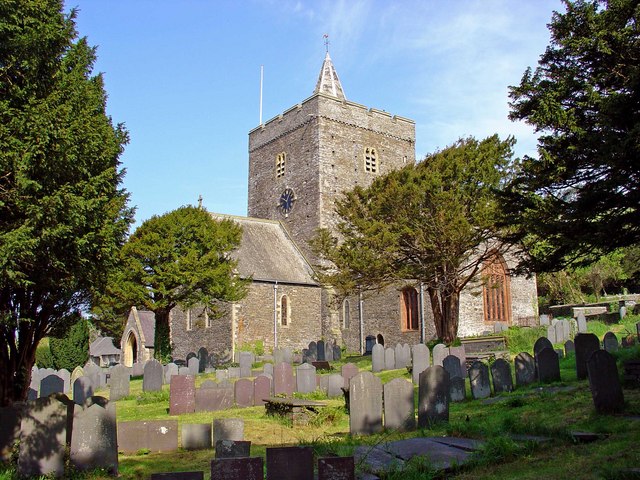
Saint Padarn's Church is a historically significant parish church located in Llanbadarn Fawr, near Aberystwyth, Wales. As the largest medieval church in mid-Wales, it boasts a rich history dating back to the early sixth century, evolving from a Celtic monastic center to a Benedictine priory and eventually a parish church. Its enduring presence makes it a key site for understanding early Welsh Christian history and monasticism.
Key Facts
- ›Founded in the early sixth century, it is the largest medieval church in MID-Wales.
- ›Originally a Celtic monastic centre (clas), it later became a Benedictine priory.
- ›The church is traditionally associated with Saint Padarn, who may have been its first bishop.
- ›It was a significant literary and learning center, particularly during the time of Sulien and his family in the tenth and eleventh centuries.
- ›The church experienced periods of destruction and rebuilding due to Viking raids and Norman influence.
- ›Since 1538, it has served as a parish church under a vicar.
- Largest Medieval Church In Mid-Wales
- Former Monastic Center
- Site of A Short-Lived Benedictine Priory
- Associated With Saint Padarn and Figures Like Sulien and Rhygyfarch
About St Padarn's Church, Llanbadarn Fawr
Saint Padarn's Church, Llanbadarn Fawr
Saint Padarn's Church, situated in Llanbadarn Fawr near Aberystwyth, Ceredigion, Wales, stands as the largest medieval church in mid-Wales. Its historical significance is profound, tracing its origins back to the early sixth century when it was established as a Celtic monastic center, known as a 'clas'. Over the centuries, the church has transitioned through various forms, including a Benedictine priory, and has been a focal point for Christian worship and learning.
Origins and Early History
The precise date of Saint Padarn's founding of the church is uncertain, but it is recognized as an early sixth-century foundation. Traditionally, Saint Padarn, a figure of considerable importance in early Welsh Christianity, is associated with its establishment, and he is reputedly its first bishop. While not a cathedral in the modern sense, the clas at Llanbadarn Fawr was a significant collegiate church and one of the leading monastic institutions of early Christian Wales, playing a crucial role as a literary center.
The Era of Sulien and His Family
The tenth and eleventh centuries marked a flourishing period for Llanbadarn Fawr, particularly under the influence of Sulien and his educated family. Sulien, known as Sulien the Wise, was a scholar who had studied in Scotland and Ireland before returning to lead the clas. During his abbacy and his two terms as Bishop of St Davids, the monastic library at Llanbadarn Fawr reportedly grew to be larger than those of Canterbury Cathedral and York Minster. This era also saw significant literary output, with Sulien's son, Rhygyfarch, composing the Vita Davidis (Life of St David) and the production of the Ricemarch Psalter, a rare surviving manuscript from eleventh-century Wales.
Evolution and Later Periods
The church's history is punctuated by periods of conflict and change. It suffered destruction from Viking raids in the late tenth century and was later ravaged by Gruffydd ap Llywelyn in 1038. The arrival of the Normans in the late eleventh century brought further shifts, and between 1111 and 1117, the ancient clas church was granted to St Peter's Abbey, Gloucester, becoming a Benedictine priory for a brief period. Following the expulsion of Norman monks, the Celtic monks likely returned. Since 1538, Saint Padarn's Church has functioned as a parish church under a vicar, continuing its long legacy as a vital spiritual and historical landmark in Wales.
Source: Wikipedia ↗
Frequently Asked Questions
When was Saint Padarn's Church founded?
The site of Saint Padarn's Church has been used for Christian worship since the early sixth century. It was likely founded by Saint Padarn himself, after whom it is named.
What was the original function of Saint Padarn's Church?
Initially, Saint Padarn's Church functioned as a Celtic monastic centre, known as a clas. It was a significant religious and literary hub in early Christian Wales.
Did Saint Padarn's Church ever have episcopal status?
Historical accounts suggest that bishops may have been based at Llanbadarn Fawr for periods in Celtic times, with Saint Padarn traditionally being its first bishop. However, the exact nature and duration of this episcopal see are uncertain.
What was the role of Sulien and his family at Llanbadarn Fawr?
During the tenth and eleventh centuries, Sulien and his educated family made Llanbadarn Fawr a foremost place of learning in Wales. Sulien, known as Sulien the Wise, served as abbot and twice as Bishop of St Davids, leading to the growth of the monastic library.
How did the Normans influence Llanbadarn Fawr?
Following the Norman arrival in the late eleventh century, ecclesiastical influence increased. Between 1111 and 1117, the church was granted to St Peter's Abbey, Gloucester, becoming a Benedictine priory for a short period.
What is the architectural significance of Saint Padarn's Church?
Saint Padarn's Church is noted as the largest medieval church in mid-Wales. While much of its early structure is speculative, the period of Benedictine rule saw the potential construction of a stone church, a new tower, and a porch.
Related Cathedrals

Brecon Cathedral
Brecon Cathedral, formerly the church of Brecon Priory and later the Parish Church of St John the Evangelist, is the cathedral of the Diocese of Swansea and Brecon in the Church in Wales. It became a cathedral in 1923 following the disestablishment of the Church in Wales, serving as the seat of the Bishop of Swansea and Brecon. Its history is linked to the Norman conquest of Brycheiniog and the establishment of a priory by Bernard de Neufmarché.

Llandaff Cathedral
Llandaff Cathedral is the principal church of the Diocese of Llandaff in the Church in Wales, located in Llandaff, Cardiff. It is dedicated to Saints Peter and Paul, and three Welsh saints: Dubricius, Teilo, and Oudoceus. The cathedral has a long and complex history, marked by periods of construction, destruction, and significant restoration, making it an important religious and architectural landmark.

Newport Cathedral
Newport Cathedral, officially known as the Cathedral Church of St Woolos, is the cathedral of the Diocese of Monmouth within the Church in Wales. Although modest in size, it is considered one of Wales's most interesting religious buildings due to its long history stretching from the 5th century to the present day, its unique blend of architectural styles, and its origins as the church founded by St Gwynllyw.