
Barletta Cathedral
Barletta Cathedral is a Roman Catholic cathedral located in the heart of Apulia, southern Italy. Its construction began in the 12th century, evolving over centuries with Romanesque, Gothic, and Renaissance influences on a site with ancient origins. The cathedral is notable for its rich medieval decorations and its historical significance as a center of worship and architectural development.
Key Facts
- ›The current structure's construction began in the 12th century on a site with ancient hypogeum structures dating back to the late 4th-early 3rd centuries BC.
- ›A previous palaeo-Christian basilica existed from the 6th century AD, later replaced by a Romanesque church in the 12th century.
- ›The cathedral was consecrated in 1267 and underwent significant Gothic expansions in the 13th century, concluding renovations in the 16th century.
- ›It features rich medieval decorations, including capitals with animals, monsters, and other fantastic figures.
- ›The main façade originally had three portals, with the central one later replaced by a Renaissance version.
- ›Architectural styles present include Romanesque, Gothic, and Renaissance elements.
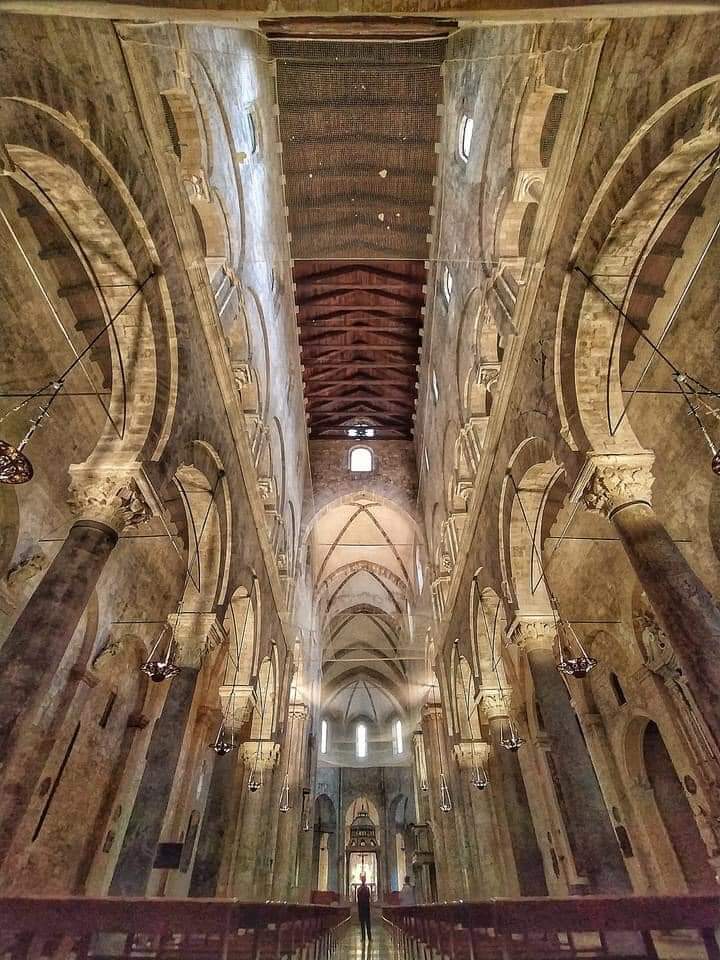
- Capitals With Animals, Monsters, and Fantastic Figures
- Remains of Ancient Church Pavement
- Bas-Reliefs From Original Portal
- Rose Window On Western FaçAde
- Mullioned Window
About Barletta Cathedral
Barletta Cathedral is a significant Roman Catholic cathedral located in the city of Barletta, in the Apulia region of southern Italy. Its history is deeply layered, with the current structure's construction commencing in the 12th century on a site that has been used for worship for millennia.
History and Development
The cathedral occupies a location with ancient origins, featuring hypogeum structures dating back to the late 4th to early 3rd centuries BC, possibly associated with a temple to Neptune. From the 6th century AD, a palaeo-Christian basilica stood here. After the destruction of ancient Canosa, numerous clerics relocated to Barletta, and the church was renamed Santa Maria de Auxilio. A 9th-century structure on this site had a Latin cross plan with a pavement mosaic, traces of which still exist.
A Romanesque church, known as Sancta Maria Majoris, was built in the Norman period (12th century) over the preceding basilica. The bell tower was erected later in the same century, and the capitals of the ciborium were crafted by oriental artists. Further additions included the matronei, a mullioned window, and a rose window on the western façade. The new church was consecrated in 1267, featuring a nave and two aisles divided by columns and pillars. In the 13th century, two bays and three semicircular apses were added, mirroring designs found in Trani Cathedral.
In the 13th century, Palatine Count Giovanni Pipino da Barletta, a confidant of King Charles I of Anjou, spearheaded a further expansion. The edifice was enlarged eastward with a new choir, and the apse and other sections were altered, incorporating new Gothic structures. The extensive renovation and expansion efforts continued until the 16th century.
Architectural Features and Decoration
The cathedral is oriented from east to west, with its Gothic ambulatory facing eastwards. The bell tower stands on the northern side and provides access to the castle through an archway beneath which lie remnants of the ancient church's pavement. The interior is noted for its rich medieval decoration, including intricately carved capitals adorned with animals, monsters, and other fantastical figures. The main façade originally featured three portals; the central one, lost under unknown circumstances, was replaced by a Renaissance portal. Some bas-reliefs from the original portal, depicting scenes such as the Last Supper and Christ's entrance into Jerusalem, are now housed within the cathedral.
Barletta Cathedral stands as a testament to the evolving architectural and religious history of the region, blending various styles and periods into a unified sacred space.
Source: Wikipedia ↗
Frequently Asked Questions
When did construction begin on Barletta Cathedral?
The groundbreaking for the current building of Barletta Cathedral took place in the 12th century. This marked the beginning of a long process of construction and renovation that spanned several centuries.
What are some of the historical layers of Barletta Cathedral?
The site of Barletta Cathedral has a deep history, with ancient hypogeum structures from the late 4th-early 3rd centuries BC. A palaeo-Christian basilica existed from the 6th century, followed by a Romanesque church in the 12th century, and subsequent Gothic and Renaissance additions.
What architectural styles can be found in Barletta Cathedral?
Barletta Cathedral showcases a blend of architectural styles. Influences of Romanesque, Gothic, and Renaissance periods are evident in its structure, from the original Romanesque church to the Gothic expansions and the later Renaissance portal.
What are some notable decorative features of the cathedral?
The cathedral is adorned with rich medieval decorations, particularly evident in its capitals, which feature depictions of animals, monsters, and other fantastical figures. Some bas-reliefs from the original portal, depicting scenes like the Last Supper, are preserved inside.
When was Barletta Cathedral consecrated?
The new church, built on the site of earlier structures, was consecrated in 1267. This marked a significant milestone in its development during the medieval period.
Related Cathedrals

Angers Cathedral
Angers Cathedral, officially Cathédrale Saint-Maurice d'Angers, is a Catholic cathedral in Angers, France, serving as the seat of the Bishops of Angers. Renowned for its blend of Romanesque and Gothic architectural styles, it also features significant Baroque elements and an exceptional collection of stained-glass windows, some dating back to the late 12th century.

Bordeaux Cathedral
Bordeaux Cathedral, officially the Primatial Cathedral of St Andrew of Bordeaux, is a Roman Catholic cathedral in Bordeaux, France, serving as the seat of the Archbishop of Bordeaux. It is a significant landmark included in the UNESCO World Heritage Site of the Routes of Santiago de Compostela in France. The cathedral showcases a rich architectural history, evolving from Romanesque to Gothic styles and incorporating Renaissance elements, making it a vital historical and religious site.

Aix Cathedral
Aix Cathedral, officially Cathédrale Saint-Sauveur d'Aix-en-Provence, is a Roman Catholic cathedral in Aix-en-Provence, France. Situated on the site of the ancient Roman forum and a 6th-century Christian church, it showcases a remarkable blend of Romanesque, Gothic, and Neo-Gothic architectural styles, with elements dating back to its earliest Christian foundations. The cathedral serves as the seat of the Archbishop of Aix-en-Provence and Arles and is recognized as a national monument of France.