
Thubten Yeshe
Thubten Yeshe was a Tibetan lama of the Gelug tradition who, following his exile to Nepal, became instrumental in introducing Tibetan Buddhism to Western students. He co-founded Kopan Monastery and the Foundation for the Preservation of the Mahayana Tradition, and was known for his unconventional teaching style.
Key Facts
- ›Co-founded Kopan Monastery in Nepal in 1969.
- ›Co-founded the Foundation for the Preservation of the Mahayana Tradition in 1975.
- ›Taught Western students, beginning in 1965.
- ›Followed the Gelug tradition of Tibetan Buddhism.
- ›His reincarnation, Ösel Hita Torres, was identified in 1986.
- ›Authored or inspired several books, including "Introduction to Tantra" and "the Bliss of Inner Fire."
Important Relationships
- Thubten Zopa Rinpoche
- Kyabje Ling Rinpoche
- Introduction To Tantra
- Wisdom Energy
- the Bliss of Inner Fire
- Becoming Vajrasattva: the Tantric Path of Purification
- When the Chocolate Runs Out
- Becoming the Compassion Buddha
- Sera Monastery, Lhasa
- Kopan Monastery, Kathmandu, Nepal
- Tushita Meditation Centre, Dharamkot, Himachal Pradesh, India
- Vajrapani Institute, Boulder Creek, California
Tibetan
Full Ordination
Reincarnation, Exile
About Thubten Yeshe
Thubten Yeshe (1935–1984) was a Tibetan lama renowned for his role in introducing Tibetan Buddhism to Westerners and for his unconventional teaching style within the Gelug tradition. Following his exile from Tibet, he settled in Nepal where he co-founded Kopan Monastery in 1969 and the Foundation for the Preservation of the Mahayana Tradition (FPMT) in 1975, institutions that have become central to the dissemination of Buddhist teachings globally.
Life and Historical Context
Born near the Tibetan town of Tolung Dechen, Lama Yeshe was sent to Sera Monastery in Lhasa at the age of six. He received full ordination at 28 from Kyabje Ling Rinpoche. After the Chinese invasion of Tibet, he traveled through Bhutan and to the Tibetan refugee camp in Buxaduar, India. It was there that his teacher, Geshe Rabten, entrusted him with the care of a younger monk, Thubten Zopa Rinpoche, with whom he would collaborate throughout his life.
In 1965, Lama Yeshe began teaching Western students, a path that was met with criticism from some within the Tibetan community who viewed it as being motivated by money. Despite this, his student base grew, leading to the establishment of significant institutions. Between 1977 and 1978, he taught a course on "Tibetan Buddhism" at the University of California Santa Cruz.
In 1974, Lama Yeshe entered into a celibate marriage with an Australian disciple, a union intended to facilitate his travel, including a planned visit to Tibet in 1982. He passed away in 1984 and was cremated at the Vajrapani Institute in California.
Legacy and Teachings
Lama Yeshe's teachings have been compiled into numerous books, including "Introduction to Tantra," "Wisdom Energy," and "The Bliss of Inner Fire," published by Wisdom Publications. The Lama Yeshe Wisdom Archive continues to make his teachings widely available through various formats.
His influence extended beyond his direct teachings, as his reincarnation was identified in 1986 as a Spanish boy, Ösel Hita Torres, now known as Tenzin Ösel Hita. This marked Yeshe as the first in a line of recognized tulkus (reincarnate lamas) within this lineage, continuing his spiritual legacy.
Source: Wikipedia ↗
Frequently Asked Questions
Who was Thubten Yeshe?
Thubten Yeshe was a Tibetan lama of the Gelug tradition who played a significant role in bringing Tibetan Buddhism to the West. He co-founded important institutions such as Kopan Monastery and the Foundation for the Preservation of the Mahayana Tradition.
When and where was Thubten Yeshe born and did he die?
Thubten Yeshe was born in 1935 near the Tibetan town of Tolung Dechen. He died in 1984, with his cremation taking place at the Vajrapani Institute in Boulder Creek, California.
What Buddhist tradition did Thubten Yeshe belong to?
Thubten Yeshe followed the Gelug tradition of Tibetan Buddhism. He received full ordination from Kyabje Ling Rinpoche.
What are some notable institutions founded by Thubten Yeshe?
Thubten Yeshe co-founded Kopan Monastery in Kathmandu, Nepal, in 1969, and the Foundation for the Preservation of the Mahayana Tradition (FPMT) in 1975. He also co-founded Tushita Meditation Centre in Himachal Pradesh, India.
What is Thubten Yeshe known for regarding his students?
Thubten Yeshe was known for his dedication to teaching Western students, which was considered unconventional by some Tibetans at the time. He began teaching Westerners in 1965 and continued to do so throughout his life.
Is Thubten Yeshe considered a reincarnated lama?
Yes, Thubten Yeshe is recognized as a reincarnated lama. His reincarnation was identified in 1986 as a Spanish boy named Ösel Hita Torres, now known as Tenzin Ösel Hita.
Related Buddhists

Thubten Zopa Rinpoche
Thubten Zopa Rinpoche was a Tibetan Buddhist lama of the Gelug school, born in Nepal in 1945. He is widely recognized for co-founding the Foundation for the Preservation of the Mahayana Tradition (FPMT) and Maitripa College. Following the death of his teacher Lama Yeshe, Rinpoche served as the spiritual director of the FPMT, guiding its extensive charitable and Dharma activities until his passing in 2023.
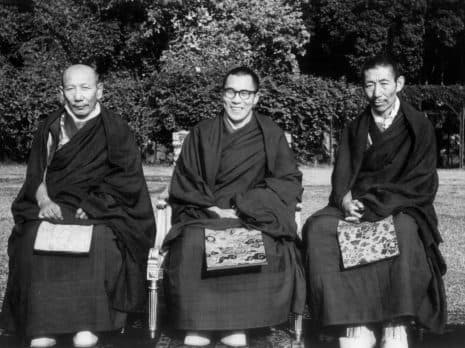
Trijang Lobsang Yeshe Tenzin Gyatso
Trijang Lobsang Yeshe Tenzin Gyatso (1901–1981) was a highly influential Gelugpa Lama and a direct disciple of Pabongkhapa Déchen Nyingpo. He served as the junior tutor to the 14th Dalai Lama, imparting extensive teachings and initiations. Trijang Rinpoche is recognized as a significant lineage holder of the Gelug tradition, particularly the Ganden Oral Tradition, and was instrumental in transmitting these teachings to numerous lamas who later spread Buddhism in the West.
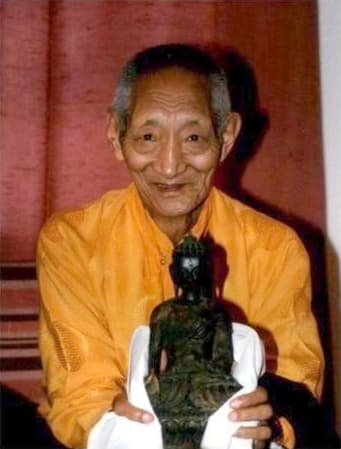
Kalu Rinpoche
Kalu Rinpoche was a highly respected Tibetan Buddhist lama, meditation master, scholar, and teacher, notable for being one of the first Tibetan masters to teach in the West. He played a significant role in transmitting the teachings of the Shangpa Kagyu lineage and established numerous centers for Buddhist practice globally.