
Śuddhodana
Śuddhodana was the father of Siddhartha Gautama, the historical Buddha. He was a leader of the Shakya people, an oligarchic republic whose capital was Kapilavastu. While often depicted as a king, modern scholarship disputes this, suggesting he held a more limited leadership role within a council, and that the Shakya were a vassal state of Kosala.
Key Facts
- ›Father of Siddhartha Gautama, the Buddha.
- ›Leader of the Shakya people, residing in Kapilavastu.
- ›His status as a king is disputed by modern scholars, who suggest an oligarchic system.
- ›His son Siddhartha left home at age 29 in search of spiritual answers.
- ›Śuddhodana sent emissaries to invite the Buddha back to the Shakya land.
- ›He achieved arhatship on his deathbed after hearing the Buddha preach.

Important Relationships
Kapilavastu, Lumbini
Leader, Father
Father of the Buddha
About Śuddhodana
Śuddhodana was the father of Siddhartha Gautama, the individual who would become known as the Buddha. He was a leader of the Shakya people, who resided in an oligarchic republic with its capital at Kapilavastu. The name Śuddhodana translates to "he who grows pure rice."
Historical Context and Status
Later Buddhist traditions frequently portray Śuddhodana as a king. However, modern scholarly consensus largely disputes this, suggesting that the Shakya operated as an oligarchy rather than a monarchy. In this system, a leader or rājā was chosen by an elite council and did not rule autocratically. Furthermore, by the time of Siddhartha's birth, the Shakya republic had become a vassal state of the larger Kingdom of Kosala, requiring the Shakya leader to have the King of Kosala's approval.
Early Buddhist texts do not identify Śuddhodana or his family as royals, leading to speculation that the notion of his kingship may have arisen from later interpretations or interpolations in Buddhist texts, possibly stemming from a misinterpretation of the word "rājā."
Life and Family
Śuddhodana's parents were Sihahanu and Kaccanā. His chief consort was Maha Maya, with whom he had his son, Siddhartha Gautama. Maha Maya died shortly after Siddhartha's birth, and her sister, Mahapajapati Gotami, became Śuddhodana's chief consort. They later had two more children, a son named Nanda and a daughter named Sundari Nanda, both of whom eventually became Buddhist monastics.
At the age of sixteen, Siddhartha married his cousin Yasodharā, who was the niece of Maha Maya and Mahapajapati.
Relationship with Siddhartha Gautama
According to tradition, Śuddhodana made significant efforts to prevent Siddhartha from becoming a renunciate (śramaṇa). He reportedly kept Siddhartha within the palace grounds, surrounded by pleasures intended to dissuade him from seeking spiritual answers. However, at the age of 29, after venturing out of the palace and encountering the "Four Sights," Siddhartha left his home, wife, and infant son, Rāhula, in what is known as the Great Renunciation.
Seven years later, upon hearing of his son's enlightenment, Śuddhodana sent emissaries to invite the Buddha back to the Shakya land. The Buddha returned and preached the dharma to his father. Four years later, when Śuddhodana was near death, the Buddha returned again and preached to him. It is said that Śuddhodana achieved arhatship on his deathbed.
Source: Wikipedia ↗
Frequently Asked Questions
Who was Śuddhodana?
Śuddhodana was the father of Siddhartha Gautama, who became known as the Buddha. He was a prominent figure among the Shakya people, who inhabited an oligarchic republic with its capital at Kapilavastu.
Was Śuddhodana a king?
While often depicted as a king in later texts, most modern scholarship refutes this. It is suggested that the Shakya were an oligarchy ruled by an elite council, and their leader, or rājā, held a position that required the approval of the King of Kosala.
What was Śuddhodana's relationship with Siddhartha Gautama?
Śuddhodana was the father of Siddhartha Gautama. He attempted to prevent his son from becoming a renunciate by shielding him from the realities of life, but Siddhartha eventually left home at the age of 29.
What happened to Śuddhodana after Siddhartha became the Buddha?
After hearing of his son's enlightenment, Śuddhodana sent emissaries to invite the Buddha back. The Buddha returned, taught the dharma to his father, and Śuddhodana ultimately achieved arhatship on his deathbed.
Related Buddhists
Śāriputra
Śāriputra was one of the foremost chief disciples of the Buddha, renowned for his exceptional wisdom and his pivotal role in the development of Buddhist doctrine, particularly the Abhidharma. He is considered the first of the Buddha's two principal male disciples and is often depicted in Buddhist art and texts as a key figure in the Sangha, known for his strict adherence to monastic rules and his teaching ability.

Chandrashekhar Azad Ravan
Chandrashekhar Azad Ravan is an Indian politician, social activist, Ambedkarite, and lawyer. He is the chief and co-founder of the Bhim Army and the National President of the Aazad Samaj Party (Kanshi Ram). In 2024, he was elected as a Member of Parliament to the 18th Lok Sabha from Nagina, and in 2021, Time magazine recognized him as one of the 100 Emerging Leaders shaping the future.
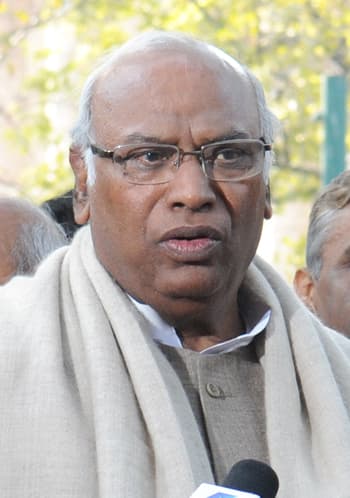
Mallikarjun Kharge
Mallikarjun Kharge is an Indian politician and lawyer who currently serves as the President of the Indian National Congress and Leader of the Opposition in the Rajya Sabha. He has held numerous prominent positions in both state and national politics since beginning his career in 1972. Kharge is recognized for his extensive legislative experience and his role in significant constitutional amendments, as well as his recent leadership in a major Indian political party.