
Ñāṇavīra Thera
Ñāṇavīra Thera, born Harold Edward Musson, was an English Theravāda Buddhist monk ordained in Sri Lanka in 1950. He is primarily known for his profound writings on Dhamma, most notably "Notes on Dhamma," which offered an intellectual framework for understanding Buddhist teachings. His work, characterized by its direct engagement with Western philosophy and its critical yet insightful approach, has significantly influenced subsequent Buddhist thought.
Key Facts
- ›Born Harold Edward Musson in England, he later became a Theravāda Buddhist monk in Sri Lanka.
- ›He is the author of "Notes on Dhamma," a significant work exploring Buddhist teachings through an intellectual lens.
- ›His writings often engaged with Western philosophical traditions such as phenomenology and existentialism.
- ›He claimed to have attained sotāpatti (stream-entry) in 1959, an experience he recorded in his private journal.
- ›He lived a solitary life in a kuti near Bundala, Sri Lanka, for many years.
- ›He died by suicide in 1965 due to severe and persistent amoebiasis.
Important Relationships
- Ven. Ñāṇatiloka (Ordaining monk)
- Ven. Ñāṇamoli (Fellow monk and correspondent)
- Julius Evola (Correspondent, translated some of his work)
Notes On Dhamma, Clearing the Path, Letters To Sister Vajirā, Seeking the Path
Aldershot, England, Dodanduwa, Sri Lanka, Colombo, Sri Lanka, Bundala, Sri Lanka
Phenomenology, Existentialism
English, Pali
Novice Ordination, Bhikkhu Ordination
About Ñāṇavīra Thera
Ñāṇavīra Thera, born Harold Edward Musson on January 5, 1920, was an English Theravāda Buddhist monk who was ordained in Sri Lanka in 1950. He is predominantly recognized for his significant literary contributions to Buddhist studies, particularly his work "Notes on Dhamma." This book, along with his extensive correspondence, was later published together as "Clearing the Path." His writings are notable for their deep engagement with Western philosophical traditions, including phenomenology and existentialism, which he used to construct an intellectual framework for understanding the Buddha's teachings.
Life and Historical Context
Born in Aldershot, England, Musson received his education at Wellington College and Magdalene College, Cambridge, where he studied modern and medieval languages. He served in the British Army during World War II, utilizing his linguistic skills as an interrogator. Post-war, he felt a profound dissatisfaction with his life and, along with his friend Osbert Moore (who became Ñāṇamoli Thera), decided to pursue monastic life in Ceylon (now Sri Lanka). They received novice ordination in 1949 from Ven. Ñāṇatiloka at the Island Hermitage in Dodanduwa, and higher ordination as bhikkhus in 1950 at Vajirārāma monastery in Colombo. Harold Musson was given the monastic name Ñāṇavīra.
Major Contributions and Writings
Ñāṇavīra Thera's writings are divided into two periods. His early writings (1950-1960) reflect a rigorous search for the essence of the Dhamma, often through correspondence with Ñāṇamoli Thera, exploring Western thought and its relevance to Buddhist concepts. After suffering from a severe and prolonged illness, Ñāṇavīra Thera claimed to have attained sotāpatti, or stream-entry, on June 27, 1959. His later writings (1960-1965), particularly "Notes on Dhamma," express a profound certainty derived from this realization. These works aim to provide an intellectual basis for understanding the Suttas, clearing away what he perceived as misconceptions, and inviting readers to share his perspective.
His letters, collected in "Clearing the Path," are known for their candor, wit, and intellectual depth, discussing his personal struggles with illness and his philosophical insights with correspondents from various backgrounds. These writings offer a contemporary exposition of the Buddha's Teaching, reflecting his experience of living in a remote jungle abode.
Personal Life and Death
Ñāṇavīra Thera chose a life of solitude, residing in a simple kuti near Bundala in southeast Ceylon. For fifteen years, he suffered from a severe case of amoebiasis, which significantly impacted his health. This prolonged suffering, coupled with his philosophical considerations on the nature of existence and suffering, led him to make the deliberate decision to end his life on July 5, 1965. His writings extensively address the complex question of suicide arising from such circumstances.
Source: Wikipedia ↗
Frequently Asked Questions
Who was Ñāṇavīra Thera?
Ñāṇavīra Thera, born Harold Edward Musson, was an English Theravāda Buddhist monk ordained in Sri Lanka. He is recognized for his influential writings on Buddhist doctrine, particularly 'Notes on Dhamma'.
What is Ñāṇavīra Thera most known for?
He is best known for his book 'Notes on Dhamma,' which provided a rigorous intellectual interpretation of the Buddha's teachings, often drawing parallels with Western philosophy. His collected letters, published as 'Clearing the Path,' also offer deep insights into his thought and practice.
What was the nature of his writings?
His writings, particularly those after 1960, are characterized by their intellectual rigor and a stated aim to 'clear away dead matter' that obscured the core of the Dhamma. He sought to provide an intellectual basis for understanding the Suttas without abandoning faith.
What led to his death?
Ñāṇavīra Thera died by his own hand and deliberate decision in 1965. This act arose from his prolonged suffering from a severe case of amoebiasis and satyriasis, conditions that plagued him for fifteen years.
What was his monastic life like?
After ordination, he gravitated towards a solitary life, residing in a simple kuti in a remote part of southeast Ceylon. He lived in isolation for the remainder of his life, dedicated to his practice and writings.
Related Buddhists
Piyadassi Maha Thera
Piyadassi Maha Thera was a Theravādin Buddhist monk and influential Dharma preacher known for his extensive writings and teachings in both Sinhalese and English. He served as the Sinhala editor at the Buddhist Publication Society and was a significant spiritual guide to many, including American Buddhist scholar Bhikkhu Bodhi. His work aimed to make Buddhist teachings accessible to a global audience.
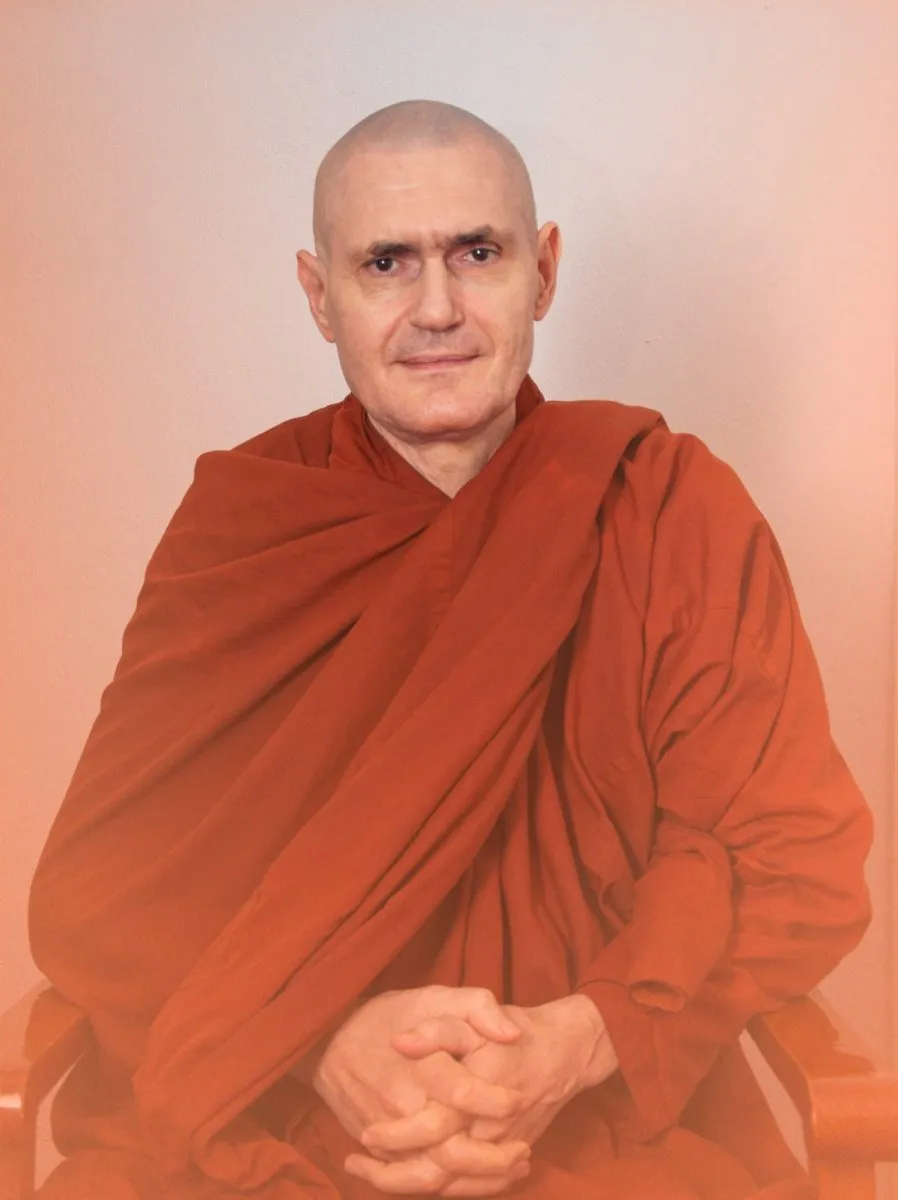
Nyānadassana Mahāthera
Bhikkhu Nyānadassana Mahāthera is a Theravāda Buddhist monk, scholar, and teacher of Greek origin, born Ioannis Tselios in 1959. He is known for his extensive study and teaching of the Pali Canon, meditation practices, and his significant role in the Paliverse Project, an AI-assisted initiative to translate the complete Pali Canon into English.
Pa-Auk Sayadaw
The Most Venerable Bhaddanta Āciṇṇa Mahāthēra, commonly known as Pa-Auk Sayadaw, is a highly respected Burmese Theravāda monk and meditation teacher. He is the abbot of the Pa-Auk Forest Monastery and has developed a widely recognized meditation method. His teachings and extensive network of centers have made him a significant figure in contemporary Buddhist practice, particularly in Southeast Asia.