
Ñāṇamoli Bhikkhu
Ñāṇamoli Bhikkhu was a British Theravada Buddhist monk and a highly regarded translator of Pali literature. Born Osbert John Salvin Moore, he developed a profound understanding of the Pali language and Buddhist scriptures during his monastic life in Sri Lanka. He is best known for his accurate and accessible translations of abstruse Buddhist texts, making them available to a wider English-speaking audience.
Key Facts
- ›Born in Cambridge, England, in 1905, he was the son of biologist John Edmund Sharrock Moore and Heloise Moore.
- ›He studied modern languages at Exeter College, Oxford, and served as an intelligence officer during World War II.
- ›Discovered Buddhism in Italy through Julius Evola's "the Doctrine of Awakening."
- ›Ordained as a novice monk in Sri Lanka in 1949 and as a bhikkhu in 1950.
- ›Spent most of his eleven years as a monk at the Island Hermitage, mastering the Pali language.
- ›His notable translations include the Visuddhimagga (the Path of Purification) and the Majjhima Nikaya (Middle Length Discourse of the Buddha).
Important Relationships
- Harold Edward Musson (Ñāṇavīra Thera)
- Nyanatiloka Mahathera
- Nyanaponika Thera
- Bhikkhu Khantipalo
- Bhikkhu Bodhi
- the Path of Purification
- Middle Length Discourse of the Buddha
- the Guide
- Dispeller of Delusion
- the Life of the Buddha: As It Appears In the Pali Canon
- A Thinker's Notebook
Sri Lanka, Island Hermitage, Vajirarama Temple Colombo, Cambridge, Oxford, Italy
Julius Evola
Pali, English
Novice Ordination, Bhikkhu Ordination
About Ñāṇamoli Bhikkhu
Ñāṇamoli Bhikkhu, born Osbert John Salvin Moore on June 25, 1905, was a British Theravada Buddhist monk and a significant translator of Pali literature. His work played a crucial role in making complex Buddhist texts accessible to an English-speaking readership.
Life and Historical Context
Born in Cambridge, England, Moore was the only child of biologist John Edmund Sharrock Moore and Heloise Moore. He pursued studies in modern languages at Exeter College, Oxford. His life took a significant turn during World War II, where he served as an intelligence officer in Italy. It was during this period that he discovered Buddhism through Julius Evola's "The Doctrine of Awakening," a work that profoundly influenced him.
Following the war, Moore, along with his friend Harold Edward Musson (later Ñāṇavīra Thera), became disillusioned with their secular lives. In 1949, they traveled to Sri Lanka with the intention of becoming Buddhist monks. They received novice ordination on April 24, 1949, from Ñāṇatiloka at the Island Hermitage, and full bhikkhu ordination in 1950 at Vajirarama Temple in Colombo. Ñāṇamoli Bhikkhu spent nearly his entire eleven years as a monk at the Island Hermitage.
Major Contributions
Ñāṇamoli Bhikkhu developed a remarkable command of the Pali language and a deep understanding of the canonical scriptures in a relatively short time. He is highly esteemed for his reliable translations of abstruse Pali texts, which are often considered difficult to render accurately. Among his most significant published works are his English translation of the "Visuddhimagga" (The Path of Purification) by Bhadantācariya Buddhaghosa, first published in 1956, and his comprehensive translation of the "Majjhima Nikaya" (Middle Length Discourse of the Buddha), published posthumously.
He also authored "The Life of the Buddha: as it appears in the Pali Canon," a respected biography based on ancient records, and compiled "A Pali-English Glossary of Buddhist Technical Terms." Many of his other translations and essays were compiled and published after his death by fellow monks like Nyanaponika Thera and Bhikkhu Bodhi.
Death
Ñāṇamoli Bhikkhu died suddenly of heart failure on March 8, 1960, while on a pilgrimage in the hamlet of Veheragama, near Mahawa, Sri Lanka. His body was cremated at a cemetery near Vajirarama Temple in Colombo.
Source: Wikipedia ↗
Frequently Asked Questions
Who was Ñāṇamoli Bhikkhu?
Ñāṇamoli Bhikkhu, born Osbert John Salvin Moore, was a British Theravada Buddhist monk and a significant translator of Pali Buddhist texts into English. He dedicated his monastic life to studying and disseminating Buddhist teachings.
What led Ñāṇamoli Bhikkhu to Buddhism?
He discovered Buddhism while serving as an intelligence officer in Italy during World War II, encountering the work "The Doctrine of Awakening" by Julius Evola. This exposure sparked his interest, leading him to eventually become a monk.
What is Ñāṇamoli Bhikkhu most famous for?
He is most renowned for his scholarly translations of challenging Pali Buddhist scriptures into English. His work, particularly the "Visuddhimagga" (The Path of Purification) and the "Majjhima Nikaya" (Middle Length Discourse of the Buddha), is highly respected for its accuracy and clarity.
Where did Ñāṇamoli Bhikkhu live as a monk?
After ordaining in Sri Lanka in 1949, he spent almost his entire monastic life, which lasted eleven years, at the Island Hermitage. He also spent time at Vajirarama Temple in Colombo.
What were some of Ñāṇamoli Bhikkhu's key translated works?
Key translations include the "Visuddhimagga" (The Path of Purification), the "Majjhima Nikaya" (Middle Length Discourse of the Buddha), "The Guide" (Nettipakarana), and "Dispeller of Delusion" (Sammohavinodanī).
Related Buddhists
Frank Lee Woodward
Frank Lee Woodward was an English educationist, Pali scholar, author, and theosophist known for his extensive research and translation work on Theravada Buddhism. He is highly regarded for compiling a significant concordance of the Pali canon by translating numerous Pali texts into English. Woodward also served as the principal of Mahinda College in Ceylon for 16 years, significantly contributing to its development and the promotion of Buddhist education.
Sīlācāra
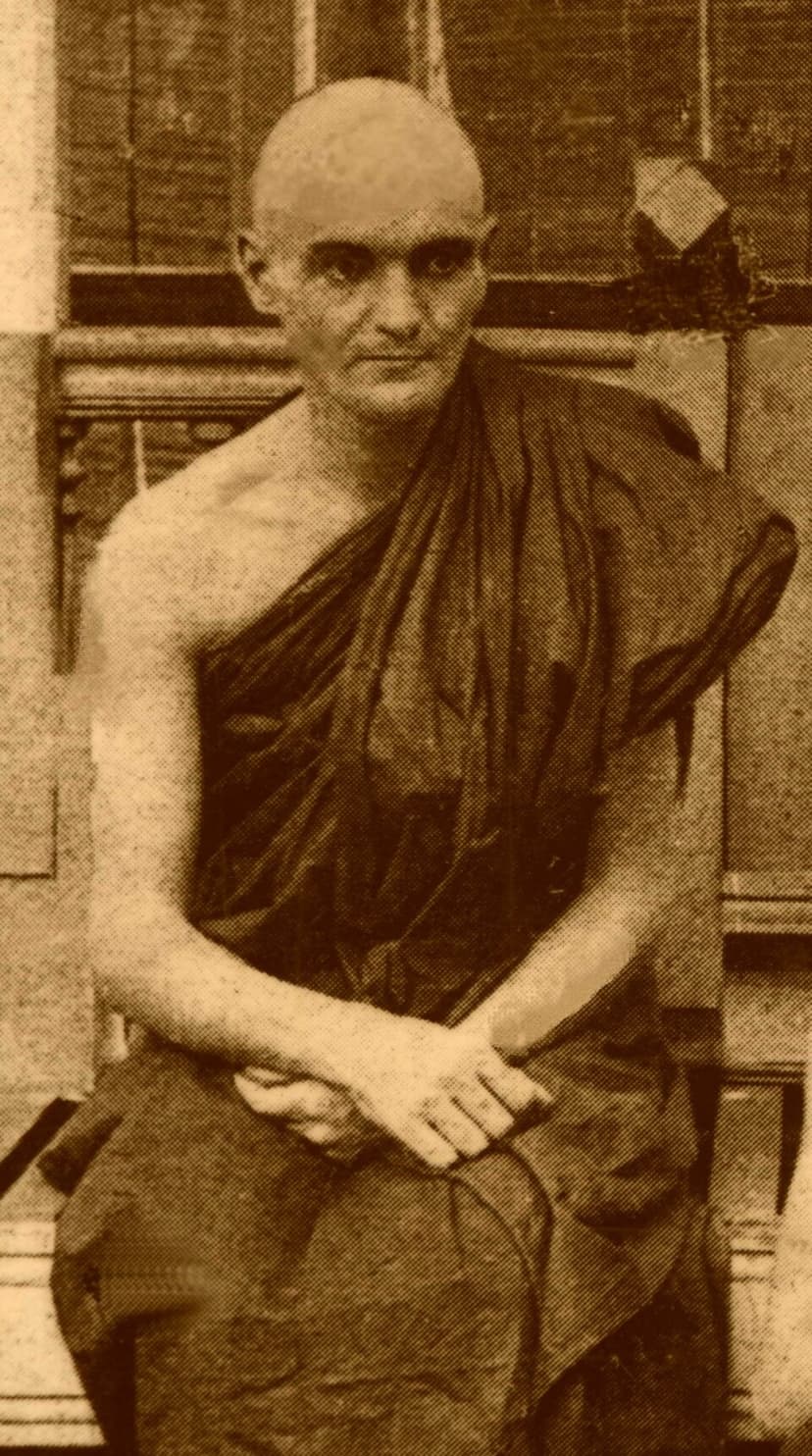
Sīlācāra Bhikkhu, born John Frederick S. Mckechnie, was a prominent early Western Buddhist monk and prolific writer. He is known for his translations and original works that emphasized the rational and scientific aspects of Buddhism, contributing significantly to the dissemination of Buddhist teachings in the West.
Lance Selwyn Cousins
Lance Selwyn Cousins was a British scholar renowned for his contributions to Buddhist Studies, particularly in the field of Abhidhamma. He played a significant role in making the Pali Canon accessible online and was a prolific translator and editor of Buddhist texts. Beyond academia, Cousins was also a dedicated teacher of Buddhist meditation in the Thai samatha tradition, founding meditation centers and classes across the UK and internationally.