
Matthieu Ricard
Matthieu Ricard is a Nepalese French writer, photographer, translator, and Buddhist monk residing at Shechen Tennyi Dargyeling Monastery in Nepal. He is known for his work bridging science and Buddhism, particularly his research on meditation and the brain, and for his extensive humanitarian efforts in the Himalayas. Ricard has also gained recognition for his writings on happiness and compassion, and serves as a French interpreter for the 14th Dalai Lama.
Key Facts
- ›Holds a PhD in molecular genetics from the Pasteur Institute.
- ›Co-founded the non-profit organization Karuna-Shechen for humanitarian projects in Nepal, India, and Tibet.
- ›Has served as the French interpreter for the 14th Dalai Lama since 1989.
- ›Is a board member of the Mind and Life Institute, which fosters collaboration between scientists and Buddhist scholars.
- ›Has authored and photographed numerous books on Tibetan Buddhism, the Himalayas, and the nature of happiness.
- ›Has been a subject in studies on the effects of meditation on the brain.

Important Relationships
- Jean-François Revel (father)
- Yahne Le Toumelin (mother)
- Dilgo Khyentse Rinpoche
- 14th Dalai Lama
- Henri Cartier-Bresson
- François Jacob
- Rabjam Rinpoche
- Trinh Xuan Thuan
- Daniel Goleman
- Wolf Singer
- Christophe André
- Alexandre Jollien
- Simon Velez
- Jason Gruhl
- Becca Hall
- Yukihiko Mitsunaga
- Tania Singer
- Gaël Chételat
- Florence Mézenge
- Clémence Tomadesso
- Brigitte Landeau
- Eider Arenaza-Urquijo
- Géraldine Rauchs
- Claire André
- Robin De Flores
- Stéphanie Egret
- Julie Gonneaud
- Géraldine Poisnel
- Anne Chocat
- Anne Quillard
- Béatrice Desgranges
- Jean-Gérard Bloch
- Antoine Lutz
- Haakon G. Engen
- Boris C. Bernhardt
- Leon Skottnik
- Richard Gere
- Haxie Meyers-Belkin
- Tan Chade Meng
- Olivier Föllmi
- Jamgon Mipham
- the Monk and the Philosopher
- Happiness: A Guide To Developing Life's Most Important Skill
- Altruism: the Power of Compassion To Change Yourself and the World
- the Quantum and the Lotus
- Tibet, An Inner Journey
- Monk Dancers of Tibet
- Buddhist Himalayas, Journey To Enlightenment
- Motionless Journey: From A Hermitage In the Himalayas
- Why Meditate ?
- the Art of Meditation
- Bhutan: the Land of Serenity
- On the Path To Enlightenment: Heart Advice From the Great Tibetan Masters
- Caring Economics: Conversations On Altruism and Compassion
- A Plea For the Animals: the Moral, Philosophical, and Evolutionary Imperative To Treat All Beings With Compassion
- An Ode To Beauty
- Beyond the Self: Conversations Between Buddhism and Neuroscience
- In Search of Wisdom
- Contemplation
- Our Animal Neighbors
- Freedom For All of Us: A Monk, A Philosopher, and A Psychiatrist On Finding Inner Peace
- Notebooks of A Wandering Monk
- the Life of Shabkar
- Rainbows Appear: Tibetan Poems of Shabkar
- the Hundred Verses of Advice: Tibetan Buddhist Teachings On What Matters Most
- the Heart of Compassion: the Thirty-Seven Verses On the Practice of A Bodhisattva
- Guru Yoga According To the Preliminary Practice of Longchen Nyingtik
- Enlightened Vagabond, the Life and Teachings of Patrul Rinpoche
Shechen Tennyi Dargyeling Monastery, Nepal, Himalayas, India, Tibet, Aix-Les-Bains, Savoie, France, Dordogne, France
Dilgo Khyentse Rinpoche, Kangyur Rinpoche
French, English
Monastic Vows
Monk, Writer, Photographer, Translator, Scientist, Humanitarian, Interpreter
About Matthieu Ricard
Matthieu Ricard is a prominent Nepalese French writer, photographer, translator, and Buddhist monk, residing at Shechen Tennyi Dargyeling Monastery in Nepal. Born in France in 1946, he is the son of the philosopher Jean-François Revel and the painter Yahne Le Toumelin. Ricard's early life was immersed in French intellectual circles, and he initially pursued a scientific path, earning a PhD in molecular genetics from the Pasteur Institute in 1972.
Life and Buddhist Practice
Following his doctoral studies, Ricard made a significant life change, forsaking his scientific career to concentrate on the practice of Tibetan Buddhism. He traveled to India and lived in the Himalayas, where he became a close student and friend of the renowned master Dilgo Khyentse Rinpoche. Since Rinpoche's death in 1991, Ricard has been dedicated to furthering his teacher's vision.
Ricard has been recognized for his work in bridging the gap between Buddhism and science. He is a board member of the Mind and Life Institute, participating in research on the effects of meditation and mind training on the brain at various institutions worldwide. He has also been a volunteer subject in studies examining happiness and the long-term effects of meditation.
Humanitarian and Literary Contributions
Beyond his spiritual and scientific pursuits, Matthieu Ricard is deeply involved in humanitarian work. He co-founded Karuna-Shechen, a non-profit organization that supports over 200 humanitarian projects in Nepal, India, and Tibet, focusing on healthcare, education, and social services. Ricard donates all proceeds from his books and conferences to these initiatives.
His photographic work, capturing the spiritual masters, landscapes, and people of the Himalayas, has been featured in numerous publications. As an author, he has written and co-authored many books exploring themes of Buddhism, happiness, compassion, and the intersection of science and spirituality. Notable titles include "The Monk and the Philosopher" (a dialogue with his father), "Happiness: A Guide to Developing Life's Most Important Skill," and "Altruism: The Power of Compassion to Change Yourself and the World."
Public Role
Since 1989, Ricard has served as the French interpreter for the 14th Dalai Lama, playing a crucial role in conveying the Dalai Lama's teachings and messages to French-speaking audiences. He has also spoken at numerous international forums, including the World Economic Forum, the United Nations, and various happiness and global symposiums.
Source: Wikipedia ↗
Frequently Asked Questions
What is Matthieu Ricard's background before becoming a monk?
Matthieu Ricard grew up in French intellectual circles and pursued a scientific career. He earned a PhD in molecular genetics from the Pasteur Institute in 1972 before dedicating himself to Tibetan Buddhism.
What is Matthieu Ricard known for in his Buddhist practice?
Ricard is known for his dedication to Tibetan Buddhism, living in the Himalayas and studying with prominent teachers like Dilgo Khyentse Rinpoche. He has spent significant time in solitary meditation and engages in research on the effects of mind training on the brain.
What humanitarian work does Matthieu Ricard do?
He co-founded Karuna-Shechen, a non-profit organization supporting over 200 humanitarian projects in Nepal, India, and Tibet, focusing on healthcare, education, and social services. He donates proceeds from his books and conferences to these initiatives.
What is Matthieu Ricard's connection to the Dalai Lama?
Since 1989, Matthieu Ricard has served as the French interpreter for the 14th Dalai Lama, facilitating communication and understanding during his teachings and interactions in French-speaking contexts.
Has Matthieu Ricard been scientifically studied?
Yes, Ricard has been a volunteer subject in scientific studies, particularly those investigating the effects of long-term meditation on the brain and the nature of happiness. He co-authored a study on the brains of long-term meditators.
What are some of Matthieu Ricard's notable books?
Notable works include 'The Monk and the Philosopher' (a dialogue with his father), 'Happiness: A Guide to Developing Life's Most Important Skill,' 'Altruism: The Power of Compassion to Change Yourself and the World,' and 'The Quantum and the Lotus' (co-authored with Trinh Xuan Thuan).
Related Buddhists

Francisco Varela
Francisco Varela was a Chilean biologist, philosopher, and neuroscientist, best known for co-introducing the concept of autopoiesis to biology and for co-founding the Mind and Life Institute. This institute fosters dialogue between science and Buddhism, reflecting Varela's own engagement with Tibetan Buddhism and his work on embodied cognition and neurophenomenology.
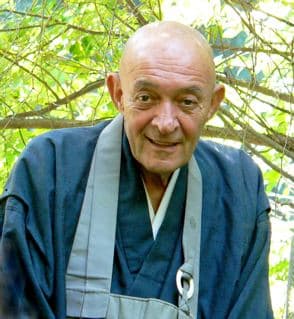
John Daido Loori
John Daido Loori was a prominent Zen Buddhist rōshi, abbot of Zen Mountain Monastery, and founder of the Mountains and Rivers Order. He is recognized for his extensive teachings, authored works, and significant contributions to Zen Buddhism in the United States, bridging both Soto and Rinzai lineages. Loori was also an accomplished photographer and naturalist.
Shinjō Itō
Shinjō Itō was the Japanese founder of Shinnyo-en, a Buddhist new religious group. He transitioned from a career as an aeronautic engineer to a religious life, training at Daigo-ji monastery and becoming a Dai-Ajari of Shingon Buddhism. Besides his role as a spiritual leader, Itō was also recognized as a Buddhist sculptor and photographer, with his works exhibited internationally.